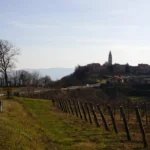

In the heart of Istria, on a 360-meter-high hill, ancient Pićan is compact yet captivating, offering vistas in every direction.
High on a 360-metre hill in central Istria, Pićan is small, serene, and full of old tales. From afar, it appears as a cluster of stone roofs and a bell tower against the sky, set in silence that recalls its history. Here, time circles through legend and story, never quite leaving the past behind.
Since prehistoric times, the Histrians inhabited the hill of Calvary, north of today’s city, where the first signs of civilisation began. The area was later inhabited by the Celtic tribe of Secura, then further developed and recognised by the Romans. The Romans called it “Petina”. During Byzantine rule, Pićan was the administrative centre of central Istria.

Today, Pićan is a destination for visitors who want to relax and step back in time. City of St. Niceforus, the founder of the former smallest diocese in Istria, provides a significant historical legacy. Apart from being the home of the “Istrian Centre for Intangible Culture”, Pićan is a town with stunning views. The horizons that stretch to the valley of “Ćepić Polje Field” will leave few indifferent.
5 Things to do in Pićan
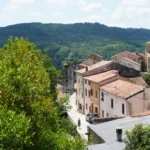
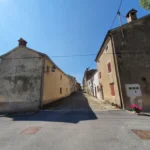
Fans of small, picturesque towns will like Pićan, which many say is a town of legends. You will notice houses with rustic lintels and stairs cut into the rock. Buildings that line the winding streets, showcasing different architectural styles, often date back to the Middle Ages. Pićanis a place ofvibranthistory, intangibleculture. While the coastal towns of Istria fell under Venetian rule, Pićan, along with Pazin, shared a different fate. The half-century-long fate of the division of Istria into Austrian and Venetian parts was marked by violent clashes, Ottoman invasions, and the outbreak of the plague. The fall of Venetian rule marked a brief period under Napoleon and later under the Habsburgs. Walking through the narrow streets, I not only feel the spirit of times past but also wonder what stories Pićan streets used to hide.
1. Enter the 14th-century town gate

Agate, dating back to the 14th century, is the first thing we notice. The medieval symbol once played an important role, as hot oil and tar were thrown from the walls at the invaders. The monumental city gate was restored in 1613, during the time of Antonio Zara. Since there are no more knight guards today, and Pićan welcomes its visitors warmly, go through the stone door that will take you to the traces of the past.
2. Visit the parish church and bell tower
The Baroque Church of the Annunciation of the Blessed Virgin Mary is one of the sights that dominate the small town. The church took its present form in 1753. The bishop’s tombs, decorated with relief and coats of arms, are located in front of the church below the church plateau. The balcony in front of the church reminds one of the Rovinj church of St. Euphemia. The interior hides a precious collection, the most prominent being the bishop’s robe, a gift from Empress Maria Theresa.
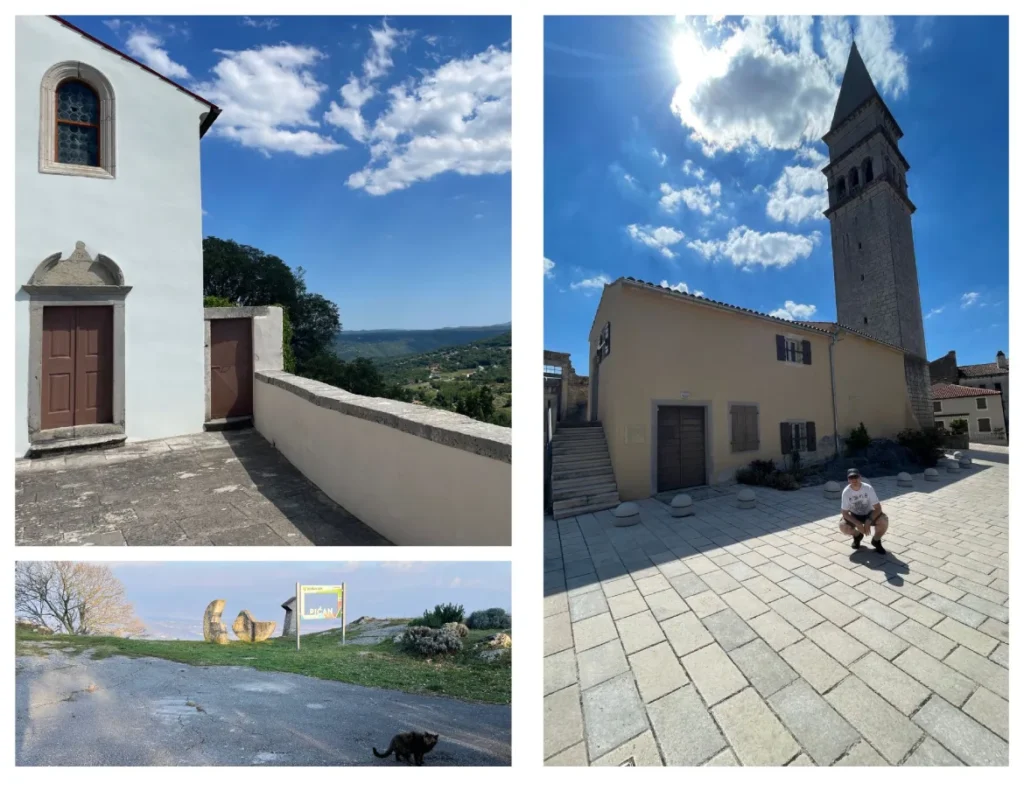
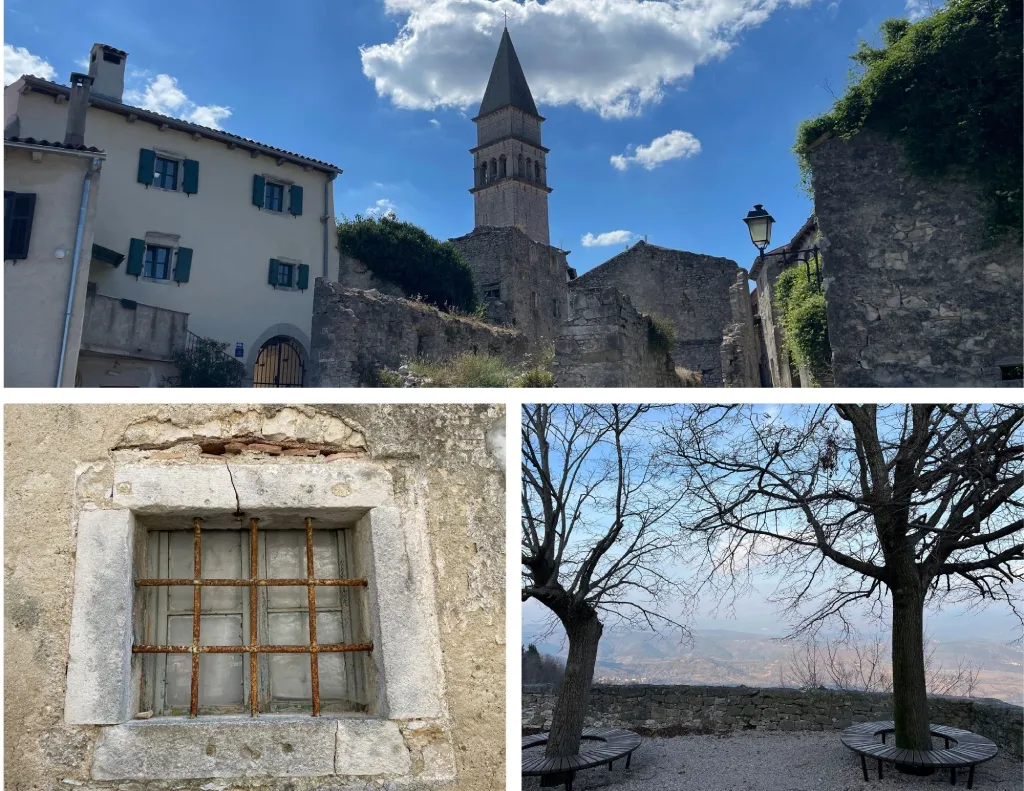
The Pićan bell tower from 1872, made of white limestone, stands opposite the church. It is one of the highest Istrian bell towers, and many consider it the most beautiful. Look for the stone scale, once used for weighing tributes given to serfs, which still lies at the foot of the bell tower. A visible sign of the Roman presence in Pićan is the inscription on the stone built into the door jamb of the house near the bell tower. Lucius Caonalio of the Pupinia family also mentioned it.

Local tip: visit the national Reading Room. The building, which operated during 1914-1918 (WWI), is located next to the small church square. It is surrounded by unusual stone architecture. Take a look.
3. Enjoy the magnificent view from Pićan viewpoints
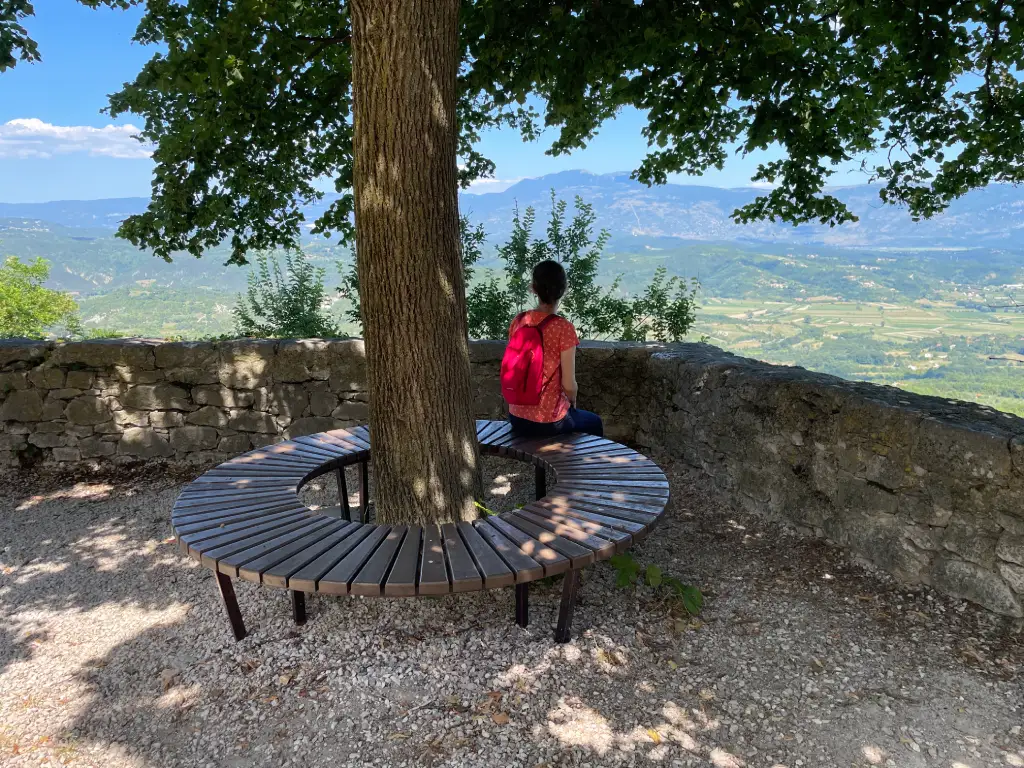
Discovering the view from the tiny town, the Austrian Emperor Franjo Ferdinand expressed his desire to return and visit Pićan again. He wanted to show it to his wife, Sofia, a painter, who was supposed to draw green landscapes. Actually, the wonderful view extending to the green landscapes is one of the main things one will remember about Pićan. The place where we will best experience the view from Pićan is the lookout pointdedicated to St. Helens (Sv. Jelena). The lookout, named after the church that once stood on this site, is one of those that let us literally forget about the hands of the clock. Jelena’s altarpiece is still kept in the parish church.
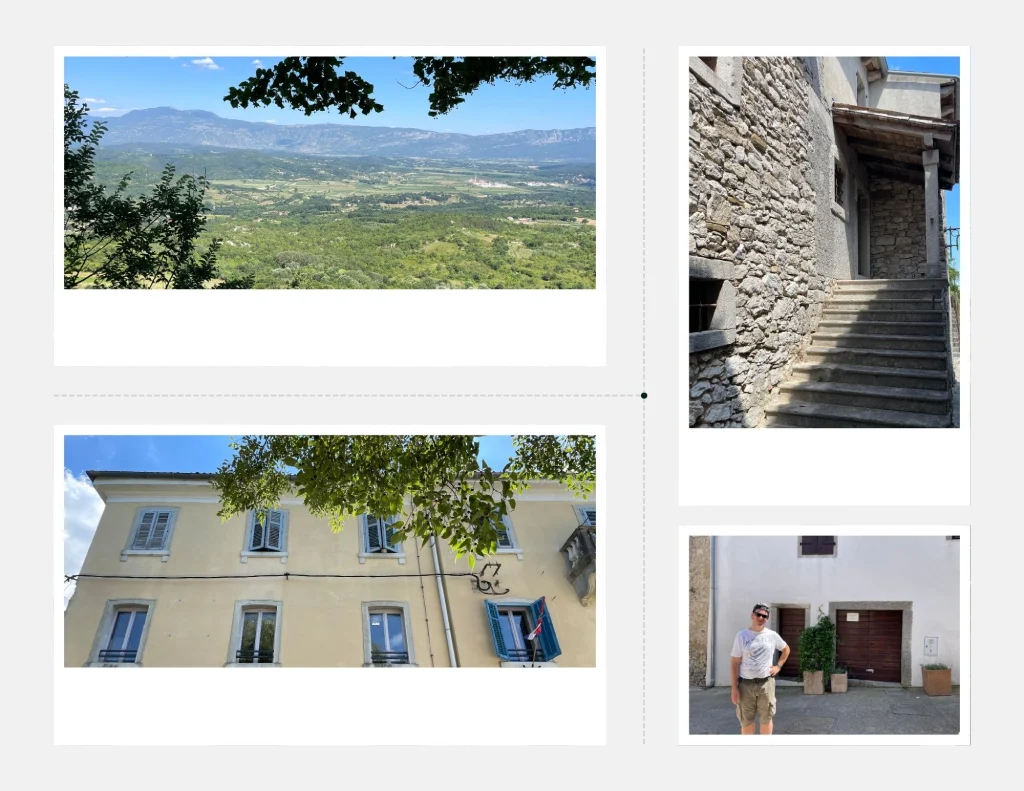
The emperor-inspired lookout is dedicated to Franjo Ferdinand. From here, the views and local wine stand out as memorable. Ferdinand never returned, as he was assassinated in Sarajevo in 1914, starting World War I—though that tale is beyond Pićan.
4. Take a rest in the park
The park in front of the town entrance, with its green trees offering shade during the summer heat, features a statue of St. John Nepomuk. The sculpture from 1714 is dedicated to a Czech saint, protector of bridges and floods. The same sculpture can be found in Gračišće and Tinjan. It is believed that Pićan once had a drawbridge at the city entrance, like Pazin and other medieval fortifications.
A very valuable building located inside the park is St. Rocco’s Church. It is dedicated to the protector of the plague. A bishop, Gašpar Bobek, built it during one of the most severe plague epidemics (1631-1634). Similar to some other Istrian towns (Draguć, Motovun), the church is located next to thetown entrance. Namely, it was believed that a patron wouldstop the epidemics from entering the city.
5. Stop by the birth house of Matko Brajša Rašan
The house opposite the parish church is dedicated to Matko Brajša Rašan, recorder of old Istrian melodies and composer of the current official Istrian anthem “Krasna Zemljo,” created in 1912 by Ivan Cukon.
Bonus thing to do: Learn about the Pićan legends
The mystical Middle Ages are the subject of legends and stories. Many intertwined legends are linked to the creation of the Diocese of Pićan. Legendfest—a festival that attracts visitors not only from Istria but also from across Croatia and abroad—bears witness to Pićan as a true city of legends, myths, and Istrian folk tales.

According to the legend of Nicephorus, the bishop of Pićan, the locals complained that he had an immoral life. To dissuade them from their accusations, Nicefor offered to open a source of drinking water by striking the barren, thorny ground with a stick. Since the locals refused, claiming they needed thorns for the vineyards, Nicefor, instead of in Pićan, on the way to the patriarch in Aquileia, created springs in Gračišće, Krbune, Buzet, and Trieste. Arriving before the patriarch, he had nowhere to hang his cloak, but stuck it in the sunlight. That was enough to acquit him. Upon his return, Nicephorus died, and his remains were kept in Umag until 1379, when they were abducted by the Genoese. His right hand was sent to Pićan, which is now kept in the parish church.
Daily tours in Pićan surround
Similar to Gračišće, Pićan is located just a few kilometres away and in the very centre of Istria. It is a valuable spot for various and unique daily tours to feel Istria.
Gračišće
The medieval town was larger and more robust in the 16th century than Pazin. Still, it was severely damaged during the wars and peasant uprisings. Today, it is known as one of the centres of green Istria and is just a few minutes’ drive from Pićan.
Kotle
Situated on the foothills of Pićan, Kotli village has retained its rustic 19th-century look. Due to its isolation, it is one of the most original places known for the preserved mills in use until 1964.
The village, characterised by stone houses, has many wooden elements, a material much used in old architecture, more so than in this part of Istria. Kotli had good development and trades due to its crafts. One reason to visit it is to enjoy the beautiful waterfall and the fresh air. The village is also famed for traditional musical instruments such as bass, vijulina, and clarinet, since its inhabitants were known to be good players.
Raša & Trget
Located toward Labin, Raša Bay is not as famous, but it is a green, landscaped cove with a lake. There is a beautiful pathway that surrounds the lake, on which can be seen the remains of the miners. Raša used to be the miners’ city because it was home to the largest mine in Istria.
Trget is a tiny but magnificent place located off the east coast of Istria. The rural architecture, the boats tied on a small pier and the coastal promenade with a beautiful nature pebble beach are why you shouldn’t miss it.
Plomin
You could still get to the nearest sea view destination, Plomin, via Labin in twenty minutes. Located on a hill with a magnificent view of Plomin Bay, the place has an ancient and quaint vibe.
Kršan
The medieval castle, dominated by its central tower, is only a 15-minute drive away. The place has one of the oldest wells in Istria, dating back to 1616, and a valuable Gothic portal frame.
Getting to Pićan
📍 GPS. Latitude: 45.220360, Longitude: 14.010120
✈️ Air. There are several airports nearby that can reach Istria. Pula Airport is the closest one. Rijeka Airport, approximately 54 km away, is also a good alternative. Other options include Trieste Airport (145 km), Venice Airport (255 km), Zagreb Airport (230 km), and Ljubljana Airport.
🚌 Bus. The nearest bus station with connections to most Croatian cities is in Pazin, located 15 km from Pićan. Some international routes from European cities also arrive in Pazin. However, to reach Pićan itself, you will need a private transfer or a rental car from Pazin.
🚆 Train. The nearest train station is also in Pazin. If you prefer to travel by train, you can reach Pazin from Zagreb or Ljubljana.
Pićan tips
📍 Where it lies: In the quiet heart of central Istria, 12 km east of Pazin, built on a 360-metre hill with sweeping views of Ćepić Polje and the green valleys below.
🚶 Wander: Enter through the 14th-century gate, stroll the narrow lanes of the old core, and linger at the viewpoints of St. Helen and Emperor Ferdinand. Each turn reveals a story carved in stone.
⛪ Sacred corners: The Church of the Annunciation of the Blessed Virgin Mary with its bishop tombs and baroque splendour, the elegant bell tower from 1872, and the small Church of St. Roch — protector from plague — at the town’s entrance.
💧 Hidden gems: The statue of St. John Nepomuk in the park, the Reading Room from the early 20th century, and the peaceful plateaus offering open views of the Istrian inland.
🐐 Trek Goat tip: Visit during LegendFest in summer, when Pićan turns into a stage of myths and tales. Or come on a quiet weekday morning — when mist lingers over the valley, and the only sound is your own breath between the walls.
🅿️ Practical: Park at the entrance below the town gate. Pićan is best combined with Gračišće, Kotli or Kršan for a gentle day trip through Istria’s stone villages.