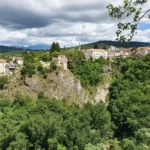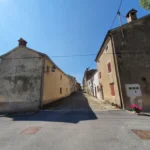

High above the Mirna River valley, where oak forests hide the most treasured truffles of Istria, Buzet rises in calm dignity. The town is not only known for its abundance of this rare delicacy, but also for the quiet craft that lingers in its streets — old workshops, stone houses, and the gentle rhythm of a place where time still follows slower measures. To wander here is to feel both the earth’s richness and the enduring magic of human hands.
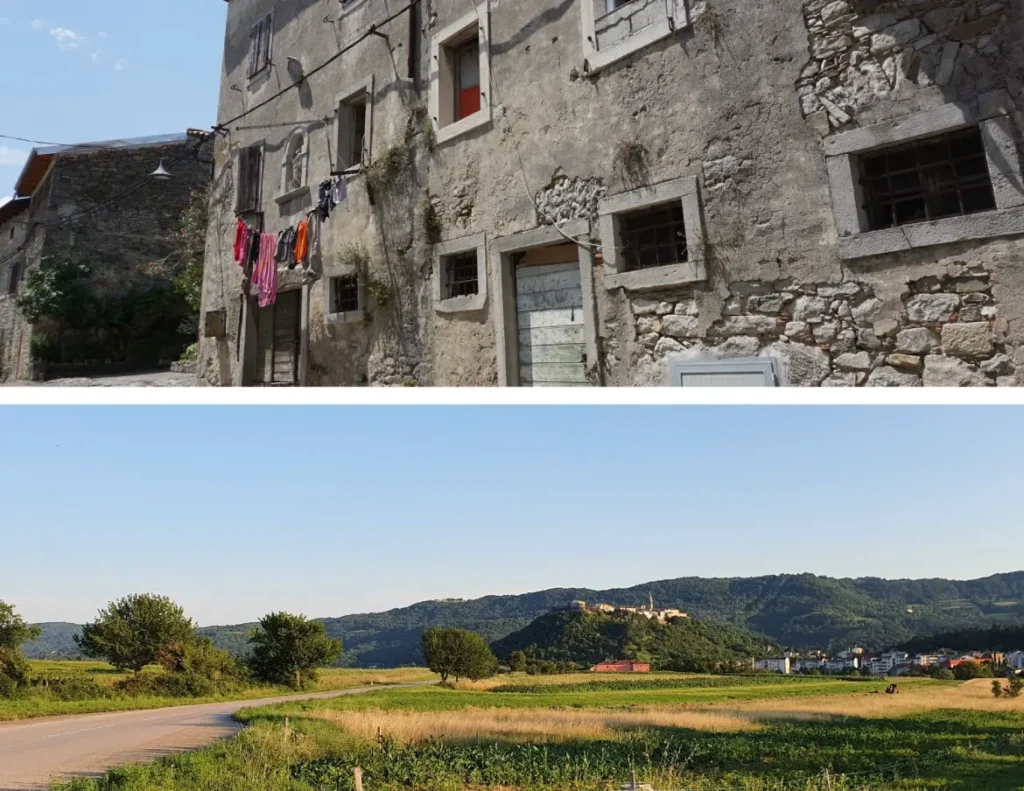
Buzet is a quaint town located above the Mirna River valley in northern Istria. It is not coincidental that it is recognised as one of the Istrian places known for truffles. Lonely in the middle of the valley, ancient Buzet, located on a hill (158 m), reveals many things, historical and cultural. The historians used to call it “The Key of Istria”.
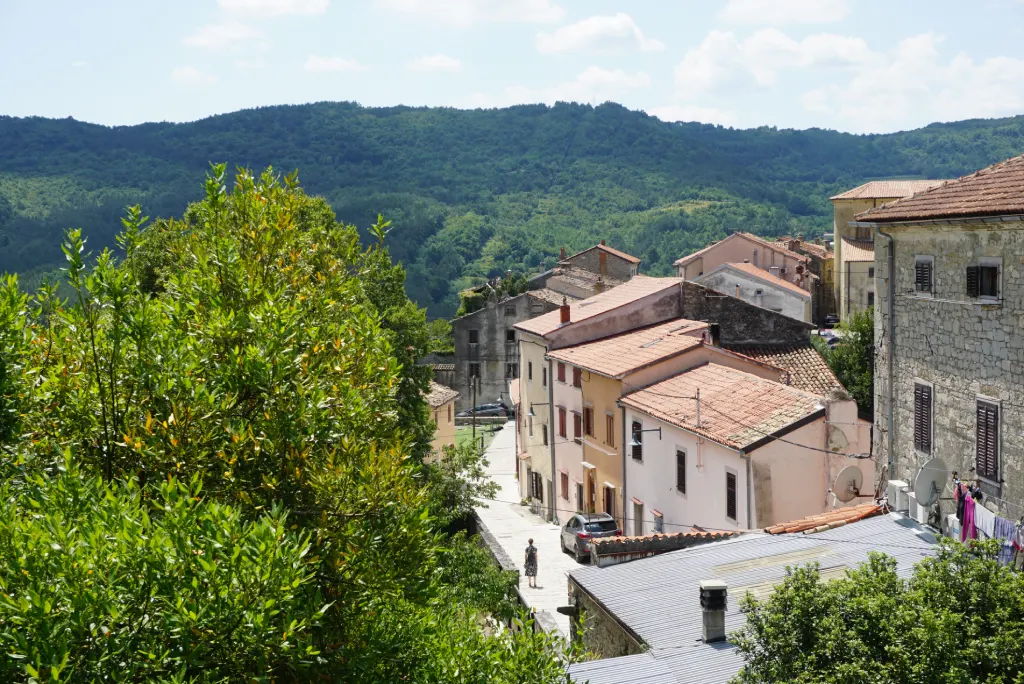
A small town, illuminated by the first rays of the morning sun, reveals a unique reflection of its ancient, millennial past. On the other hand, once one steps in, this town would reveal magnificent views. They stretch across the landscape of northern Istria, bordered by forests, to the magical valley of the river Mirna, which flows constantly, like time passing. Buzet is picturesque but probably best known for the festival “Subotina po starinski”.
Travelling northern Istria: B means Buzet…the tiny town of the medieval heritage
Couples, mountaineers after the Ćićarija hike, photographers and families with children will find a walk through Buzet. Although it was first mentioned in 1102 when the Istrian Marquis Ulrich II. donated to the Patriarchs of Aquileia, the picturesque town’s historical roots rest on the foundations of a prehistoric hillfort. It is considered one of the oldest formations in Istria. During the Bronze Age, the area was inhabited by Illyrian tribes.
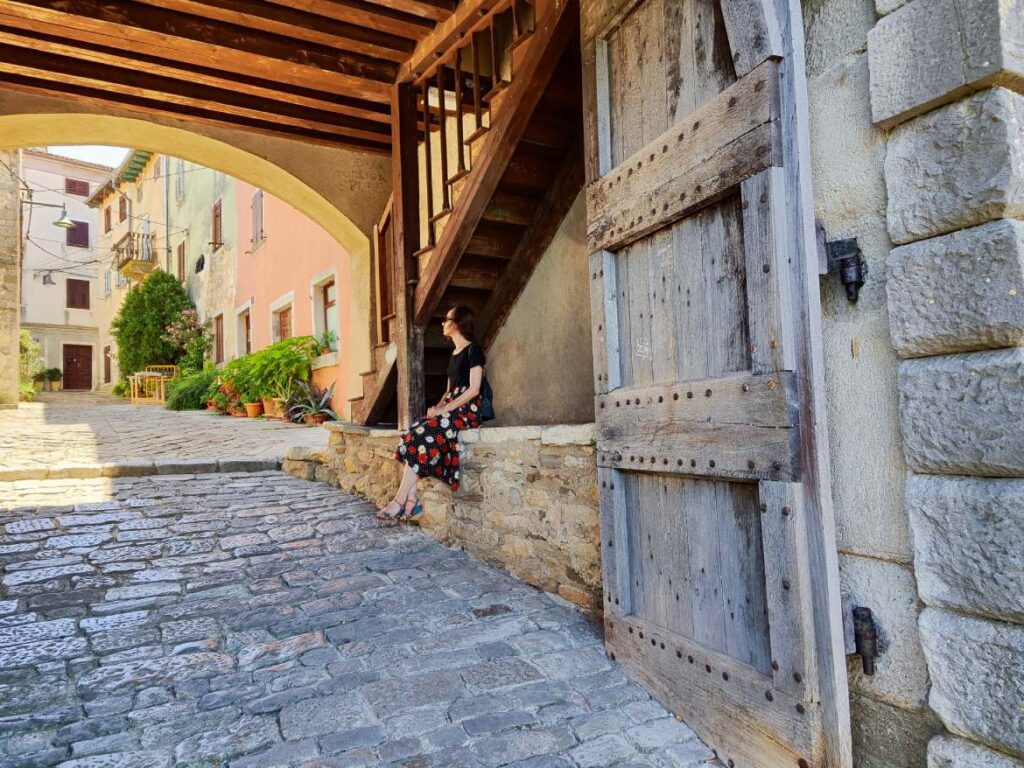
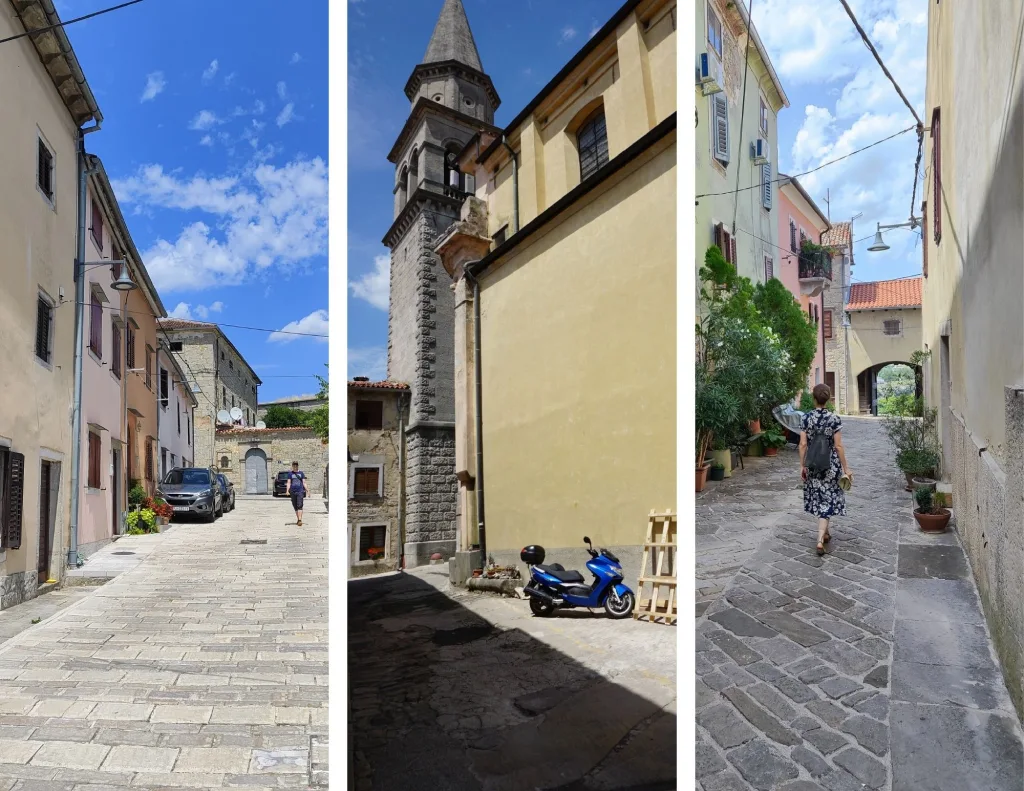
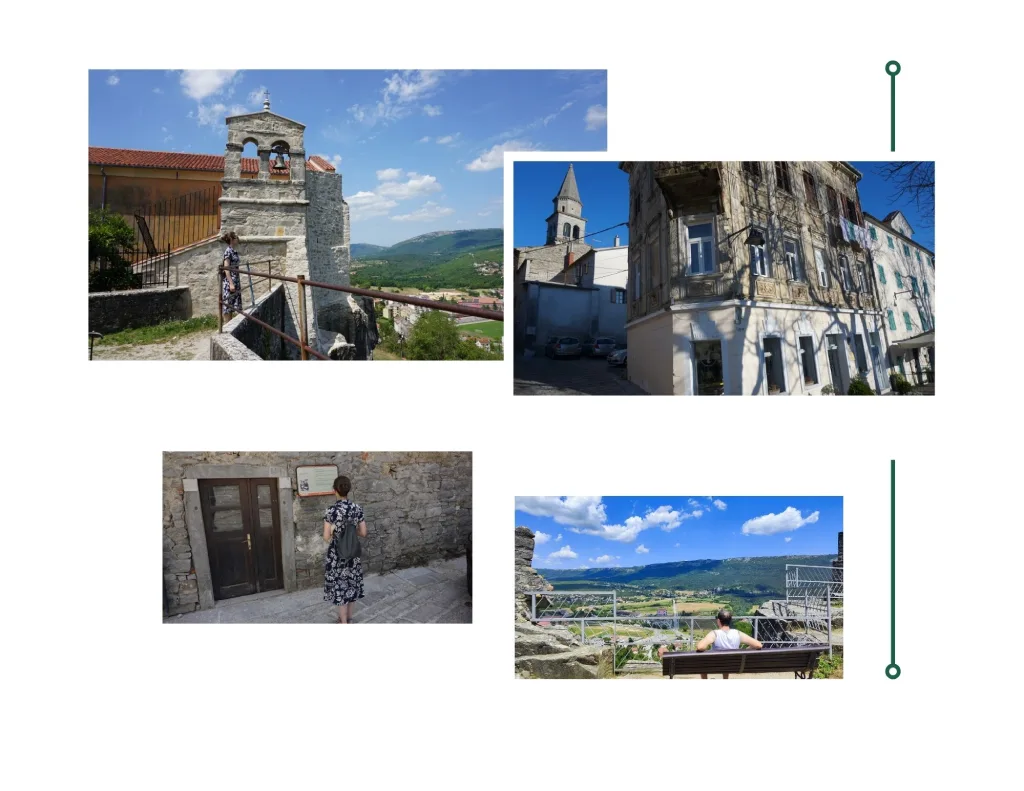
To walk through Buzet is to trace the pattern of endurance. From the Great Gate built under Captain Contarini in 1547 to the shaded arcades of the Small Gate, the town tells a story of craftsmen, merchants and quiet faith. Around the main square rises the Parish Church of the Assumption of Mary, its bell tower watching over the rooftops since the 15th century. Just steps away, the Fonticus once guarded grain for the Republic of Venice; today it guards memories. The Šterna cisterns — Vela and Mala — still collect the sky’s reflection in their stone rims, each with a carved lion and a coat of arms.
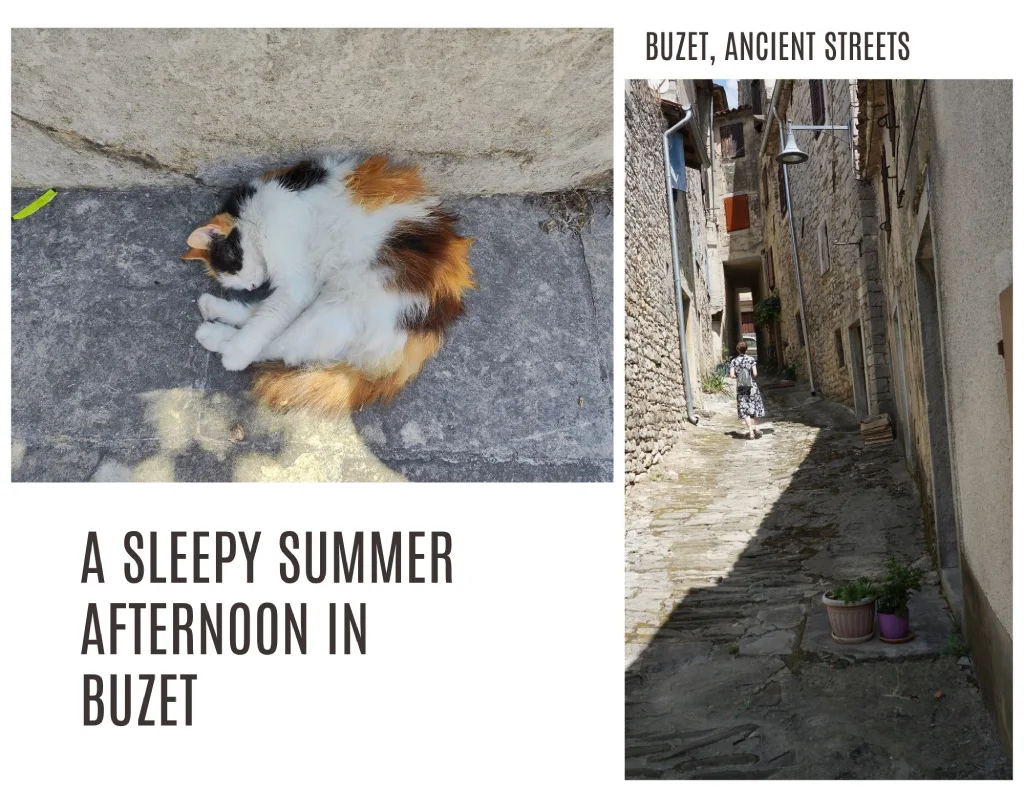
And when the day slows, as it often does here, Buzet opens itself to silence. The view stretches across the Mirna valley to the green shoulders of Ćićarija. From there, paths lead toward Kotli and its waterfalls, or higher up toward Žbevnica — where the wind tastes like freedom. Perhaps that is why the locals say that Buzet isn’t just a place to visit, but one to experience slowly.
The Venetian Republic’s heritage
The picturesque town offers a pleasant climate for visiting year-round, from spring to winter. Even today, we can feel the spirit of the legacy built by the Venetian Republic during the 16th century. After Aquileia handed over Buzet to Venice in 1421, the fortress of Rašpor was destroyed. Until then, it was the seat of the Venetian military governor, until 1797.
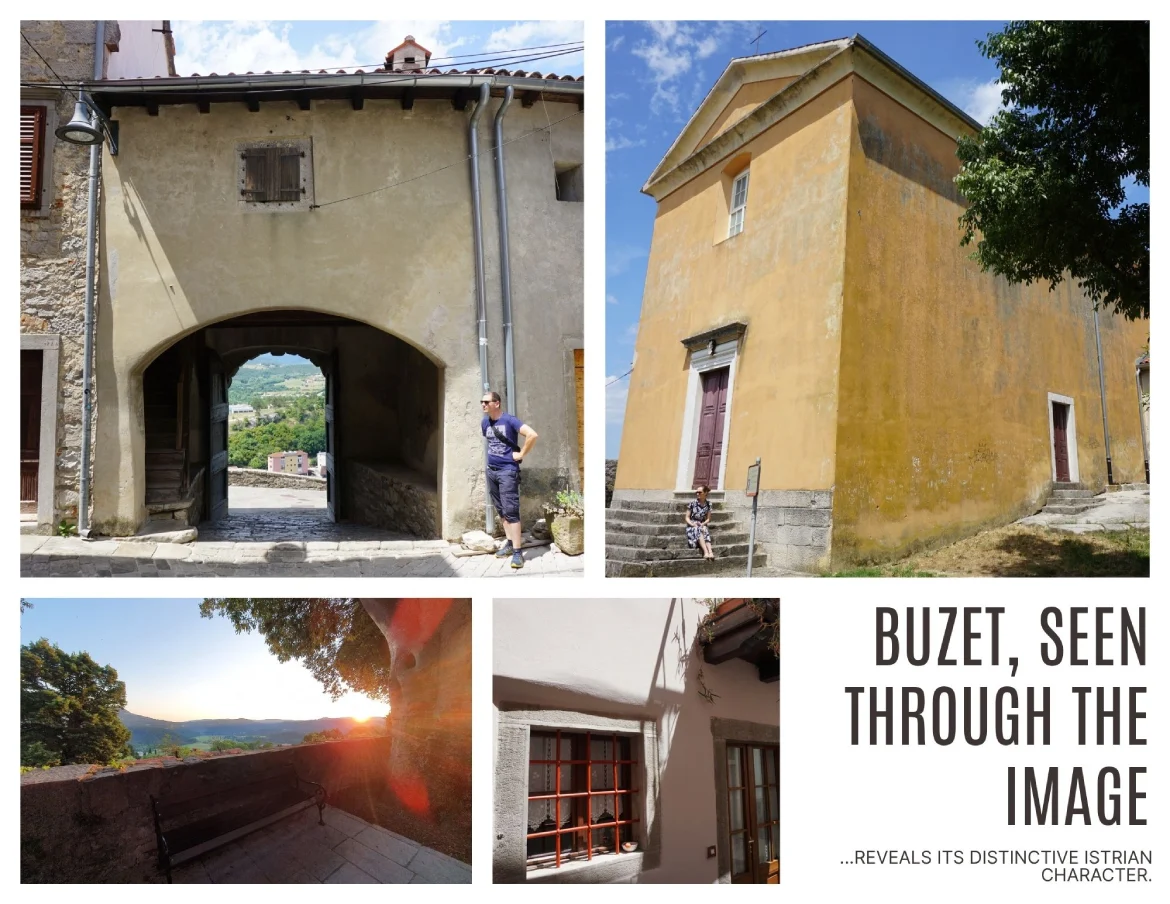
The period of Venice is also the largest part of the view of today’s place. Then crafts and defensive walls are established. And the Venetian Republic is also credited with making Buzet and the city a palace. The Bembo Palace (1728) is a classicist Venetian Baroque; the Flego Palace (16th century), originally a parish court, the stone lion’s mouth created in 1755 is part of the wall of the Bigatto Palace (1639), which today serves as a museum; the De Vertis Palace 1728) has pictures of nobles. And finally, the thing that should not be left out in Buzet are the views that spread towards the green slopes of Ćićarija, as well as the valley of the river Mirna.
Vela and Mala Vrata Gate
As in medieval times, the city surrounded by walls is entered through the Great and Small Gates. Both date from the time of Venice: the “Great Gate ” (1547) was built by Captain Gianmaria Contarini, and the “Little Gate” (1592) bears the coat of arms of Captain Solomon. Once you pass through the Little Gate, the old town will dazzle you with its architecture at first sight. Lovers of small towns will love to walk the mysterious streets of Buzet, under the tall green canopy of trees that hide mysterious stories. One of them will also reveal an event that occurred three centuries ago, before the city’s entrances were formed. Namely, in 1267, Buzet was looted by the Count of Gorizia, Adalbert II.
Vela and Mala Šterna cisterns
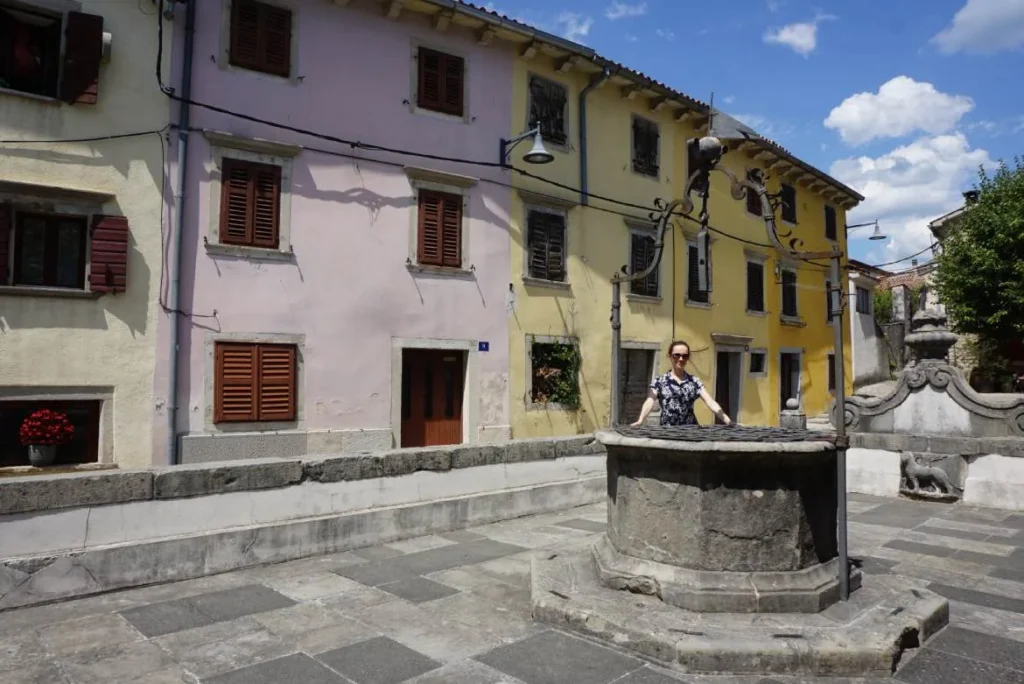
The word “Šterna“, which in the Istrian dialect means “cistern,” is especially important to Buzet. The architectural element was built as part of a separate building next to the houses or villages for water storage. While their inner layer is treated with waterproof lime mortar, sanded brick, quartz sand, and sometimes volcanic elements, the upper part is always photogenic. Buzet overlays of the late Baroque Vela Šterna, a polygonal floor plan from 1788/1789. g. with a fence made of Rococo-style decorations and the coat of arms of Captain Marc ‘Antonio Trevisano. At the foot of the inscription is a Venetian symbol, a relief of a lion. Mala Šterna dates from 1517/1522. g., and renovated in 1563.
Four squares and three streets
The arrangement of the Šotojorti and Lopar promenades (not on Rab), along with some 19th-century classicist houses, forms a small town with four squares that connect three streets. The square with the parish church of the Assumption of Mary carved into the rock is a very unique place. The single-nave building with side chapels is late Palladian and dates from 1779 to 1784. It is the work of F. Dongetti, modelled on the parish church in Umag.
An important liturgical object is the gilded silver sign from 1453. Next to the church is a 15th-century bell tower with a Glagolitic bell carved in 1541. The lapidary in the southwest tower is also interesting. An element that is often found in other Istrian towns is the fonticus. In Buzet, a town was built in 1534. It served as a granary during the Venetian Republic. It was rebuilt in 1587, while in 1900 it was modified for social events.
Bonus: learn this particular thing in Buzet
Let’s say you decided to get more from Buzet. Here we mentioned what Buzet could offer.
Find out Buzet Earring in the city museum Buzet
Earrings found in the tombs of the native Illyrians, the so-called Celts in northern Istria, in the cemetery in Mejica (18 specimens) and Sovinjski Brdo (2 specimens), date from the 7th and 8th centuries. They are today’s symbol of Buzet. Their originals are at the Buzet Homeland Museum, housed in the Bigatto Palace, built in 1639. According to archaeological literature, Buzet earrings were found mainly in early medieval tombs in the Adriatic and the Alps. Find one of them and try it to see which suits your ear best! The museum also houses a historical collection of medieval frescoes and Glagolitic inscriptions, an ethnographic collection, and crafts such as a bakery, a blacksmith shop, and comb making.
Uncover the legend about the name of the city of Buzet
The name Buzet or “Blzet ” was adopted on maps and in standard Croatian. We note that the place is first mentioned by Ptolemy under the name Piquentoi. The Celts called it Piquet, which would mean “capital”. The later Roman name is transformed into Pinguentum – Puente. The existence of this name in Roman times is proved by a plaque in honour of the goddess Augusta, who protected the then city of Pinquentum from the plague, and was built by the people of Buzet in 192 BC. From the roots of Pinguente, residents who have left the city have adopted the surname “Dapinguente”. The same in translation would mean “from Buzet” (Chakavian “Buzet ”). Several similar surnames related to the place are found in Italian, such as Dapiran, Damuggia, Dazara, etc.
What is most interesting is the legend about the city’s origin, a folk tale passed down for generations. During the harsh winter, at the time when Buzet was looted, a boy without shoes on his feet descended to the foot of the town. Seeing him, his peers start mocking him for being a ” bus “, which in translation from the Buzet dialect would mean barefoot. Since then, the semi-deserted town on the hill has been called Bus or Buz, which, in the spirit of the Slavic-Croatian dialect, has been pronounced Buzet throughout history.
Visit Subotina po starinski Feast
With a hundred-year tradition, “Subotina po starinski” (“Saturday of the Old Way”) is held every September, on the first Sunday after the Nativity of the Virgin Mary. It is the largest and most important event in Old Town Buzet. The fair runs all weekend. It starts as early as Friday under the local name “Petkotina” (Friday fair), continues the following day on Saturday, and finishes with the final ceremony on Sunday. Subotina Event will showcase elements from Buzet’s past and demonstrate how Buzet looked in the Middle Ages.
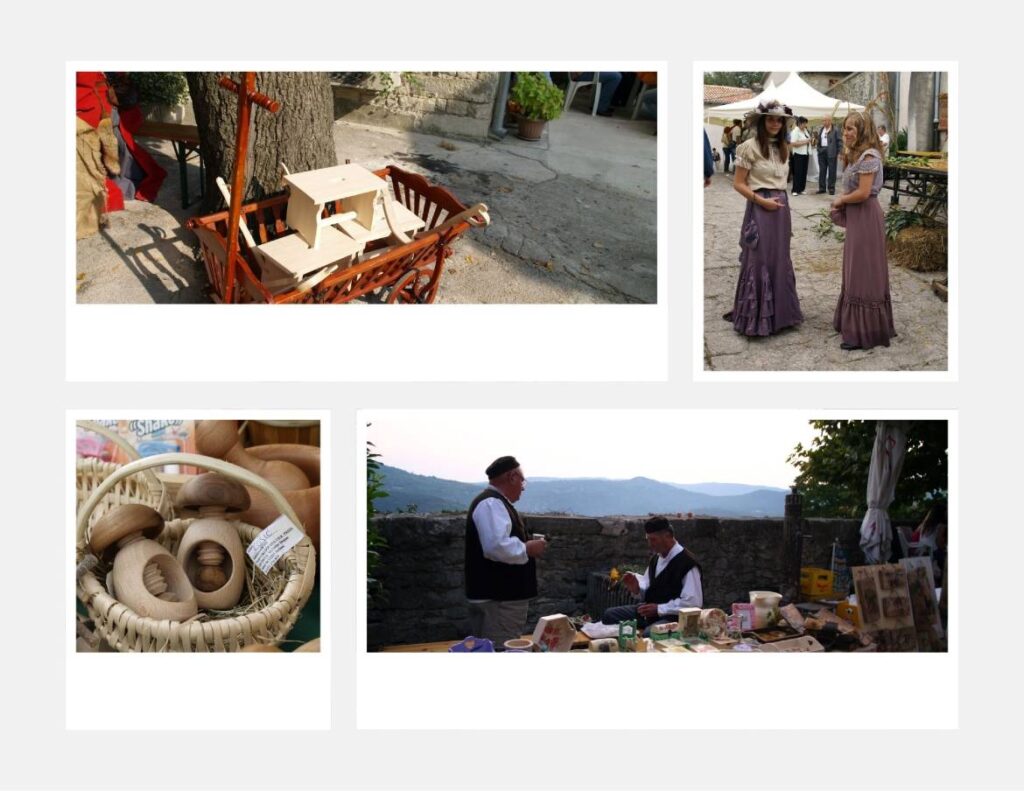
To feel and experience an example of an Istrian town, Buzet of the Middle Ages, is a unique and unforgettable experience. All the old artist workshops that were once the most popular in Buzet are open in rustic style, and the streets are filled with traditional music. Something that is probably the most recognisable is crafted on Buzet streets. Stroll the medieval Buzet and look at how the old town bakery, the old blacksmith shop, the comb shop, and the old town pharmacy once looked. Traditional costumes, as symbols, are characteristic of the fair. If you come to Buzet on that day, you will have the opportunity to step back in medieval times. Take a walk and meet the street performers. Old craftsmen, the traditional street instrumentalists, folk theatre participants, chimney men, firemen, ice cream makers, street entertainers, painters, or street photographers, all will wait for you. Plenty of indigenous Istrian products are sold at the fair.
Outdoor Buzet
There are numerous outdoor activities you can do around Buzet. I couldn’t decide which was my favourite, so I chose something else. Hike the trail of the “Seven waterfalls” under Buzet, or Ćićarija Hills (Zbevnica, Raspadalica ridge) above it, or drive a bicycle to Pietra Pelosa Castle. So you have come to visit the Old Town of Buzet and discovered its historical features. However, you still have time to see its surroundings. Don’t wait too long. Bordered by the mountains of Ćićarija on one side, Kotli and the Mirna River, Buzet is a real paradise for outdoor sports enthusiasts. So, let’s start.
Seven Waterfalls Trail
Yes, we did it once, and every time I finish, I still want to go again. The trail is 14.5 kilometres long, and it takes about 6 hours to walk. You’ll be made along this marvellous and beautiful trail that passes the bridges, lakes and villages alongside the Mirna River. And the most important, you’ll be given near the Seven Waterfalls since the course bears their name. The “Path of 7 waterfalls” is one of the pearls of Buzet and today is considered one of the most beautiful tourist attractions of the area.
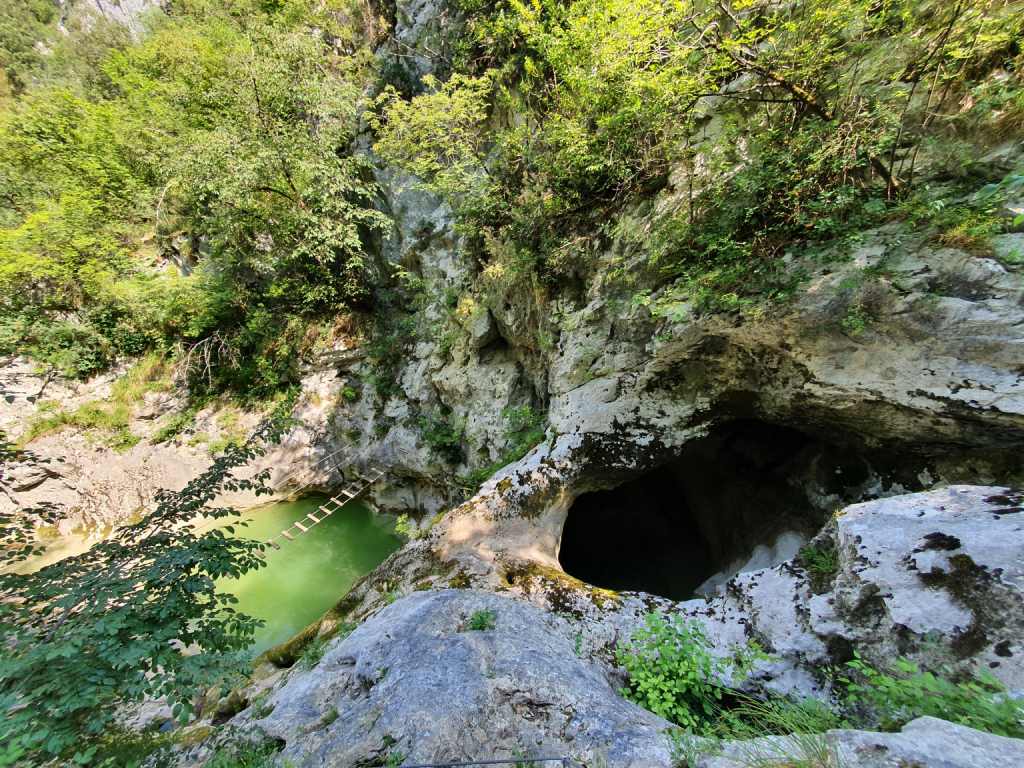
A circular trail starts and ends at the same point in Buzet. However, the recommended control point I recommend is the village of Kotli, since the official trail turns back to Buzet from there. I want lots of fun and relaxation for everyone who decides to make this trip. Although the track is not very difficult, a couple of climbs make it more demanding, incredibly, a few of them. As the entire stock is relatively long, it is classified as a hiking route. Nevertheless, many beginners and tourists will find this course enjoyable. Enjoy the photography of the street.
Žbevnica Summit
Yes, we did it, and not just one. We have been doing it a few times per year for training, since the Trek Goat must be in good health. Žbevnica is considered the westernmost Croatian peak above 1000 meters (1014 m). It is part of the Ćićarija mountain range, situated right above Buzet. Made of limestone on both sides, it has a large, steep, forested slope. However, the lush grass rises above the forest belt. The upper part of the mountain is covered by beautiful green meadows.
You can make a few of the routes to Žbevnica, but I recommend starting in the little village of Brest. You can easily reach Brest by driving directions to Počekaji (train station) from Buzet. Upon arriving in Počekaji, continue forward on the elevated mountain road. After some 10 minutes of the drive, you’ll reach Brest. Leave a vehicle in the little village of Brest and start the hiking trail here. There is Žbevnica Mountain Hut above the town of Brest. It is at an elevation of 851 meters above sea level. The mountain affiliation “HPD Planik” members fromUmag run the hut. During the summer, it should be open every weekend. From here, you’ll need about 45 minutes to reach the summit of Žbevnica.
The view from Žbevnica is lovely. You’ll see Buzet and the central part of Istria on one hand. Simultaneously, on a sunny day in the northern region, Koper harbour will be visible.
Pietra Pelosa Castle
Yes, we did it. The Pietrapelosa Castle, located amidst dense vegetation on an elevation between Buzet and Livade, is often called only the Castle or Kostel. It might be an attractive location for mountain bike lovers, starting the trail in Buzet. The natural way through forests and meadows in Buzet’s surroundings leads to the 10th-century castle. It’s assumed the court changed hands several times throughout history, including under the Venetian Empire, but it has never been destroyed.
Find more about Buzet Trails
Sure, there are still numerous trails around Buzet, including the Roč- Raspadilica route and the cycle ride from Buzet to Istarske Toplice, an Istrian spa. After spending the whole day exploring northern Istria, sit down in some tavern and try some of the Buzet specialities with the truffles. Nothing else than pizza with sausages and truffles can be served, I recommend. Take a look at Buzet’s surroundings from its hill; they look beautiful and, at first glance, almost undiscovered, don’t they?
- Climbing tip. Though the Ćićarija mountain range may not seem very high or famous, it offers various activities such as climbing. There are a few climbing spots nearby Buzet and Roč that will appeal to climbers. One of the lovely climbing spots is a rock in the canyon valley of Vela Draga. The canyon is made of marvellous karst geomorphological natural monuments.
- Paragliding. There is, right above Buzet, Raspadalica, the favourite spot for paragliders. Paraglider? Enjoy in Buzet from above!
Surrounding Buzet daily tours
Though we already mentioned some of the outdoor ideas, we still listed a few spots that might be interesting while in Buzet.
Head to Salež and see the Pillar of Shame
Salež is a small village situated between Zrenj and Motovun. The place is known for containing the only preserved pillar of shame in the shape of a human figure. The post made of white stone is also called “Berlin”, after the four-seat carriage known as Berlina, which once drove between Berlin and Paris. According to legend, it was used to publicly humiliate offenders. Here’s how to get to Salež from Buzet:
- By Car. Salež is about 8,5 kilometres from Buzet and takes 15 minutes to drive.
Admire Hum – the Smallest Town in the World
Besides being famous as the smallest place in the world, Hum’s cobblestone streets, with views extending to the central Istrian landscapes, will offer a unique experience for everyone. There are only two principal streets, but everyone seeking inspiration will find something interesting. Here’s how to get toHum from Buzet:
By Car: Hum is 17 kilometres from Buzet and a 15-minute drive.
Visit Vipava Valley
Situated in Slovenia, the beautiful valley of Vipava (Vipavska Dolina) is full of golden greenery treasures. See the picturesque places, such as Ajdovščina, or head up to some of the mountains above Vipava (see details in our trail section). During the warm summer days when it appears too hot, the Nanos, Gora and Trnovo Plateaus offer plenty of refreshment, alongside the crystal rivers and springs. There are beautiful huts, such as Sviščaki and Vojkova koča Na Nanosu, which are reachable by car. Getting to Vipava Valley from Buzet:
- By car: There are about 75 kilometres from Buzet to the Vipava valley, and the drive time lasts about one and a half hours.
Seek refreshment in Kotli
One of the most beautiful and valuable rural architectural wholes will reveal its origin, yards, terraces, fireplaces, chimneys and mills. It is situated right above the Mirna River that tumbles through the village. Everyone seeking inspiration from a blend of nature and rural architecture will enjoy a tour to Kotli, which was already mentioned in the activities (see above: 7 waterfalls trail). Look at the Mirna River, which creates waterfalls over the rocks and forms hollow pools carved into the stone, after which the village got its name (Kotli). Getting to Kotli from Buzet:
Getting by car. It’s a 15-kilometre drive from Kotli to Buzet, about 15 minutes.
Buzet tips
📍 Where it lies: Northern Istria, above the Mirna River valley, at the foot of Ćićarija.
🏰 What to see: Great and Small Gates, Parish Church of the Assumption of Mary, Fonticus granary, Vela and Mala Šterna cisterns, Bembo and Flego Palaces.
🍄 Hidden treasures: Buzet Homeland Museum with the ancient “Buzet Earrings”, Pietrapelosa Castle, and the scenic village of Kotli.
🚶 Wander: The cobbled streets of the old town, the panoramic viewpoints, and the trail of Seven Waterfalls below the hill.
🌲 Outdoor tip: Hike Žbevnica or glide from Raspadalica — Buzet, an outdoor paradise wrapped in silence.
🎭 Don’t miss: Subotina po starinski — the old-style fair that brings medieval Buzet back to life each September.
🅿️ Practical: 90 km from Pula, 75 km from Rijeka, 15 km to Hum. Parking below the old town; pedestrian access only inside the walls.
🐐Trek Goat tip: Stay until dusk — when fog rises from the valley, and the first lights flicker on the hill, Buzet feels like it’s floating between worlds. Let’s visit in September, when “Subotina po starinski” fills the streets with the scent of truffles and bread, and the whole town dresses in history. For one weekend, time folds — blacksmiths work their forges, musicians play on corners, and laughter mingles with the rhythm of old songs. It’s more than a festival. It’s a reminder that slowness, here, is not a luxury — it’s a way of life.
🚗Car and parking. Buzet is very well served by land roads. There are several parking areas under the hilltop and one above the town entrance. We suggest parking at the hilltop.