
As dusk settles over Vodnjan, lime and dust scent narrow lanes, mingling with golden air. Vodnjan, ten kilometres north of Pula in southwest Istria, is a colourful town inviting quiet discoveries.
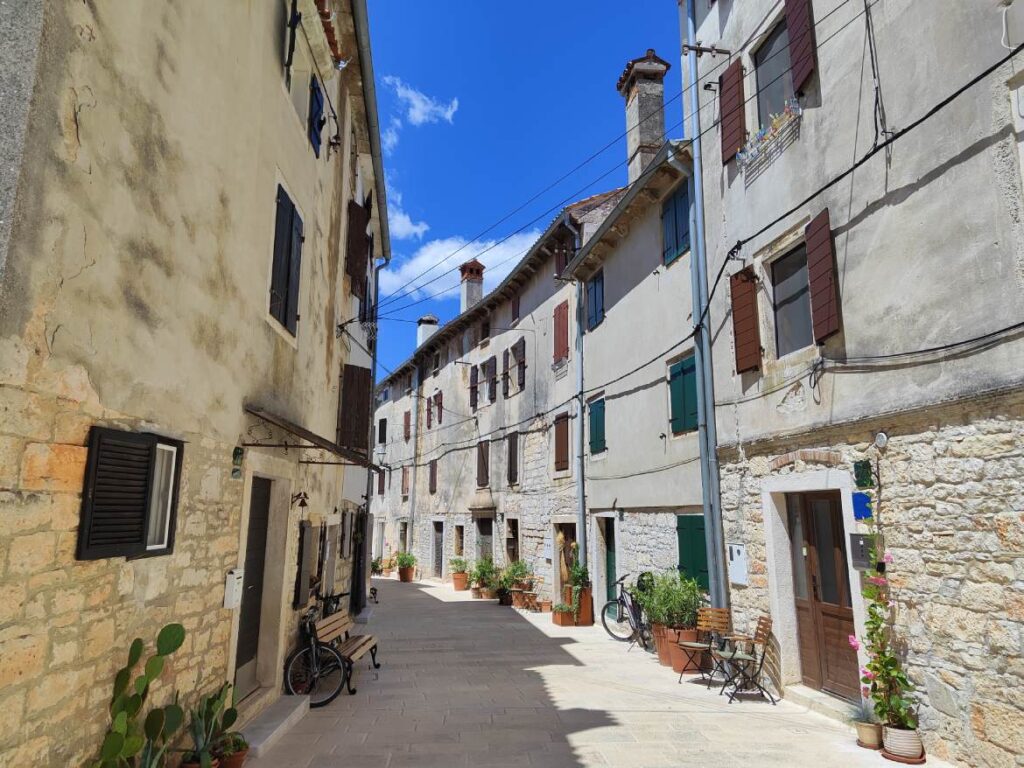
Some towns are like open books; others are more like whispers caught between the stones. Vodnjan belongs to the latter. Vodnjan may not rival Istria’s hilltop towns, but linger in its lanes to feel its calm, ancient pulse. The town, a whisper between stones, reveals itself slowly above southern Istrian fields. Lime and dust fill the air, façades glow with sun-faded colours, and footsteps echo through time.
Why should you visit Vodnjan?
Vodnjan does not impress; it invites. Beauty lies in endurance: patient stones, quiet sunsets, stories at dusk. Pause below an archway as a stone lion guards Trgovačka Street. Spot the lion at sunset as shadows sharpen its grin. Sit at Narodni trg and watch the afternoon fade past painted façades; the square is a gentle stage for daily life. Golden light enhances the houses toward the Bettica Palace. Wander among dry-stone huts—kažuni—beyond old city walls, silent witnesses to lives shaped by time and craft. This is a place for travellers who listen, who find meaning where stone meets sky and time meets stillness.
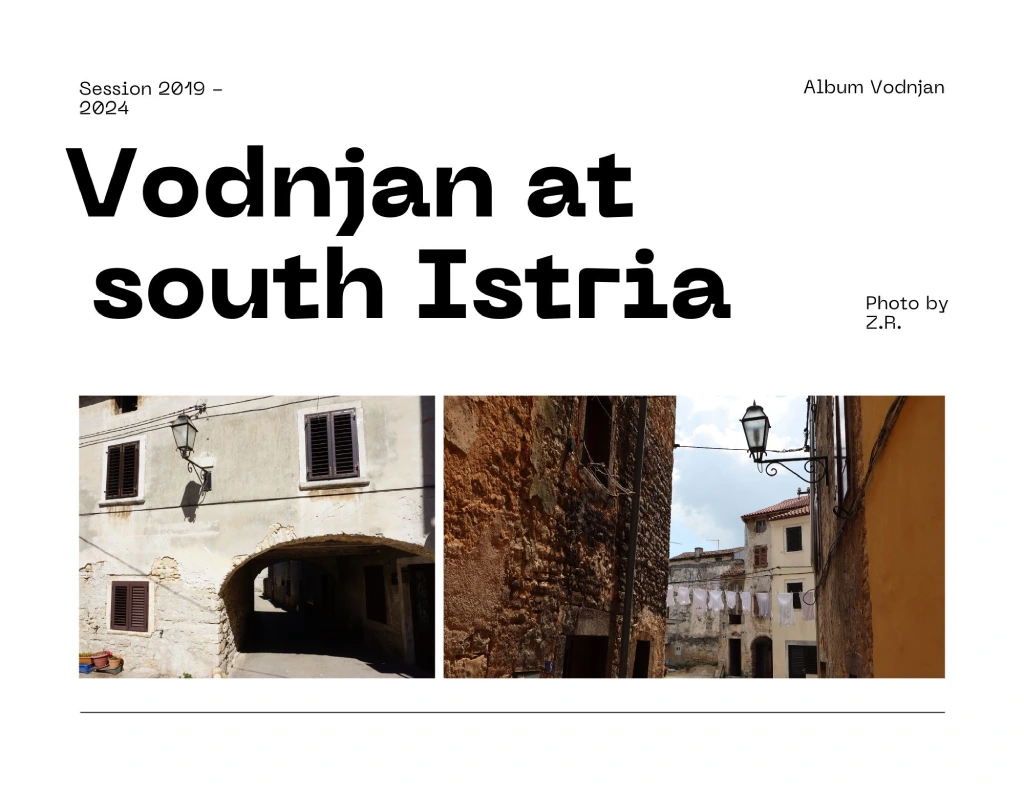
Unlike many Istrian towns built high on hills, Vodnjan, much like neighbouring Svetvinčenat, rests on a plateau with shallow karst depressions called vales. Linger here, and the drama may feel more muted than in the hilltop towns of central Istria, but a closer look reveals a rich tapestry of preserved medieval treasures. Beyond its tranquil atmosphere, the town holds measurable superlatives that set it apart. The parish church of St Blaise is the largest in Istria and is crowned by the peninsula’s tallest bell tower; Trgovačka Street is the longest street in any Istrian town. Beyond these lanes, the land whispers with dry-stone shelters called kažuni, and the air is marked by the legacy of olive growing. One of the region’s oldest olive traditions thrives here, and tasting the oil becomes part of Vodnjan’s story.
To truly experience Vodnjan, focus on its main appeal: the enduring sense of continuity in daily life. Seek out its less obvious historical traces. The town’s medieval plan, with its central square, long main street, and side lanes shaped by centuries of architecture, does more than preserve ancient walls—it keeps the connections between past and present alive in daily rhythms. For heritage lovers, this layout offers a living link to history, allowing you to trace the footsteps of countless generations and feel part of a community shaped by time, not just by monuments.
Vodnjan in history
Though today part of southern Istria, Vodnjan has always stood at a crossroads. It straddles both geographical and cultural boundaries between the West and the East. Imagine: Roman carts rattling along dust-laden paths toward the sunset in the west. To the south, Venetian galleys wait, their sails stretched against the Adriatic breeze. Vodnjan is ten kilometres north of Pula and 135 metres above sea level. It sits at the intersection of ancient and modern paths. If you drive from Fažana to Rakalj, you will likely pass by Vodnjan. This strategic location has influenced its story for centuries.
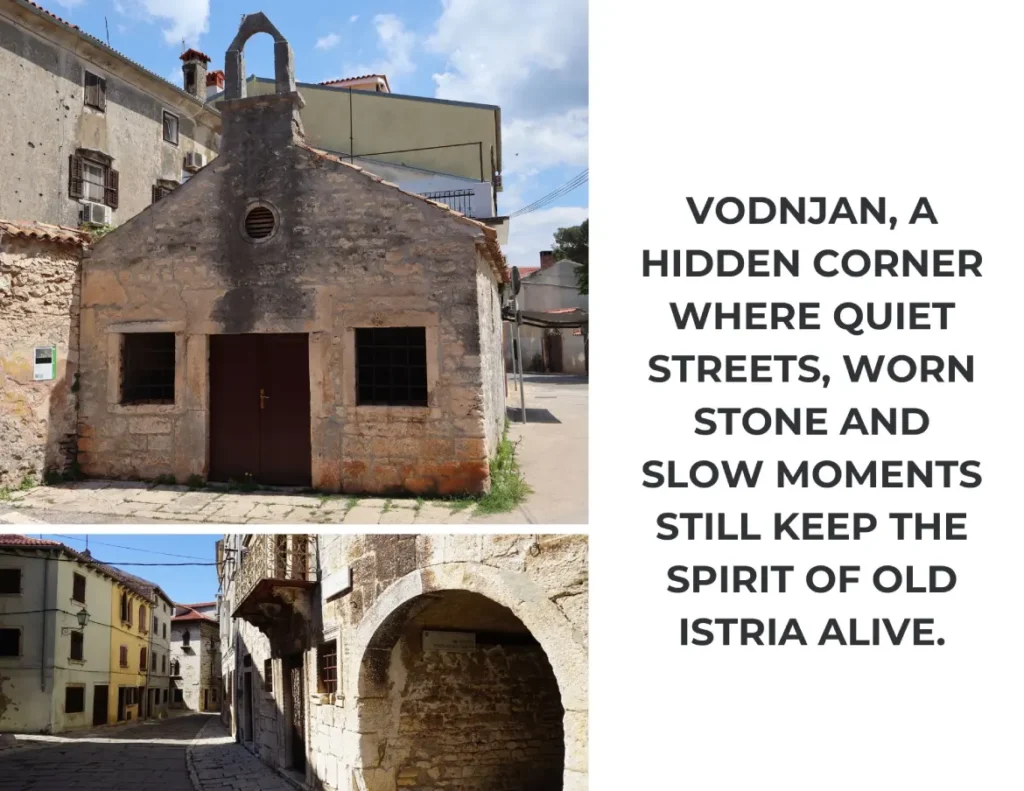
Vodnjan began as a small settlement on the site of an original Illyrian and later Roman community. The first written mention dates back to 1150. You might be surprised to learn that until fairly recently, Vodnjan was one of the most prominent towns in Istria—larger than Pula for much of the 16th century. Its population grew to around 1,500 inhabitants at a time when Pula was nearly deserted due to epidemics and misfortunes.
Vodnjan’s fortunes changed when the Austro-Hungarian Empire invested heavily in Pula, making it the region’s biggest military port. The bishops of Pula sought refuge in Vodnjan, which may explain why the town avoided devastating epidemics. At the peak of its prominence, a Venetian official wrote, “Dignano is a flourishing city, abounding in fine houses and lively commerce, its streets echoing with the voices of craftsmen and merchants.” Such firsthand impressions invite us to see Vodnjan not only through historical records but through the eyes of those who once walked its streets.
The heart of the town likely formed on the foundations of a prehistoric hillfort. At a crucial border junction, it evolved into a community of exiled Roman legionaries who took up agriculture. After the fall of the Western Roman Empire, the Ostrogoths and Byzantines ruled the region, during which Vodnjan and its surroundings saw economic and cultural growth, including the construction of numerous castles and churches.
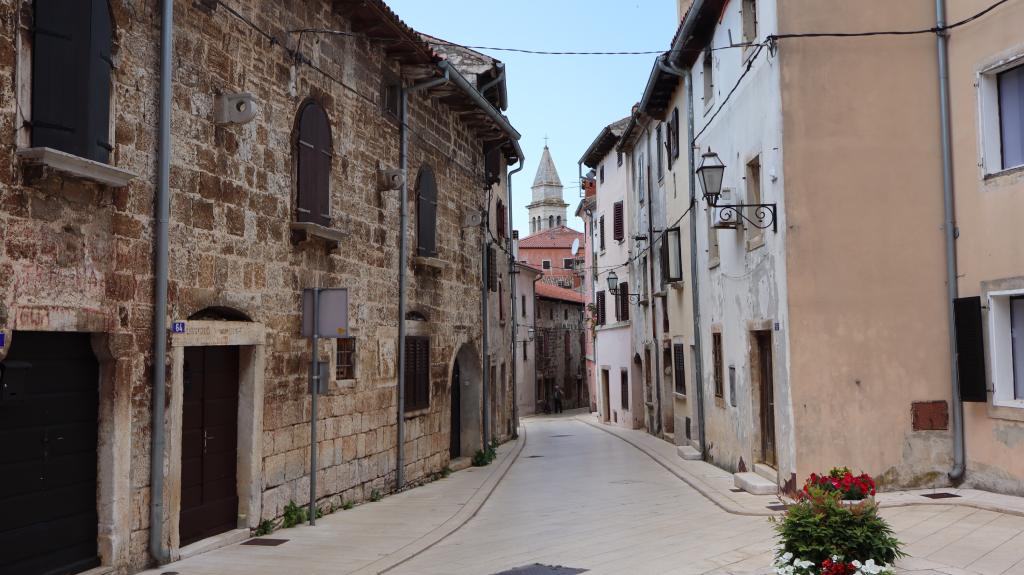
In 751, Vodnjan was destroyed by the Lombards, along with many other settlements in feudal Istria. By the 12th century, records refer to it as Antoninianus. Later, in the 13th and 14th centuries, the town was identified as Adignano—first as a terra (estate), then as Castello (fortified town), and finally as Torre (tower). During the 13th century, the fortified city of Attinianus (also known as Attinianum) occupied the present-day town square and surrounding area. Its defensive walls had three gates, and by 1338 the settlement was known as Turris Adignanum.
Research by Ivetac notes that the name Adignano appeared in 1194 during a court hearing. The Croatian version appeared in the 13th century. Italian Dignano and Croatian Vodnjan gradually replaced earlier names. Vodnjan has remained since the 14th century. This naming history reveals its evolution: from Illyrians to Romans, to bishops seeking refuge, to Venetian praise, to fortified walls, and now medieval streets. Each corner and plaza holds a chapter of this story.
Things to do in Vodnjan
Vodnjan’s cobblestone streets lead past about fifteen churches, echoing the town’s deep-rooted past. At the heart of this sacred landscape is a trio of spiritual monuments, all within easy reach of each other. Begin your wandering at the renowned St. Blaise church near the city centre, continue to the Church of Our Lady of Mount Carmel, and finish at the Church of St. Jacob—each within a ten-minute walk. These monuments together form Vodnjan’s Sacred Core, offering a window into the enduring spirit and faith that have shaped the town over the centuries.
Enjoy the colours of The Old Town and visit People’s Square (Narodni Trg)
Arriving in Vodnjan, walk the longest street to Narodni (People’s) Square, the lively heart of town. Brightly coloured homes frame the square, where the stately Bracciano Palace, a 17th-century Venetian loggia, anchors the scene. Over the centuries, this palace transformed—serving as a fortress, archive, theatre, courthouse, and, finally, a residence—all adding layers to the town’s living history.
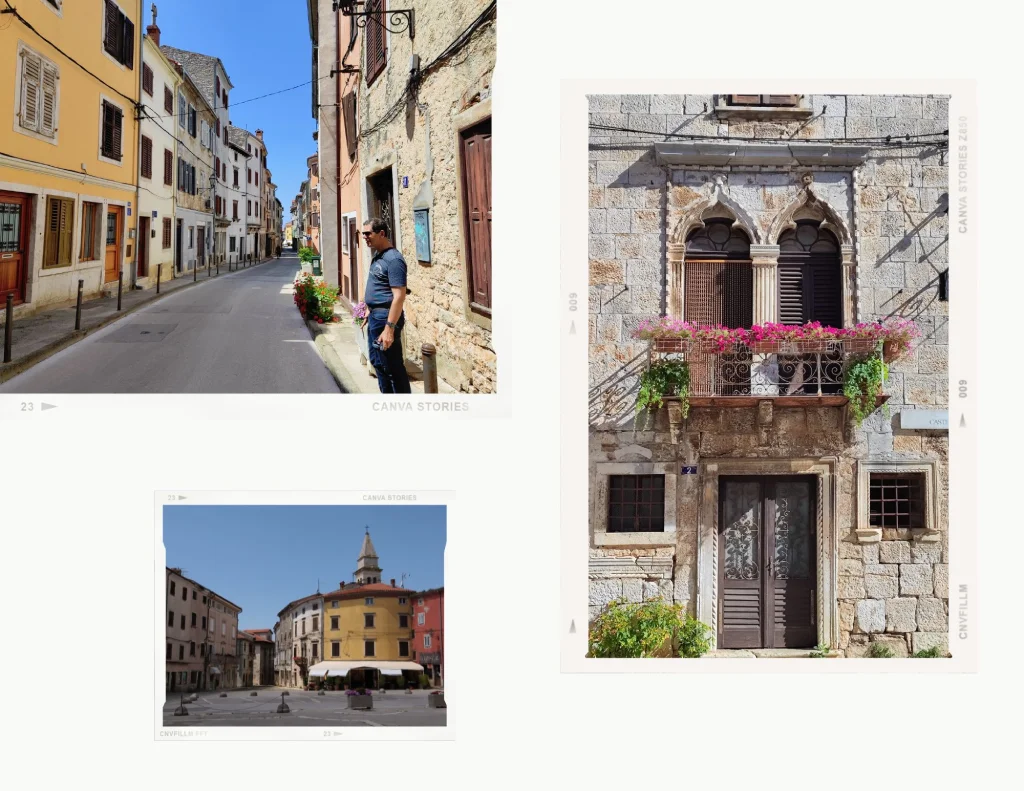
Take in the ornate architectural patterns here to appreciate Vodnjan’s artistic features. Pause at Narodni Square, relax with your preferred drink, and absorb the Mediterranean spirit of creativity. As you sit, let the bell tower’s clang ring through the air while the rich aroma of espresso drifts by, mingling with laughter and the gentle rhythms of daily life. Strolling these colourful streets, visitors often find inspiration in the lively charm and layers of history.
See theNeo-Gothic Town Palace
Also located in Narodni Square, the eye-catching Neo-Gothic Town Palace, built in 1911, is easily recognised by its bold red facade. This architectural landmark stands out among Vodnjan’s main attractions and is a popular feature for visitors to see and photograph.
Look at the St. Blase Church (Sveti Blaž)
St. Blaise Church (Sveti Blaž) is Vodnjan’s and Istria’s largest church, situated in the centre of town. Built in the 18th century on older foundations, it stands out for its scale and local history—funded through community contribution. Its design was inspired by Venice’s San Pietro in Castello.
You shouldn’t miss a look at the building’s facade, adorned with five life-size statues. St. Blaise is in the middle, with St. Lovro and St. Peter to his right, while St. Quirinus and St. Paul are painted on the left. The statues were carved by Andrea and Giovanni, Veneri Trevisano, a weaver, upholsterer, self-taught musician and painter. Local stories tell how Andrea, while working long hours on the figures, would sometimes pause to press his calloused fingers against the stone and hum folk melodies, blending the rhythm of his chisel with the distant sounds of the square. It is said that he tried to capture something of the living townsfolk in each saint’s gesture, so that the façade would not only honour the holy but also reflect the quiet pride of Vodnjan’s own people.
See the Vodnjan Mummies and Sacral Art collection
The Sacral Art Collection houses over 730 exhibits from the 4th to the 19th centuries. These include stone reliefs, 15 paintings and sculptures, about 100 precious reliquaries, and many books, manuscripts, jewellery, and vestments. The collection presents a clear picture of the Middle Ages. It is housed in St. Blase Church, as mentioned above.
Additionally, the St. Blasé church houses a valuable collection of sacred art. Recently, it became famous for housing 370 relics of 250 saints, known as the ‘Vodnjan Mummies,’ preserved behind the altar. Some believe these saints’ bodies have healing powers, drawing around 15,000 visitors each year. Few places let you stand inches from centuries-old saints—a rare encounter that lingers long after you leave.
Take a photo of the bell tower
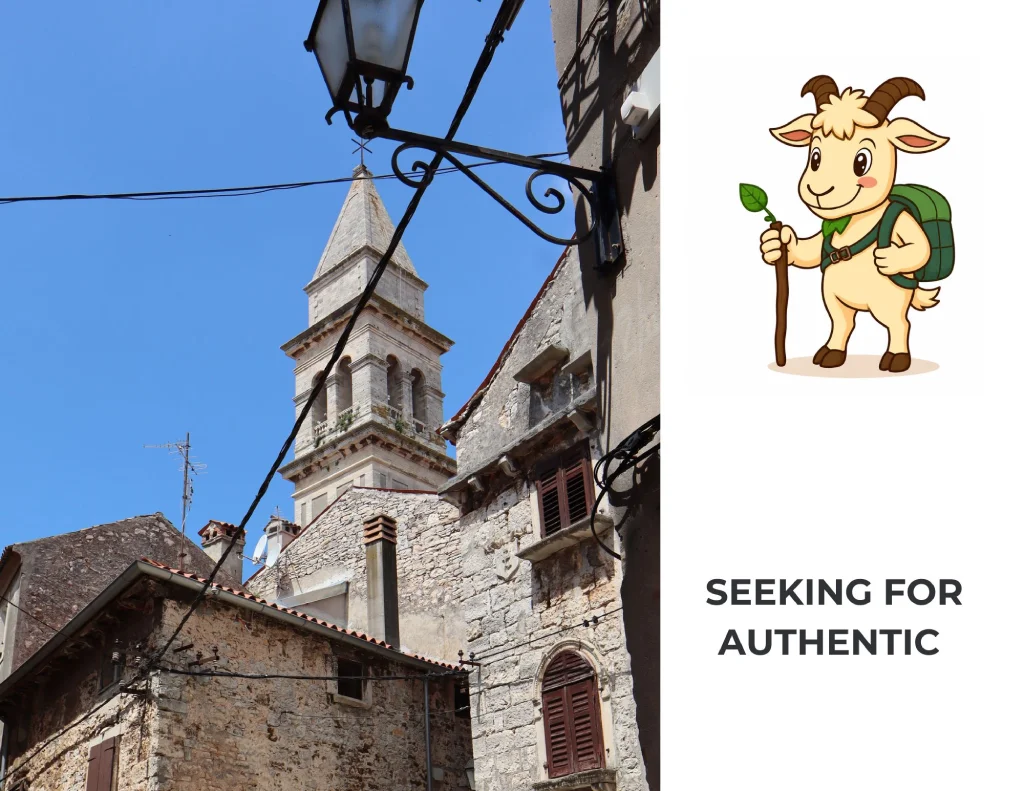
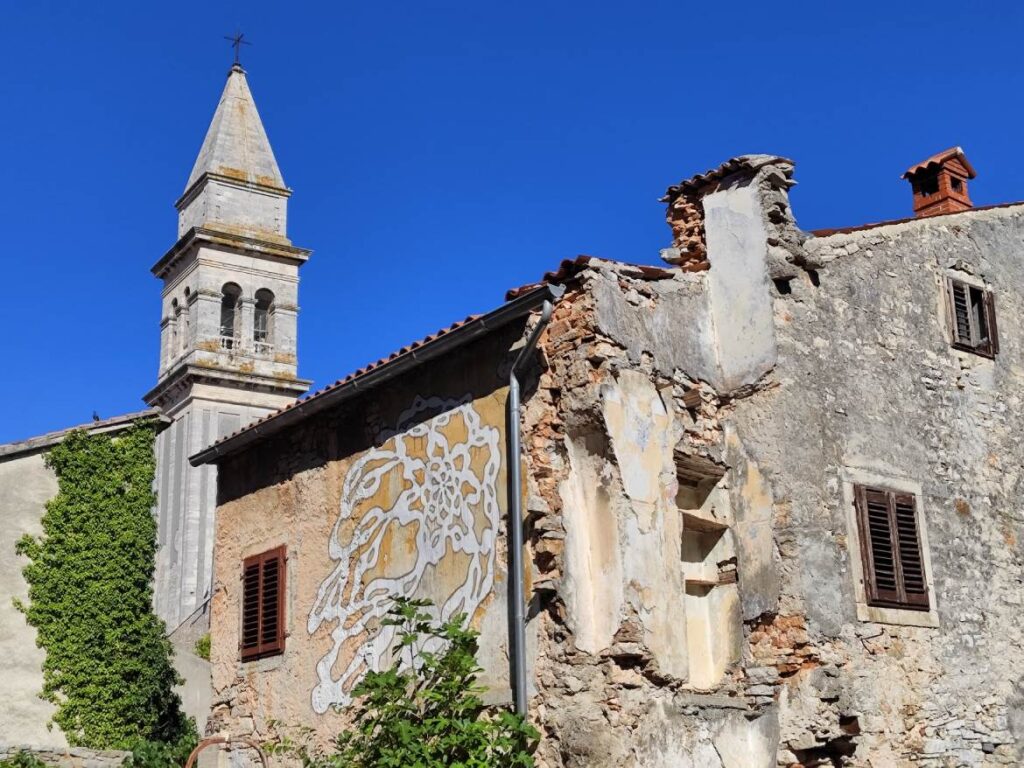
Vodnjan’s 63-metre-high bell tower, the tallest in Istria, rises next to St. Blaise Church. An essential landmark and popular photo subject, its impressive Venetian-inspired architecture makes it one of Vodnjan’s key visual highlights.
Make a walk alongside the Bettica Palace.
Be sure to see and photograph the magnificent Bettica Palace, a 14th-century Gothic-Renaissance residence in the old town. As one of Vodnjan’s key historic attractions, its architecture and historical significance make it a notable highlight for visitors.
Look at the Church of the Holy Cross
Next to the bus stop at the beginning of “Istarska Street” is the Church of the Holy Cross, dating back to 1468. It was the seat of the Brotherhood of Whippers (flagellants). This church once served as a shelter where Pula bishops stayed overnight during their visits to Vodnjan. There stood his horses, carriage, and servants.
Admire the tiny church of St. Jacob (Jakov)
While you walk alongside the narrow alley that stretches to the right of the main street leading to the People’s Square (Narodni Trg), you’ll mention the tiny church of St. Jacob (Jakov). The church, dating back to the 9th century, is considered the peace between Pula and Vodnjan. This is why both places were signed by a council right in this church in 1393. In 1492, the people of Vodnjan passed the city statute.
Look for the art in “Apoteka”(Pharmacy)
Established in 2013 at an initiative by Matija Debeljuh (visual and film artist) and Branka Bencic (curator), this “Space for Contemporary Art” was founded in the old town of Vodnjan (Istra, Croatia), in the premises of an abandoned pharmacy. It is a flexible concept that works in the space of “in-between” – different positions and ideas.
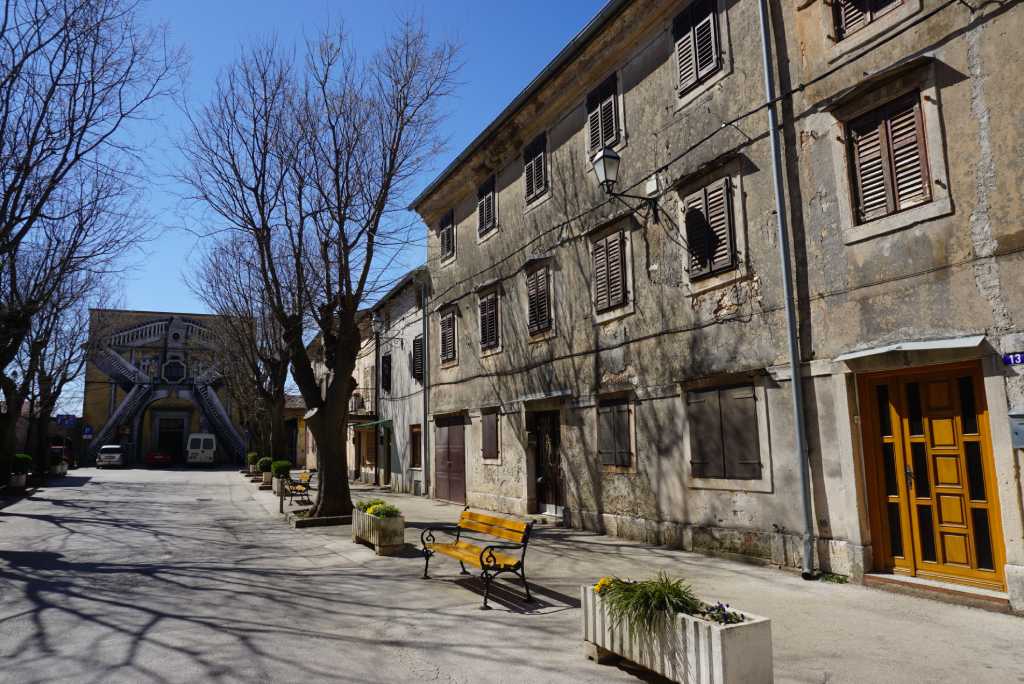
The place is living the culture and serves to be for several purposes: a gallery,an office, an active agent, focusing on presentation, exhibiting, research space, development, understanding, promotion, communication, networking in the field of contemporary artistic practices, emerging artists, curating, innovative and creative culture.
Stop by the Church of Our Lady of Mount Carmel
The church is located in the very historic centre of the town, in the lower part of the oldest, longest and best-known streets in Vodnjan, “Trgovačka Street”, right after turning into Contrada del asì (vinegar alley).
The church, dating back to 1630, was built with a ground plan in the shape of a “Latin cross”. It is specific to have an impressive facade of finely dressed stone, with a rosette bearing the coat of arms of podestà Francesco Barbaro. The church interior is unique, with a wooden gilt altar (1651), a statue of St. Sebastian, a painting of Our Lady of Mount Carmel and St. Simon Stock, a stucco-coffered ceiling, painted wall ornaments, an organ, and a choir gallery above the main entrance. Though it is tiny, a single bell-tower dominates the church and was built as part of it.
Visit rural estates and taste olive oil
You can find the rural estatesnearby Vodnjan. The buildings, which often included the landowner’s or a farmhand’s house, are still called “Stancija” by locals, as they were. A typical building in Istria today, recognised as an agricultural tourism point, was mostly built for agricultural production. Once, it was served to stay overnight or stay in it during the period while cattle or sheep were being kept. Besides offering accommodation services, many of them provide a variety of traditional or standard menu food today.
Vodnjan events
Like the other central Istria places, Vodnjan has its events, but the most famous one is held in August.
Bumbarska Fešta Feast
This most recognised event in Vodnjan and its surroundings, “Bumbarska Fešta or La Festa Dei Bumbari”, has been held every year in middle August. To feel, an example of an Istrian town in the traditional style, Vodnjan, would be a unique and unforgettable experience. In that time, Vodnjan is filled with artist workshops, and you’ll find the outdoor shops on the streets offering olive oil, wines and other traditional products.
The most liveable is, without a doubt, the central square filled by traditional music, and it is probably the most recognisable symbol of the feast.
St. Blase feast (Sveti Blaž)
This sacerdotal pilgrimage is held on St. Blaise’s Day (03rd February), when Vodnjan celebrates its patron saint.
Be active in Vodnjan
Vodnjan is not just as attractive as it is. Since its surroundings are natural, with arable fields, pastures, and forests, one can still enjoy the last traces of nature. Let the spirit of adventure guide you as you chase down the history etched into old buildings, Roman roads, cisterns, wells, Roman villas, oil presses, and churches. This is more than sightseeing; it’s an invitation to actively participate in the stories that these landscapes tell. Vodnjan is an excellent place for outdoor lovers.
Trek Goat cycling local tip: Vodnjan – Rakalj
An excellent area of southwest Istria is full of trails through green landscapes, boasting more than 120 km of marked bike trails, most of them in and around Barbariga. Are you drawn to coast-hugging ease, gliding along gentle roads with shimmering sea views? Or would you rather test yourself on karst-ridge climbs that wind past ancient stone walls and wide open fields? Starting in Vodnjan, you can choose your own adventure: this trail system lets you tailor your ride to your mood and muscles. The featured route, a combination of road and macadam, takes you through inspiring scenery and the tiny villages of Prodol and Krnica, with the final point at St Agnes Church in picturesque Rakalj. Whether you crave a relaxed ride or a challenge, this is a ride you should try while in Vodnjan.
Trek Goat local hiking local tip: Kažuni & suhozidi trail (pasture and dry walls trail)
You can make it over the numerous pathways that surround the place. This trail takes you through the Istrian countryside, passing traditional round stone buildings known locally as “Kažun” and the characteristic dry stone walls – “Suhozidi”, which once marked the borders of pastures. The route offers a wonderful way to experience the region’s green landscapes and learn about local traditions. The tour begins in Vodnjan, following the main road toward the roundabout. Turn left and continue along the road toward the railway station, then cross the main street. Shortly after, you’ll enter the scenic countryside, where you can admire several Kažun houses (pasture house) structures and the dry stone walls (suhozid) that once divided the pastures.
Continue toward Salvela, Mednjan, and Batvači. Just before the village of Batvači, look for signs to St. Fosca Church; this is also an area where more Kažun houses can be seen. From there, follow the signs toward Peroj, from which it is easy to return to Vodnjan. For those feeling adventurous, you can extend the route to Fažana, a small coastal town mentioned in the excursion section below. The trail is suitable for both walking and biking. Total distance: 20 km.
Daily tours in the Vodnjan surroundings
Due to its geological position between the eastern part of Istria and its west or south coast, Vodnjan is an excellent starting point for any kind of sightseeing. Though maybe tiny at a glance, it offers so many various things you can do in it. Besides the green landscapes, it’s bordered by other small towns or tourist destinations, such as Rovinj or Pula, which are not far away. Here we prepared just a few of the ideas.
St. Fosca Church
One of the well-known churches in the Vodnjan surroundings is located next to the old Roman road at Batvači near Peroj. It is only about a 10-minute car drive from Vodnjan. The church, built on the remains of a pre-Roman church dating to an unknown period, with frescos assumed to date to the 12th century, is dedicated to “Fosca” (“brunette”), the Roman martyr. According to the story, Fosca lived in the 3rd century in a Roman family. Still, after her conversion to Christianity, she was decapitated at the age of 15. Honoured to her, in that place, was raised the church.
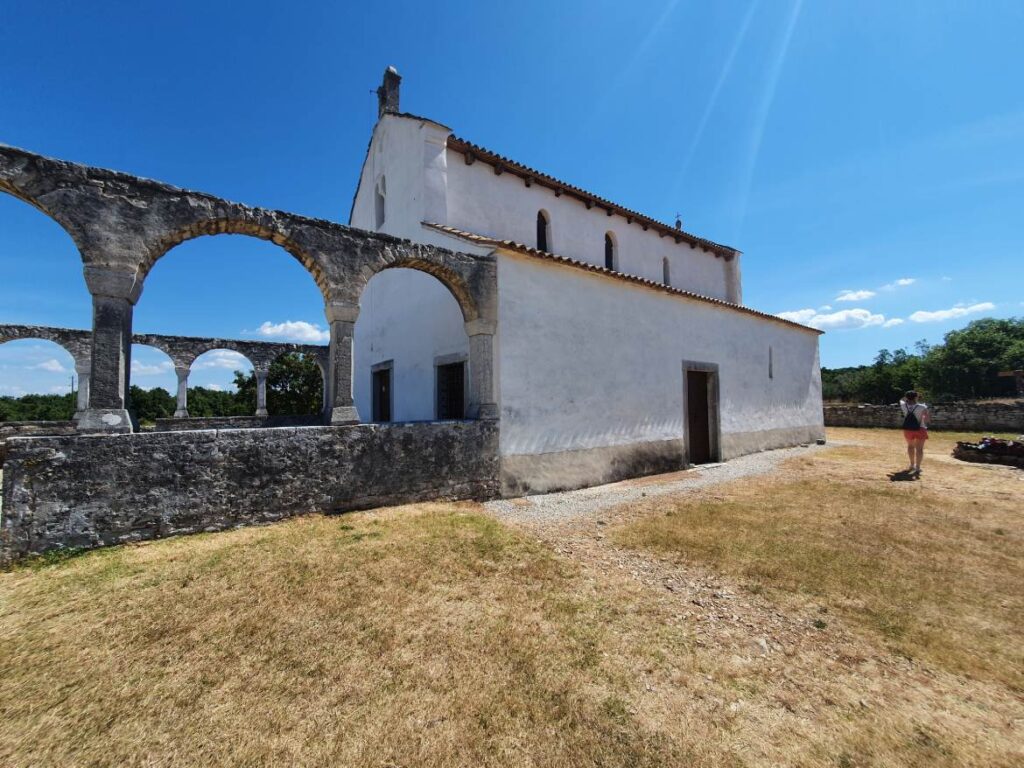
Today, the church is renowned as a place of recovery. Legend has it that bishop Tommasini recorded the first healing case in 1681. Afterwards, numerous believers reported miracles and healings. It’s believed that St. Fosca protects against headaches, rheumatism, and arthritis.
Fažana
The little coastal place in the southwest of Istria was, in antiquity, the summer residence of Roman patricians. They built numerous villas there; today, the best known is the “Gate of Brijuni”. Located on the other side of a 3-kilometre-wide channel, Fažana is probably the point in Istria. You can overlook the Brijuni Islands during a walk on the magnificent coastal promenade. Besides incredible architecture and the square over which St Cosmas and Damian’s church dominates, Fažana is made for outdoor fans.
Krnica & Krnički Porat
Krnica is a small, picturesque village at an altitude of 195 m on the eastern coast of Istria. Since Krnica is a very peaceful village with no traffic jams during the summer, it has become a popular destination for tourists seeking a peaceful holiday. It’s very close to the sea and perfect for biking, trekking, swimming, diving or boat peddling. Today, about 300 inhabitants live in a town founded in 1520 by refugees from Dalmatia, which is dominated by the parish church of St Rok and its bell tower, located in the middle of the town. The tiny place will rejoice with its typical traditional architecture. The village has a post office, a store, and a pizza restaurant.
If you’re in Krnica or some of the other villages around during the summer, you shouldn’t miss visiting the St. Roko (Rokova) feast. That is a cultural event organised once a year, on August 16 and usually attracts around 500 people. Southeast of Krnica, down there is a port named “Krnički port”. The place, dominated by fishing boats, has kept the protected Istrian area’s charm, with very few houses and wonderful nature.
Pula
Located at the very south of Istria, Pula, besides being the biggest city of the peninsula, has become a synonym for the gladiators’ arena, the imposing 1st century Roman Amphitheatre. If you’re interested in architecture or history, you should visit Pula, full of Roman heritage, including Augustus’s temple in the Forum, several town gates, and the remains of the theatre, also from Roman times. All of it you can in Pula, which is only 15 minutes distant from Vodnjan.
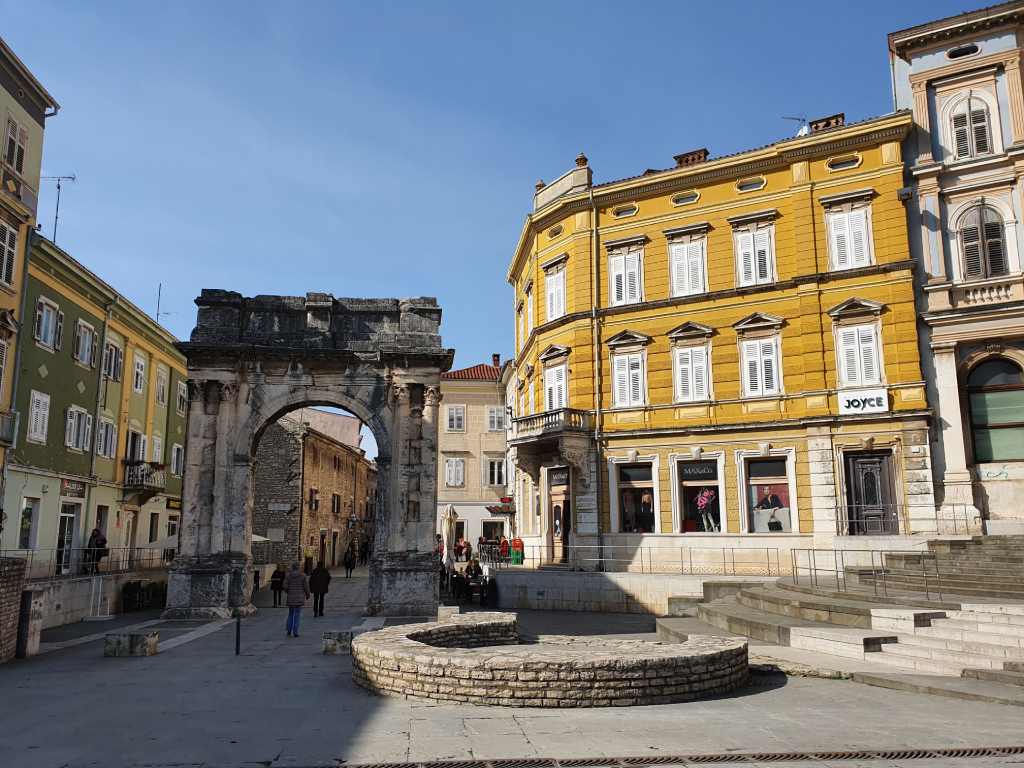
Also, to be recognised as a Roman place, Pula was once an Austrian-Hungarian Navy port; today, it is full of mystical fortresses, underground tunnels, army barracks, hospitals, officers’ villas, and a military cemetery. Pula is the town of culture, full of galleries and museums, and is bounded by a wonderful coastal heritage and beaches.
Rakalj (Stari Rakalj)
The place, known by the Latin name “Arcellae”, is said to be “Old Rakalj”, a small 11th-century castle located on the eastern coast of Istria. This place is a lush of inspiration, peace, and heritage. The St. Agnes church, dating back to 1495 and built on a 93-meter-high hill, offers a magnificent view of the sea.
Though Rakalj seems tiny, it’s the birthplace of the famous Croatian writer and economist “Mijo Mirković – Mate Balota“. The monument in his honour was raised in a small Rakalj cemetery where he was buried. After that, you visit the little place where you can get down to the Adriatic Sea and taste the bright and clear eastern Istria water.
Bale
The medieval town will inspire you with its picturesque, colourful architecture, built alongside streets dominated by dialects spoken by the descendants of its Romanic inhabitants from south Istria.
The place most known for Sorado-Bembo Castle is built as a living quarter between two towers. The parish church, dating back to 1880, is also recognised for its medieval architecture, including the town loggia characterised by Venetian style, the Pretorian manor, fortifications, and gates. Bale has also been recognised as an outdoor destination and is considered to be a butterfly city. At the same time, dinosaur remains have been found along the coast near it.
🐐Trek Goat local tip to Vodnjan
The particular thing you don’t want to miss while visiting Vodnjan is to stroll the cobblestone streets of the entire village. Indeed, you’ll make beautiful photos of the place with the Mediterranean–Istrian charm.
But there is undoubtedly something more critical of it. The thing you shouldn’t miss is tasting excellent Istrian specialities, such as prosciutto, cheese with olive oil from the olive groves, and wine from the surrounding area. There are a few rural households nearby, and restaurants are easy to find.
Getting to Vodnjan
Since Vodnjan is set in a very central part of Istria, it can be reached from almost every aspect of the peninsula very easily by car. However, there are no public buses from Pula station that operate through all the villages in the south of Istria, including Vodnjan.
✈️By Plane. Pula Airport (PUY), located in Valtura, is only 15 km from Vodnjan and the most convenient airport for visiting Istria. It offers domestic and international flights, especially during the summer. From the airport, you can take the shuttle to Pula and then a public bus to Vodnjan. Bus line 23 connects the airport to Pula’s main bus station—check schedules in advance. Rent-a-car services and private transfers are also available, and pre-booking is recommended. Other nearby airports include Rijeka (RJK) and Trieste (TRS), both about 90 minutes from Vodnjan.
🚌 By Bus. Pula’s main bus station, about 20 km from Vodnjan, is well connected to major cities such as Zagreb, Rijeka, Venice, and Trieste. Local buses run regularly from Pula to Vodnjan, especially the line to Rovinj. Plan your arrival time carefully to coordinate with local departures. Taxis are available 24/7.
🚆 By Train. Vodnjan has a small local train station, but rail travel in Istria is limited. Daily connections exist to Pula and Buzet. Pula’s train station connects further to Zagreb, Ljubljana, and Maribor via bus/train transfers. The Pula–Buzet line is mainly used by locals and students.
🚗 By Car. Driving is one of the easiest ways to reach Vodnjan. The “Istrian Y” motorway connects all major towns in Istria with Slovenia and Italy. There are two exits for Vodnjan. From Trieste, the drive takes about 1.5 hours; from Zagreb, around 3–4 hours via the highway. After exiting, follow local roads to reach any destination across Istria. During the summer months, expect heavy traffic and observe speed limits carefully.
Vodnjan Info corner
📍Where it lies: In southern Istria, about 10 km north of Pula and 20 km from Fažana and Brijuni National Park. Built on a plateau, Vodnjan overlooks olive groves and gentle karst fields — an open landscape that glows warm in late afternoon light.
🚶Wander: Start at Trgovačka Street, said to be the longest in Istria, and follow it to Narodni Trg, the colourful central square framed by Venetian-style palaces. Notice the Bettica and Bramente houses — once noble residences, now keepers of quiet stories.
⛪Sacred corners: Visit the Church of St. Blaise (Sveti Blaž), the largest in Istria, home to hundreds of relics and the mysterious Vodnjan mummies. Nearby stand the small churches of St. Jacob and Our Lady of Mount Carmel, each with a story rooted in faith and endurance.
💧Hidden gems: Seek out the Kažuni and Dry-Stone Walls Trail around the town — a landscape museum under the open sky. Then stop at Apoteka – Space for Contemporary Art, a former pharmacy now a creative laboratory for new voices in Istria.
🐐Trek Goat tip: Time your visit for Bumbarska Fešta, the lively August festival when Vodnjan fills with music, olive oil stalls, and Istrian laughter. Or come in winter for the Feast of St. Blaise (3 February) when the town’s quiet devotion becomes visible. Before leaving, taste local olive oil — one of the best in Croatia — at a nearby small rural stancija.
🅿️Practical: Vodnjan is 15 km from Pula Airport (PUY) and easily reached by car via the Istrian Y motorway. Parking is available near the old town. It makes a peaceful base for exploring southern Istria, from Fazana’s seafront to Rakalj’s cliffs, and an essential stop for anyone tracing the slow, stone-lined roads of the peninsula. Before you leave, let the last olive oil warmth linger on your tongue as the bells fade across the plateau—a sensory memory to carry with you long after the golden light of Vodnjan has disappeared.