
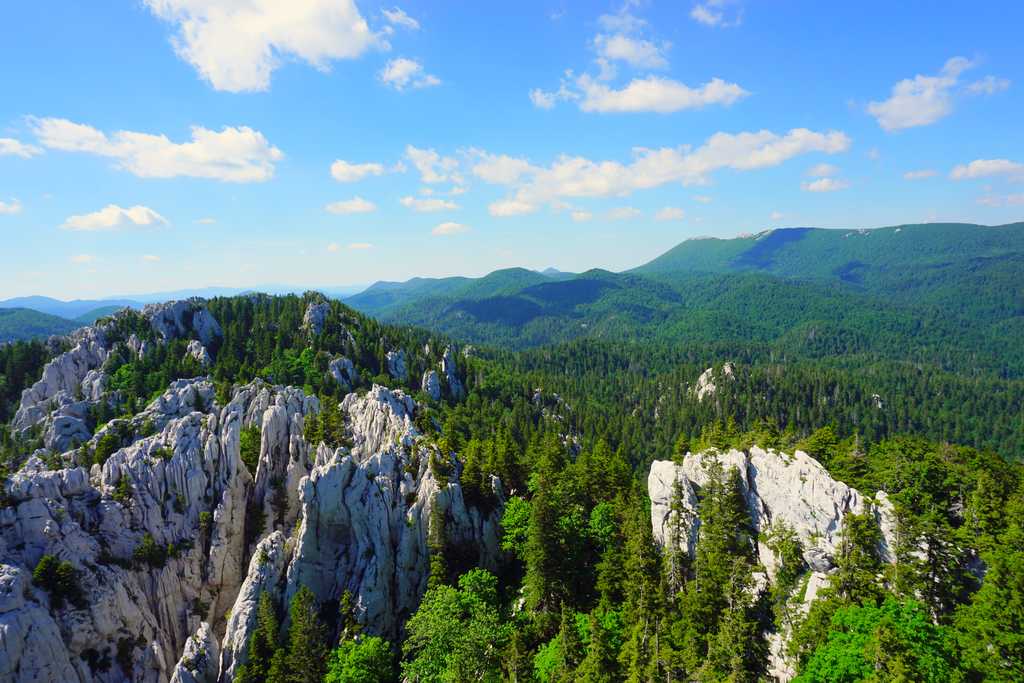
If you dream of discovering Croatia’s most magical ridge walk, Vihoraški put is a trail that promises adventure, challenge, and breathtaking scenery. This guide shares practical tips and insights to help you plan a safer, richer experience—whether you’re aiming for a memorable first hike or seeking to deepen your connection with nature. One of the most enchanting mountaineering routes in Croatia is known to locals as Vihoraški put. Let me show you why I keep coming back for as long as I can.
Delving into the Gorski Kotar photo archive, I found precious memories of my own hiking adventures that brought the Vihoraški put trails to life, which are especially dear to me. As I trace these images, each one reminds me how moments on the mountain become etched in your memory—a first glimpse of sunlight flickering through the trees, the thrill of reaching a rugged ridge, the quiet satisfaction after a long day on the trail. Inspired by this visual journey, I feel a strong call to return to these same mountains and to preserve my own unforgettable moments. I invite you to imagine the stories you might gather here: the discovery of a favourite view, a triumph over a challenging ascent, or that peaceful connection with nature you carry home. Perhaps your own memories will soon mingle with mine, ready to fill a future album or echo in your stories.
Its sharp cliffs shine like glass in the midday sun—when you see them through the trees, you’ll know you’re halfway across the ridge. The dark spaces between the cliffs feel cool and wild; walking into their shade often means you’re entering the old beech forest, where the next signs for the hike appear. Hiking here isn’t about speed or reaching the top. It’s about soaking in the area, letting every part lead you on. Every crunchy leaf or change in sunlight means something: the soft moss underfoot shows the trail is getting smaller, while the sudden light means a big view is near. The trail is tough but gentle, revealing beauty to those who walk with care and pay attention to these small details. To help remember these times, I have described the Vihoraški put below based on a two-day trip. Still, since I often hike here on longer trips, I’ve added some older photos as well.
A trail between the rocks
Deep in the forest bordered by the evergreen cliffs of Gorski Kotar, between the “Bijele and Samarske stijene Rocks”, lies a path bordered by high, steep, geologically diverse cliffs. Their peaks are as sparkling as ice, and their sides are as sharp as a sword. Their vistas are unforgettable, the passages between them filled with countless natural gems.The unique hiking experience of Gorski Kotar is a well-known trail that connects two geological phenomena: “Samarske and Bijele Stijene“.
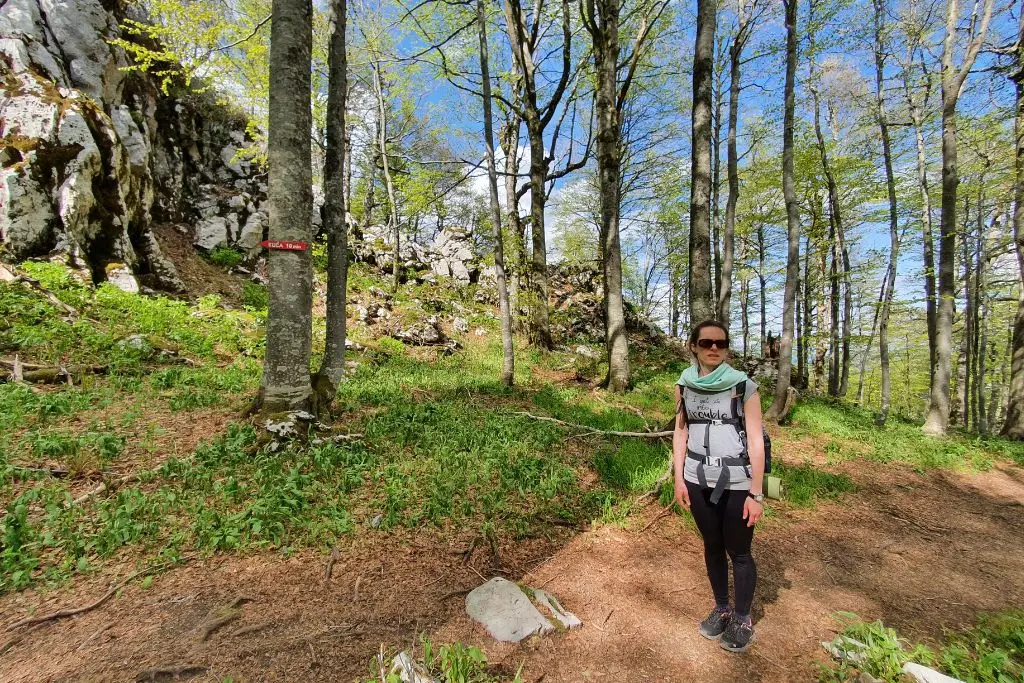
The mix of forest and rocks, plus the pretty trail, means you need some simple climbing skills, but no special gear. The shade in the woods will please any hiker who finds joy in its beauty. In good weather, the White Rocks shine like sunlight on water, but in rain, they are slippery—yet the air is fresh and full of forest smells. The view is even better when the peaks rise above the clouds or morning mist.
Planning a route through the Vihoraški Put means… surrendering to the deep geological nature
During the exploration of Bijele Stijene throughout history, the gaze of mountaineers would often stop somewhere at “Samarske stijene”, thinking that they were close to each other. Moreover, due to the ridge and the rocky canyon, they are, in reality, far away. During the construction of a new house on Bijele stijene, Milovan Dlouhy explored a straight passage through the ridge between Bijele and Samarske stijene.
On a silent winter night, moonlight glimmered on fresh snow where a single paw print appeared, its imprint crisp and mysterious along the untouched ridge. Following these tracks, explorers sensed an untrodden path hidden between Bijele and Samarske stijene, a secret waiting to be revealed by nature itself. This primal moment of discovery gave birth to the “Vihoraški Put.” Later, Želimir Katura projected the route, officially opening it in honor of the 100th anniversary of hiking in Croatia. Hiking markers along the path were placed passing through “Ljuska.”
Access point: Tuk village
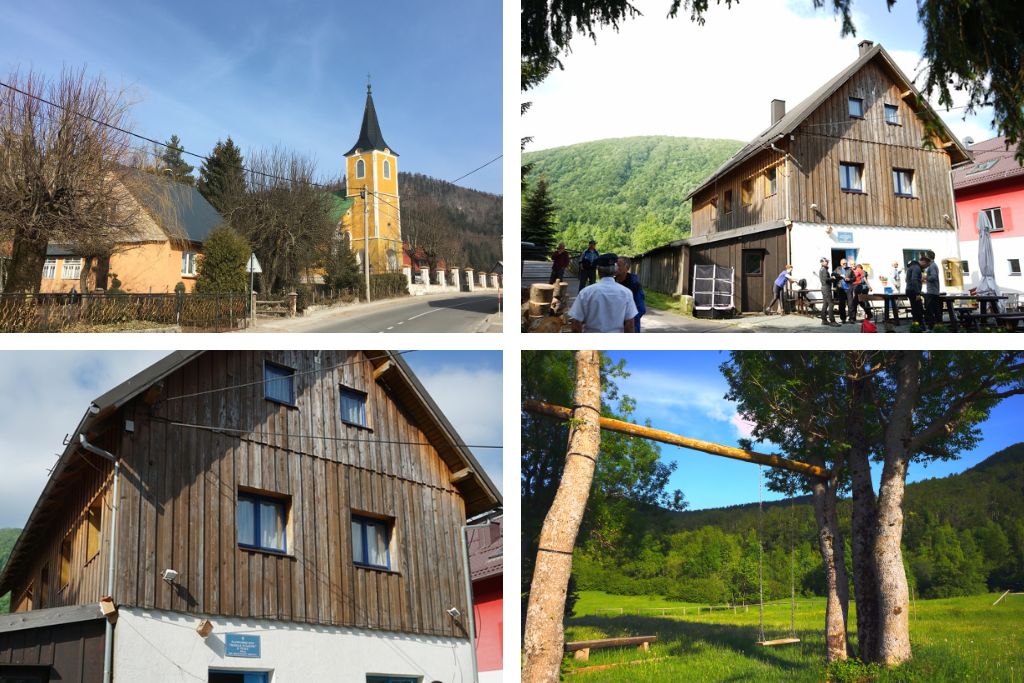
On the Rijeka – Zagreb highway, we take care of the turnoff to the Fužine / Vrata exit from the direction of Rijeka or the Delnice National Park from the direction of Zagreb. Following the road toward Mrkopalj, we first pass “Sunger ” and then arrive in “Mrkopalj”. Finally, the sign for the small village of Tuk (850 meters above sea level) appears. After “Begova Razdolje” (1,060 meters above sea level), Tuk Vojni (850 meters above sea level) is considered the second-highest populated place in Croatia. It has typical rural architecture, with steep roofs to shed snow. Bus groups can stop here at the “Bijele stijene” mountain lodge (875 meters above sea level) to change clothes and “refresh” from the journey.
The grass field of Matić Poljana
From Tuk, follow the gravel road toward Jasenko. On this route, you will pass through Matić Poljana, a spacious meadow filled with greenery. The meadow is easily spotted near the road and is photogenic at any hour—dawn, night, or sunset. In the field, notice the stone structures made up of 26 monolithic rocks, a commemorative monument to 26 soldiers who froze during the Second Brigade mission from “Draženica–Jasenak” and Mrkopalj.
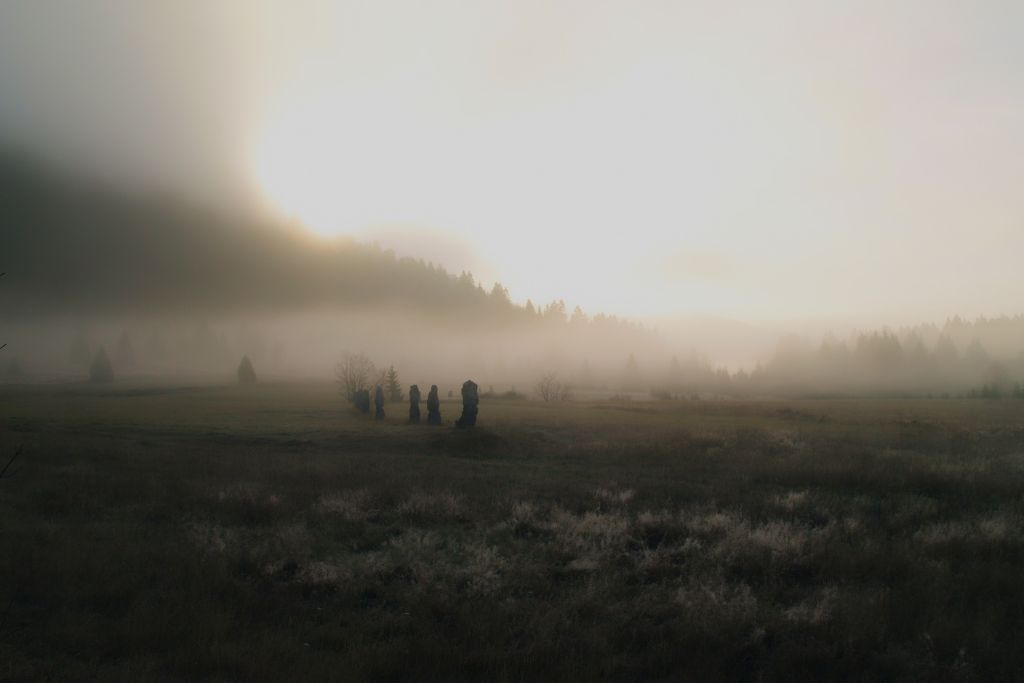
To truly capture the magic of a Gorski Kotar morning, plan to either sleep overnight in Tuk or set your alarm for before sunrise. Instead of just reading about it, challenge yourself to step into the meadow at dawn—stand among the misty grass as the first light spills onto Matić Poljana. Listen for the silence, feel the chill, and try to frame that exact moment with your own camera. I have been to Matić Poljana many times and these early hours remain unforgettable. Just a note: the photo I shared here is from a sunrise back in 2008, the first time I visited this area with my father. Though it doesn’t match the date of our two-day adventure, the feeling of those mornings lingers with me still.
Starting point: Mlečikov Lug
The gravel road goes through the dense forest, starting northwest of Tuk. Begin by passing the turnoff for the Jančarica mountain hut, and then continue until you see the hunting lodge. Look for wildlife such as foxes or bears as you travel farther. The forest’s colours, shadows, and silence vary by season. Each seasonal change alters the atmosphere and has practical implications for hike planning.
In autumn, a golden canopy appears, offering stunning views, though shorter daylight hours mean it’s best to start early. In spring, freshly unfurled green leaves and melting snow make the trails slippery, but as the days grow longer, there is more time to hike. In winter, the landscape turns white, making proper gear essential, and the days are at their shortest. In summer, long days and abundant sunlight create ideal hiking conditions, although mosquitoes are common. Summer, long days and abundant sunlight are ideal, though mosquitoes are common. After passing the hunting lodge, continue to Mlečikov Lug, the usual trailhead, located about 10 km from Tuk and 13 km from Mrkopalj.
Our two-day adventure along the Vihoraški put: a unique combination of the cliffs
As one of the most attractive trails in Gorski Kotar, surrounded by a forest of beech, pine, fir and oak on one side and a rocky landscape on the other, the “Vihoraški put” trail is truly unique. It can be connected from several sides. The most common starting point is Mlečikov Lug, with the following direction: Mlečikov Lug – Bijele Stijene – pl. M. Hirtz Shelter – Dolina Kostura – Mlečikov Lug. However, for the purposes of this article, I decided to share a slightly different view, or rather, the opposite direction of travel. Namely, we decided to do it in the spring, shortly after the shelter was renovated.

The greenery, views and untouched nature will make every hike along the Vihoraški Put unforgettable. However, the forest and rocky area can be challenging during rainy weather due to slippery rocks. For beginners, it is recommended to be accompanied by a more experienced hiker even in dry weather. We take hiking boots or low-top hiking shoes. In autumn, spring, and summer, fleece, a windbreaker, and long sleeves are recommended for the evening. In winter, wear a jacket and long waterproof snow pants.
Let’s not forget:
🌤️Watch the forecast.
🎒🪢Have a well-equipped backpack with enough food and water.
🏡Respect the shelter’s house rules so other hikers can use it without any problems.
Mlečikov Lug – mountain shelter Miroslav Hirtz
After Mlečikov Lug, we begin our two-day adventure by walking, continuing in the direction of Jančarica. After about 45 minutes of walking, we see a signpost indicating “Bijele stijene”. From here, we leave the gravel road and head in the direction of mountain shelter Miroslav Hirtz – or “Hiršovo sklonište”, as the local hikers also call it.First, we descend into the “Dolina Kostura Valley” – the “Skeleton Valley”-which enchants with its natural beauty. (Note: from this point, it is possible to choose two directions.
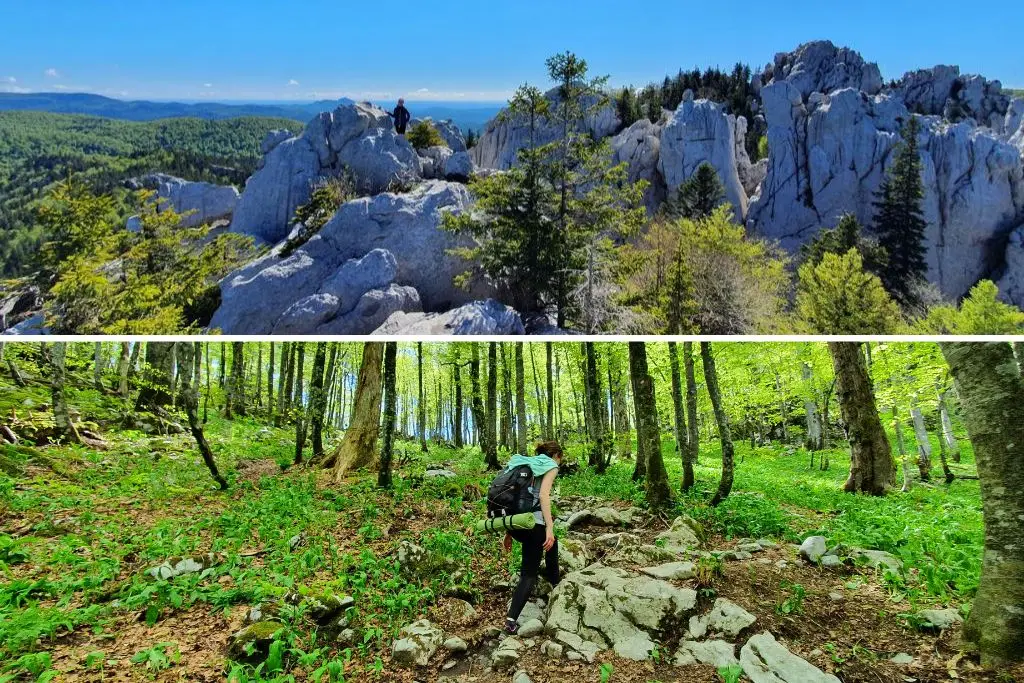
Surrounded by dense forests and peaks, the so-called Kostura Valley offers peace and quiet, creating a picturesque space for escaping everyday life. Lush forest vegetation shapes the landscape. Re-entering the gravel road, we feel completely connected to nature. However, enjoying the peace it offers does not last long. We soon face a climb towards the Hirtz shelter. Passing the “Lukovica” sign, we continue climbing and follow the sign for the “house”. After the climb, a view of the Miroslav Hirtz shelter soon opens up. We reach it in about 2 hours, after climbing through a forest of beech, oak and fir.
Mountaineering shelter Miroslav Hirtz
The shelter is newly renovated. For those who decide to sleep overnight, the climb may take longer because of the weight of sleeping bags and equipment. Also known as the “Hirtz Shelter“, hidden deep in the Gorski Kotar forest, in the Bijele and Samarske stijene nature reserve, the shelter is of superb architecture and a real lure for an overnight stay.
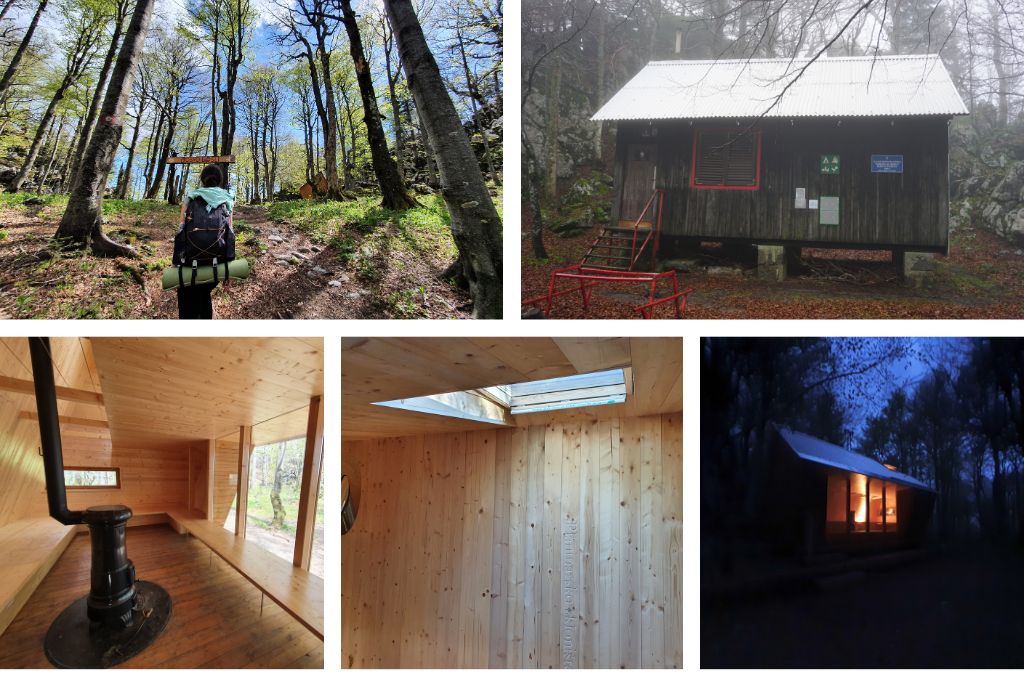
It was built on the basis of an older shelter, which I also shared in the photo. With about 30 square meters of functional interior space across two floors, the always-open house can accommodate about 20 hikers. Two solar panels on the roof provide electricity, and a wood-burning stove provides heating.
Apart from a place to dry clothes and a backpack drawer, what it is perhaps most famous for is the spectacular view of the surrounding forest through a glass wall. Not far from the shelter is a mountain hut, Dragutin Hirtz, and there is also a well with drinking water and a wooden toilet available.
From the Mountaineering shelter Miroslav Hirtz to Bijele Stijene crest
After a pleasant overnight stay at the shelter, we continue the Vihora trail in the morning. But in order to embark on the Vihora trail, we first need to reach Bijele Stijene. It is also possible to bypass the peak, but that is a shame, since it offers beautiful views. Which, of course, we had already seen during this trip the evening before, to enjoy the sunset. And also to see the weather conditions. In the morning, of course, we also climb the peak again. Now, in a different form from the day before, it is illuminated by the sun.
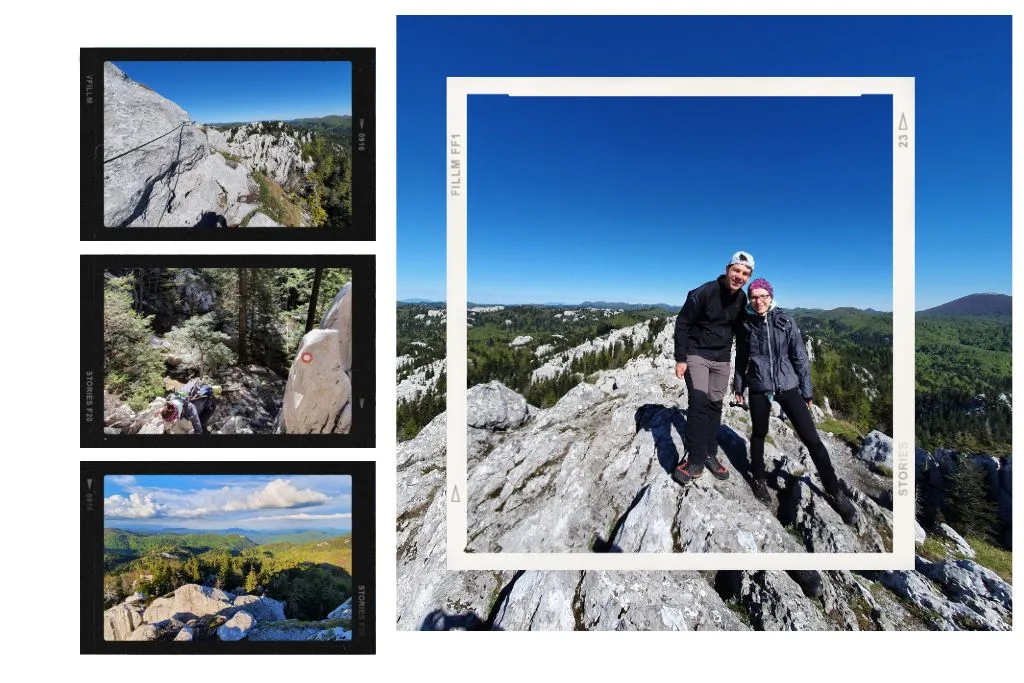
The climb to the top of Bijele Stijene is secured by cables. Climbing equipment such as harnesses or a guide rope can be useful, but are not necessary in dry weather. The top of “Bijele Stijene” (1335 m/v) offers beautiful views of the unique landscapes of Gorski Kotar. What we see in the distance are “Samarske Stijene ”, Klek, Bjelolasica, Kolovratske Stijene (Rocks) and even Velebit. A unique harmony of nature.
White rocks – Boce
After descending from Bijele stijene, we have a great time and, to our surprise, meet a Czech mountain guide coming from Boca. He says he spent the night in a tent somewhere, since he estimated he would not reach the shelter during the day. And moving at night in this area brings many challenges and dangers. Even for experienced ones.

Descending and officially entering the Vihoraški put, we see rocks in the shape of the same name, “Prsti, meaning “Fingers”. They really do look like fingers, hinting at the sharpness of the “White Rocks”. We continue along the markings and the path on which the altitude is constantly changing. Soon, we come to a piece of rock that is particularly dear to my heart, called Boce, meaning the “Bottles”. Those are located about 20 minutes from the top. This fascinating formation, bordered by high rocks, has taken on a shape that resembles carefully placed bottles on a shelf. They cause amazement among passers-by with their unusual shapes, formed by nature’s skilful hands over millennia.

As we walk along the Vihoraški put trail, the Boce appear as a hidden treasure within a natural rock formation. They are surrounded by rocks that highlight their uniqueness, creating a picturesque scene that fits with the untouched nature of Gorski Kotar. I often like to stop here to discover the secret of these unusual formations and enjoy the peace that this special corner of nature offers. The Boce on the Vihoraški put is not only a geological wonder, but also an invitation to immerse yourself in the beauty and mystery of the mountain environment.
Boce – Ljuska: until the “shell”
After resting a bit, enjoying the rocks, we continue on the Vihorašia path. We have to descend and ascend again, and the most challenging part is still ahead. If you are coming with a large group, including beginners, make sure some members have been there before. With more experienced guides, unpredictable situations will be easier to overcome. You need to be careful and take all factors, time and rest points into account.
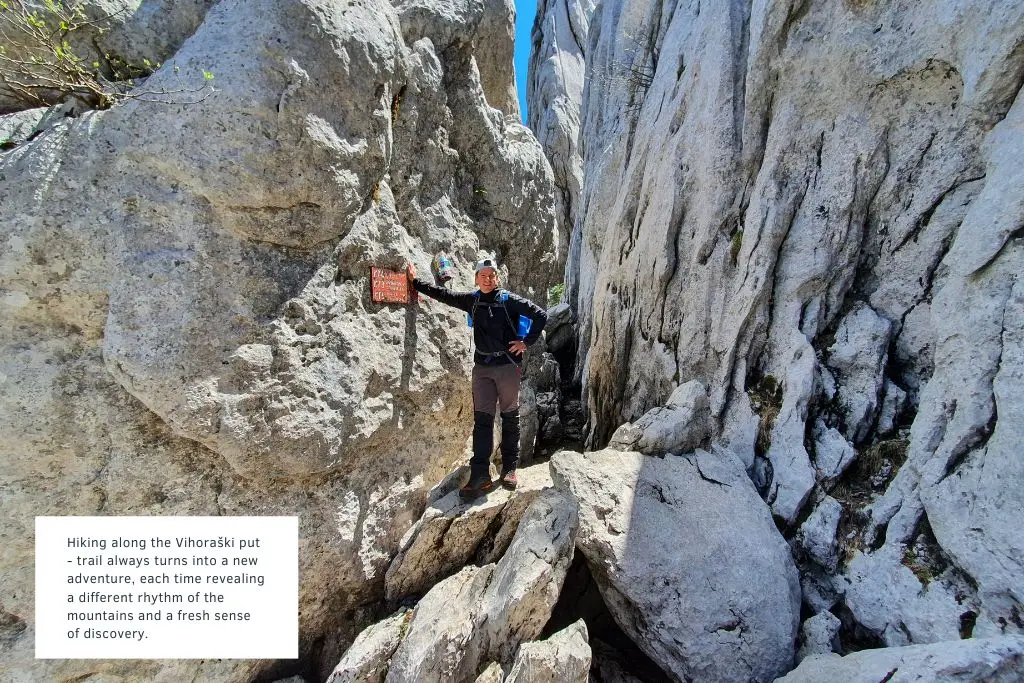
Walking through a combination of rocks and forests, we reach a climb that confronts us with steep, high, sharp rocks, but also with all their beauty. This is followed by a section known as “Ljuska,” meaning “Shell.” With breaks, it took us about 3 hours to reach Ljuska. There is a seal and stamp here, and Ljuska is also considered the official point of the Vihoraški put. Surrounded by rocks, and even on the rock itself, Ljuska is a real delight for rock lovers. However, safety comes first, since Ljuska is considered the most demanding part of the Vihoraški put. For complete safety, it may be a good idea to use a harness, since the descent involves stairs. However, that is a personal decision.
Ljuska – Ratko’s shelter: inside the pure rocks
Shortly after descending from Ljuska and lowering the altitude a little, we continue toward Ratkovo sklonište (Ratko’s mountain shelter). We have been to Ratkovo sklonište many times and have spent the night there, so there is no need to say much about it. I will just say that every new hiker who encounters Gorski Kotar first asks, “Where is that interesting shelter in the rock?”
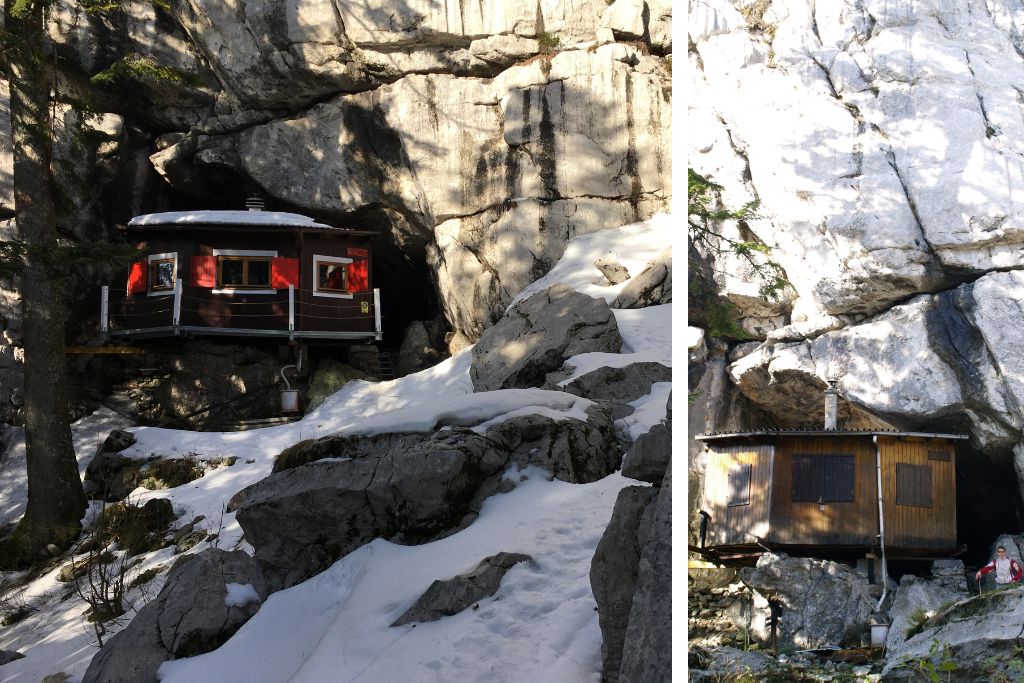
The shelter built into a rock in the shape of a natural crescent is very photogenic. It is open to hikers. For the purposes of this article, I am sharing two photos of the shelter to complete it. One is from our tour, and the other is a photo of the old shelter from 2008. Finally, after about 40 minutes of downhill, we reach Mlečikovi Lug, where we left the vehicle. A wonderful Vihotra adventure. Always worth repeating. Every day.
🏡Note: those who want less can bypass Ratkovo sklonište Shleter (it does not fit into the Vihoraški put Trail). But why less, if you can do more?
Technical details: M.Lug – M. Hirtz – Vihoraški put – R. Sklonište – M. Lug
- Tuk – Mlečikov Lug: 30 min (car or bus)
- White Rocks Peak – Ratkovo Shelter: 4 h
- Ratkovo Sklonište – Mlečikov Lug: 0:45 a.m
- Total ascent time: 5 hours
- Total descent time: 2 hours
- Total time: 7 hours