
The Island of Hvar, situated in central Dalmatia, Croatia, is green and diverse.
As the sun began to dip behind the horizon, a sense of anticipation filled the air. Suddenly, dolphins surfaced, their sleek bodies slicing through the waves alongside our ferry from Split. The distant silhouette of Hvar loomed, promising a blend of serenity and history. As I disembarked, the island greeted me with the scent of lavender and salt. Wandering the promenades of its ancient towns felt cinematic, as if the stone houses were poised to whisper tales of long ago.
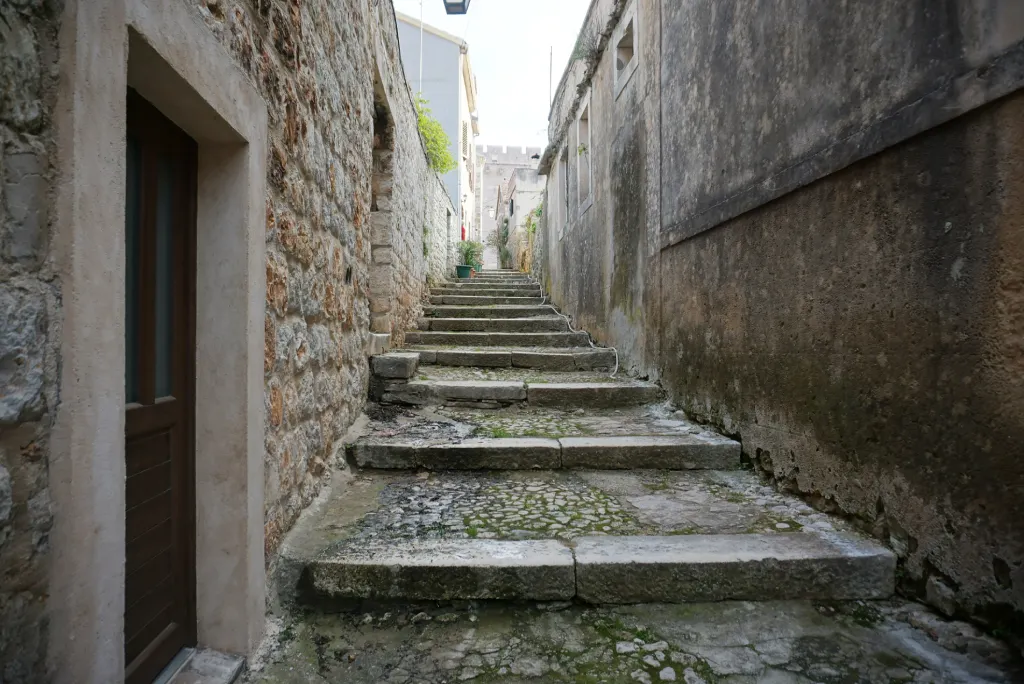
Wandering through the narrow alleys of Vrboska, listening to the wind weaving through treetops, or hiking along the island’s rugged landscapes and shores, I could truly feel the spirit of the Adriatic Sea.
Hvar lies just a two-hour ferry ride from Split Harbour. On one side, it almost brushes the Makarska Riviera, while on the other, it is embraced by the islands of Brač, Vis, Korčula, and the Pelješac peninsula. Stretching northwest to southeast for just over 68 kilometres, it is one of Croatia’s largest islands. Hvar Town, named after the island, is its vibrant heart and administrative centre. The northwest part of the island is blessed with freshwater springs, while the rest of Hvar is known for its drier, sun-drenched landscapes.
Why should you travel to Hvar?
Hvar Island has a history going back to around 6000 BC. That long tradition has turned it into both a posh vacation resort and a comfortable Mediterranean lifestyle, crowned by a vibrant cultural and historical heritage. Yeah, let’s not talk about its attractiveness among nature lovers. The island has been a popular and treasured vacation destination for Croatians and international visitors for many years. Besides being renowned for its excellent nature, Hvar Island receives no less than 2800 hours of sunlight every year. This statistical fact classifies it as the sunniest Croatian island with a few rainy days.
It’s no surprise that Hvar Island, with its mild winters, rich history and stunning views overlooking the Adriatic Sea, attracts many vacationers. This island is ideal for stunning nature and beach seekers. What impressed me the most was the beautiful views of the island roads. You might ask yourself which corner of the island shines the brightest, and what experiences truly make Hvar unforgettable. Everything depends on a few factors. Such as how many days you’ll spend in Hvar, how budget-minded you are, whether you have a vehicle, and whether you intend to stay in one location or move around.
To help you make the most of your visit to Hvar Island, I’ve organized the attractions into themed itineraries. Whether you’re a history enthusiast, a nature lover, or someone seeking vibrant nightlife, you’ll find a tailored pathway below to suit your interests and time frame. Let’s explore the best Hvar has to offer through these curated experiences:
- Hvar Town
- Vrboska
- Stari Grad
- Jelsa
Hvar Old Town
The city of Hvar is the island’s largest, best-known, and most-visited area. It’s considered to be the main town. Hvar city offers a multitude of beaches, casinos, pubs, old structures and architectural landmarks, as well as the island’s finest nightlife. As Ana, a local public relations receptionist, says, ‘Hvar’s nights are as warm and welcoming as its people; here, every cocktail has a story, and every story adds a layer to the vibrant tapestry of Hvar’s heritage.
What I noticed at a glance is a large square with St. Stephen’s Cathedral, both of which bear the same name. Aside from it, many palms overlooking the wonderful seafront, and the beautiful promenade with the beaches made me feel like I was in another world. If you walk there in the evening, the atmosphere will remind you of a Hollywood summer movie scene. Let’s see the most recognised attractions in the city of Hvar now.
Saint Stephen’s Square and Cathedral
As already mentioned, St. Stephen’s Square, dating back to the 13th century and its cathedral from the 17th century, will probably be the first attraction you’ll see while coming onto the island. The square was one of the first to develop, with expansion starting in the north before spreading to the south. The marvellous stone surroundings and twisting streets tell of an era when it was crafted by collecting a cove measuring about 4,500 square meters, once part of the bay. Visitors can stand amidst the same stones that were laid centuries ago, and as they sip their coffee while watching the sun set over the horizon, they can imagine the bustling markets and gatherings that once took place here. Sections of the square dating back to the 15th century add another layer to this historical tapestry, making the past not just a memory, but a vivid part of today’s experience.
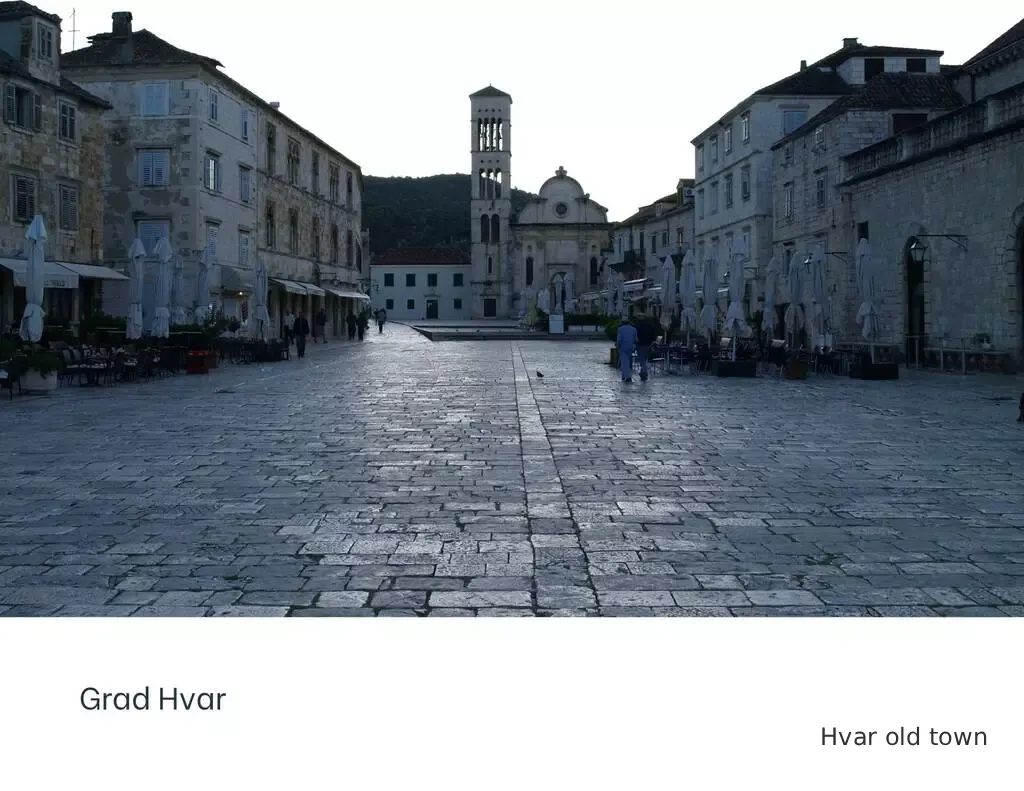
The remarkable cathedral, situated on the eastern side of the square, was built on the foundations of an early-Christian church in the 6th century. It acquired its present appearance in the 16th and 17th centuries. Look to the beautiful Renaissance bell tower next to the cathedral. Aside from the other two bell towers also situated on the island of Hvar – St. Mark, Franciscan and the ruined one of St. Veneranda, the bell tower of St. Stephen Cathedral is considered to be the nicest in Dalmatia.
Art lovers will enjoy many valuable items preserved in Hvar’s Cathedral. Those are works by famous painters such as Stefano Celesti, Palma Junior, and the Spanish painter Juan Boschettus. However, the most renowned painting is a Madonna example of proto-Venetian art. The work, dating back to 1220, is considered one of the oldest in Dalmatia.
Fortica the Fort
Looking up from Hvar Town on the hill, you’ll see a fort built on top. The UNESCO World Heritage Site, Forticawas constructed in the early 16th century under Venetian rule and then rebuilt in 1557. Though Fortica Fort appears high, it is not as difficult to reach as it looks. Just take a walk through the park northwest of St. Stephen’s Square, and you will come to the Fortica.
The ascent to the top of the walls will be valuable. Once you reach the Fortica fort, you will have a chance to enjoy stunning panoramic views of Hvar and the nearby PakleniIslands. In Hvar, the defence has preserved a collection of amphora and other artefacts from antiquity, dating back to the Middle Ages. Don’t hesitate to grab your camera and get a stunning snapshot. If you are a Forts fan, especially those with a beautiful view. You have one day to spend on Hvar, no skipping it. A jump to this magnificent fort is one of the must-dos on Hvar!
Franciscan Monastery & Museum
Museum fans will find themself happy overlooking the Franciscan Monastery & Museum in Hvar. It houses stunning artwork and informative historical architecture that rival any other on Hvar Island. The Franciscan Monastery, founded in the 16th century by a family of stonemasons, overlooks a spectacular green cove and a 300-year-old cypress tree in the courtyard. Step over and look at her odd shape.
Historic coins, maps, and records are available at the museum. The museum’s two most famous items were Ptolemy’s Atlas printed in 1524, and The Last Supper, a work by Matteo Ingoli. The nearest church, Our Lady of Charity, has further works of sculpture, including three polyptychs by Francesco da Santacroce from 1583.
Renaissance Theater
The theatre is an essential feature of the Renaissance. Throughout this period, they were turning up all over Europe. The Renaissance Theatre, built in 1612 and still going strong today, is one of Hvar’s largest theatres. Many argue that this theatre was Europe’s first, available to both the upper and lower classes.
Although performances began there in 2008, and much of the theatre is under restoration, you can still try to tour it. Within, you’ll find frescoes and baroque loggias, relics from the time when the arts flourished.
Picturesque places
Now that we’ve described the attractions of the biggest city on Hvar, let me mention some other interesting places and sights on the island. Yes, there are many small villages on Hvar. Did you know that Hvar has more than 100?
Stari Grad Hvar
Fans of old, picturesque villages will like Stari Grad, Hvar. Established in 384 BC by Greek colonists, Hvar Island’s historic gem is considered one of the oldest settlements in Croatia and Europe. Located in a deep and protected cove on the northwest side of the island, it is a secure and predictable harbour for all sailors sailing the Mediterranean.
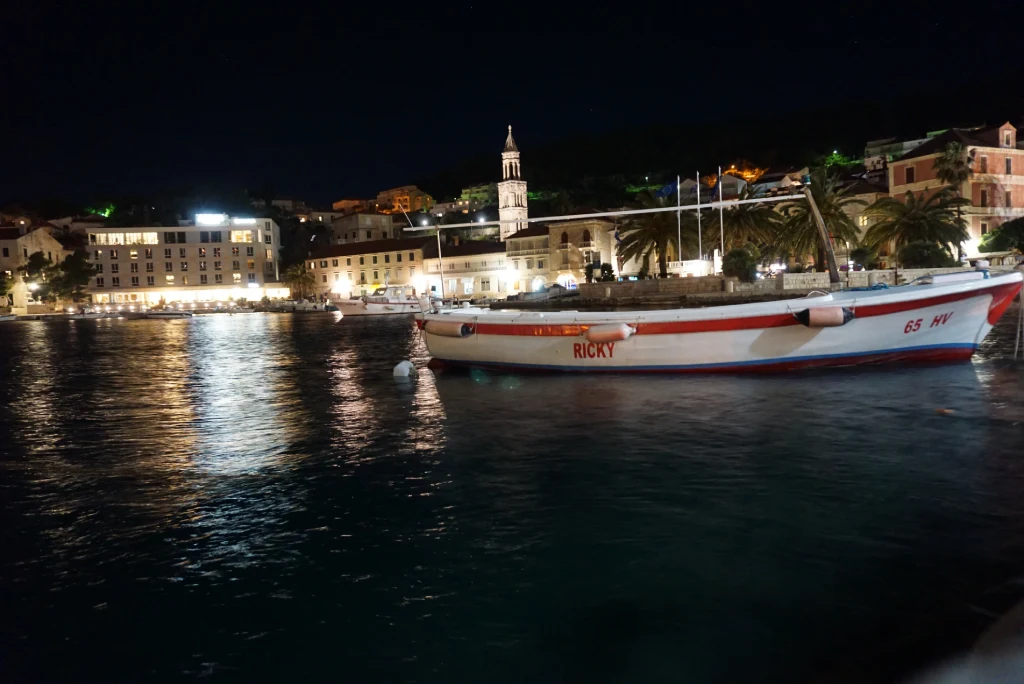
The city sits along the long, deep bay at the end of the old town. Aside from its Parish church of St. Stephen, which bears the same name as the one in the City of Hvar, the most notable monument is the 16th-century Castle Tvrdalj. Just take a walk through the Dominican Monastery’s colourful streets via Tvrdalj (home of the famous poet Petar Hektorović). It is like walking through the city’s history. The Old Town of Stari Grad comprises small stone buildings, paved streets, and various churches. Beaches aren’t the powerful Stari Grad, but it’s a popular summer destination anyway. Each summer, there is the Stari Grad Festival, numerous concerts and recitals, and the International Summer Music School. At the same time, sports lovers can enjoy the Faros Marathon, Croatia’s world-class long-distance swimming competition.
Jelsa
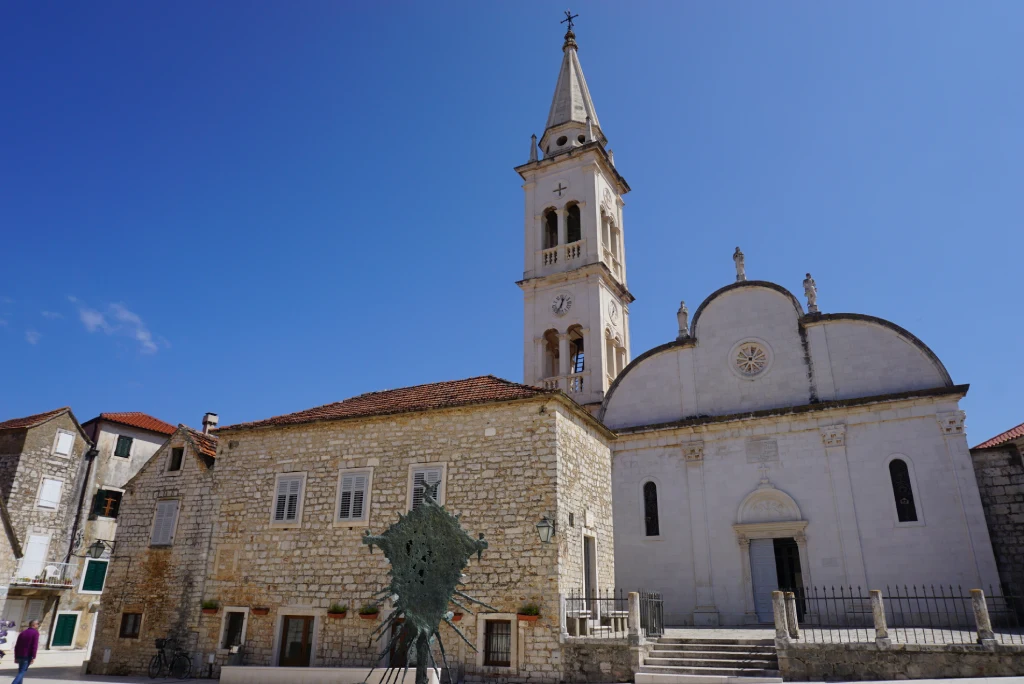
Jelsa is one of the most picturesque places on the island, and lovers of small, charming spots will enjoy it. The tourist centre on the north shore of the island is located in the central part of Hvar. Surrounded by the scents of dense pine forests, sandy beaches, various vineyards, olive groves, and cultural attractions, Jelsa offers an authentic Hvar Mediterranean experience that will make your visit unforgettable. The area around Jelsa is rustic, with sights such as St. Mary’s Church, Our Lady of Health Church, Civitas Vetus Ielsae (Old Jelsa town), St. John’s Square, and The Plaza. At the same time, you can take a stroll through the history of this fascinating area.
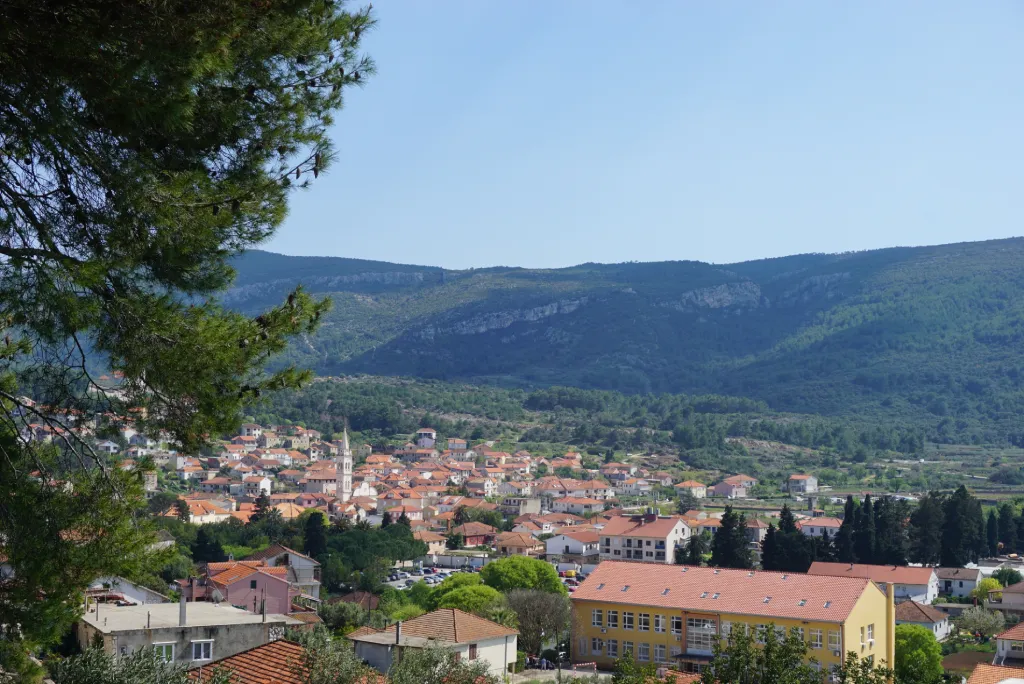
Jelsa is except for its small stone house and cobblestone streets full of various coves. Besides, it has beautiful beaches of sand and pebbles, plenty of sunshine, and clean water. Located in the middle of the island of Jelsa, this is the best starting point for many excursions: Grapčeva cave and Humac, Tor, the nearby villages of Vrisnik, Svirče, Pitve and the famous Zlatni rat beach in Bol on Brač island.
Vrboska
One of my favourites on the list of Hvar places is the smallest town of Vrboska. It is renowned as the island’s largest fishing village. The tiny place is located on both sides of a long, narrow river, whose “Vela and Mola Bonda” sides are linked by a short stone bridge. Don’t be surprised if you hear it called Little Venice.
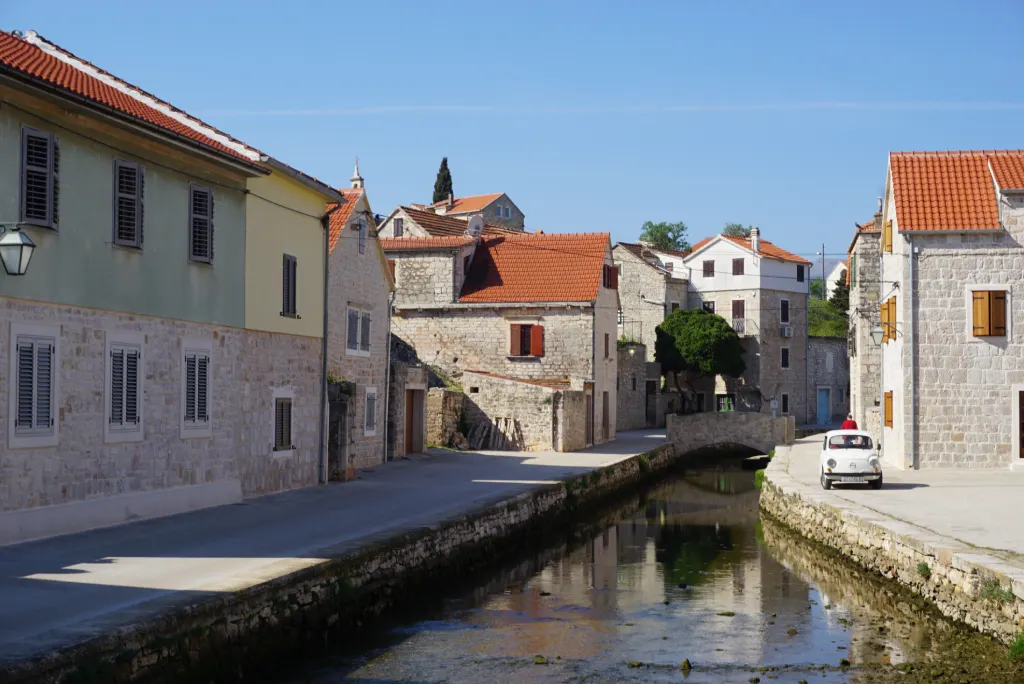
You’ll undoubtedly feel very creative while strolling in Vrboska. The narrow bridges are among the most visible architectural attractions, along with the lined paths, Victorian and Gothic houses on both sides of the bay, and a very tiny island. And all of that, surrounded by dense pine woods, makes Vrboska a sight that makes none indifferent. The reflection of stone houses in the water and the peacefully anchored sunbathing fishing boats add a particular beauty and warmth, with a unique charm.
I walked from Vrboska to the accommodation Senses Resort at sunset, and I liked it very much. There is a circular trail on the peninsula part near the Hotel for all those who want to practice in peaceful surroundings. I made it in the early morning before the Senses seminar. You can even do it.
Local tip: Fishing Museum in Vrboska. As already mentioned, Vrboska is a fishing village, which is reflected in the rich collection at the Ribarski Muzej (Fishing Museum). Today, the old fishing village is a tourist city that will attract any traveller with its charm, countless icons and calmness that shines from every corner.
St. Lawrence Church
Vrboska is also an excellent spot for all history buffs. It is undoubtedly an inevitable stop to see the island’s cultural heritage. It presents the origins of island architecture and the atmosphere as they once were. One of them is the Church Fortress and St. Lawrence. Though not visible at a glance, both of them, situated on the very top of the village area, are easily reached by a straightforward climb. Inside it are numerous sculptures.
Dol village
This is the usual starting point for a hike to the highest peak on the island of St. Nikola. The village of Dollies is only 6 km from Stari Grad. Its fascinating location comprises two sections: the western portion, St. Mary’s Dol, and the eastern portion, St. Ana’s Dol. There is only one altar in St. Mary’s Cathedral, the renowned Croatian sculptor Ivan Rendić (1849-1932), with a Madonna’s image from the 15th century, created by an unknown Tuscan artist.
The Tunnel of Pitve
Many of us probably did not know, or were surprised, to see a tunnel while driving along the island road towards Hvar. This is a tunnel named “Pitve-Zavala”. It connects the village of Pitve on the island of Hvar, in the centre of the island, with Zavala and several other settlements on the south side of the island. It was, until recently, the only passage to the payments on the south side of the island.
Be active on Hvar
Trek Goatlikes to be active while exploring Hvar by island trek.
Hiking on Hvar
Besides the untouched pebble beaches, epic towns and beautiful vistas, Hvar provide a broad range of spectacular terrain for hikers, such as Trek Goat.
Trek Goat hiking Tip: Saint Nicholas–a hike to the highest point of the island of Hvar. Yes, this is a must-do activity if you have the time while you’re on Hvar. Hikers will enjoy listening to the infinite wonder of nature as they ascend the island’s highest mountain, the peak of Sv. Nikola (628 m). Its cliffs look straight down into the sea. Let’s touch Hvar io with one hand. Take the route from Dol. The gorgeous vistas there would make you feel like you’re on top of the globe.

At the very top, you’ll notice a quaint little St. Nicholas church, whose presence was first recorded in 1495. The small chapel, dating from the 15thcentury, stands at the top of the hill. Only below its level is a farm growing wine grapes at an altitude of about 500 meters above sea level, with a few sheep and goats that we especially like. Wine, prosciutto, and cheese may also be ordered at this estate, along with numerous other meals.
A beautiful Neolithic cave with a 16th-century chapel of Our Lady of the Snows (Gospa od Snijega) is a particular attraction. A lovely mix of light, sea, mountains and their secret nooks is an excellent cure for the healing of mind and body. Within the cave is also a well of fresh water! There is a rosemary and lavender oil distillery in the tiny village of St. Nedjelja. Have a lot of fun!
Hvar climbing
As most of the other Adriatic islands are more expensive, Hvar is no exception. And the climbing area is next to Sv. Nedilja village. A Trek Goat’s favourite activity again. Free-climbing fans can enjoy the numerous prepared routes. Enjoy your climb, check your ropes with the carabiners and stay safe.
Hvar Kayaking
If you don’t feel unwell with the sea, just take a kayak from Hvar Town to the Pakleni Islands. If you don’t have your kayak, you can always rent it. The half-day small-group kayak adventure will let you enjoy the attractiveness of the blue Adriatic glittering sea. If you decide on a tour, the organisers usually include lunch at one of the small, hidden pebble beaches.
Daily tours from Hvar
Sure, there are numerous of them you can make. You just need to decide whenever you want to stay on the island of Hvar or sail away. Here we listed some of the ideas.
Šćedro Island
Šćedro lies along the southern part of Hvar, a smaller island that is a protected nature reserve. Spend the day here, immersing your feet in the waters of Šćedro’s many coves. While it’s not teeming with crowds, you can still expect the occasional naval boat taking anchorage to enjoy the splendid bays. As you explore, remember to tread lightly and practice ‘Leave No Trace’ to preserve the island’s fragile ecosystem. Your low-impact visit helps maintain the natural beauty of Šćedro for generations to come.
The Oldest Olive Tree On The Island in the village of Zastražišće
Aside from the olive groves, we could see the island. You probably didn’t know that Hvar has one of the oldest ones in the world. The oldest olive tree on Hvar, which was listed as a cultural heritage site in 1964, is almost unknown and is situated beyond the eastern village of Zastražišće, which it encircles. Experts put its age at 2,500 years, which – if valid – would make it one of the world’s 10 oldest olive trees. And even if you didn’t plan to get there, we recommend checking the Zastražišće sign and stopping by.
Yes, activities are something that we most like. As you can already notice when you look at Hvar island’s map, you can choose what you can do on the island. For example, riding a bicycle on the island’s roads, aside from its insular roads, with the sheep and goats, or going hiking to the island’s highest peak, St. Nikola, is a must-do activity. So let’s describe some of them.
Pakleni Islands
Just a short boat ride from Hvar, it’s the perfect stop for enjoying serenity in hidden coves and uncrowded beaches, and for swimming in the crystalline sea amid unspoiled nature. An archipelago called Forski škoji (Islands of Hvar), comprising about 25 rocks, is a unique, beautiful island group off the coast of Hvar. The breathtaking Pakleni Islands, surrounded by turquoise seas and dotted with hidden beaches and peaceful bays, are a great place to spend a day surfing, snorkelling, kayaking, or just relaxing by the shore.
Legend has it that the Pakleni Islands came into existence due to a secret love between a nymph and the sea god Poseidon. If you want to know what Hvar looks like from the sea, the best idea is to take a trip to Galešnik. This little island is the first in a row of all the Pakleni islands, situated at the very entrance of the port of Hvar. It is an excellent opportunity to enjoy the most beautiful view of Hvar. If you want to seek freedom, the smell of untouched nature, clean waters and solitude, don’t look further than Zvečevo. One of the Pakleni Islands is situated and can be reached by boat from Vrboska or Jelsa.
Grapčeva Cave
Though rarely known, the Hvar attraction, the Grapčeva Caves, which date back to the Neolithic period, are the most significant geological site in the Adriatic, situated on the southern part of the island of Hvar. Cultural objects from 4 B.C. found in the cave show that the ancient cave occupants were comfortable with Ionian and Aegean polychrome ceramics. For those interested in exploring Grapčeva Cave, it is important to know that guided tours are available from April to October and advance booking is recommended. Be aware that access to the cave may require a special permit obtained through local tour operators, ensuring both a safe and informative visit.
Crvene Stijene (Red Rocks)
Yes, Trek Goatadores the cliffs. And more of the high peaks. One is the Crvene Stijene cliffs, a geological form of vertically disintegrated reddish cliffs that fall steeply into the sea. The unique activity of the sea and rain has left its imprint on the limestone layers, creating an incredible geological artwork. Grab a camera, take a photo of the rocks and take care, as the rocky beach could always be dangerous and challenging.
Dubrovnik
The UNESCO-listed “Pearl of the Adriatic” is Croatia’s most popular destination, and indeed a must-visit. If you don’t plan to visit on your own, be sure to book a day tour from Hvar. Boat trips depart daily for Dubrovnik, or you can arrange a private boat transfer. They both will bring you to Dubrovnik’s marble streets, surrounded by medieval ramparts, once walked by Richard Burton and Elizabeth Taylor, who liked to enjoy romantic liaisons.
Enjoy the view from the Dubrovnik walls and learn about its history. Take a look at the impressive sites, such as one of the oldest pharmacies in Europe at the Franciscan Monastery and the 15th-century Rector’s Palace. It has been transformed into the Cultural History Museum with beautifully restored rooms, coats of arms, coins, and portraits.
Beach swimming on Hvar
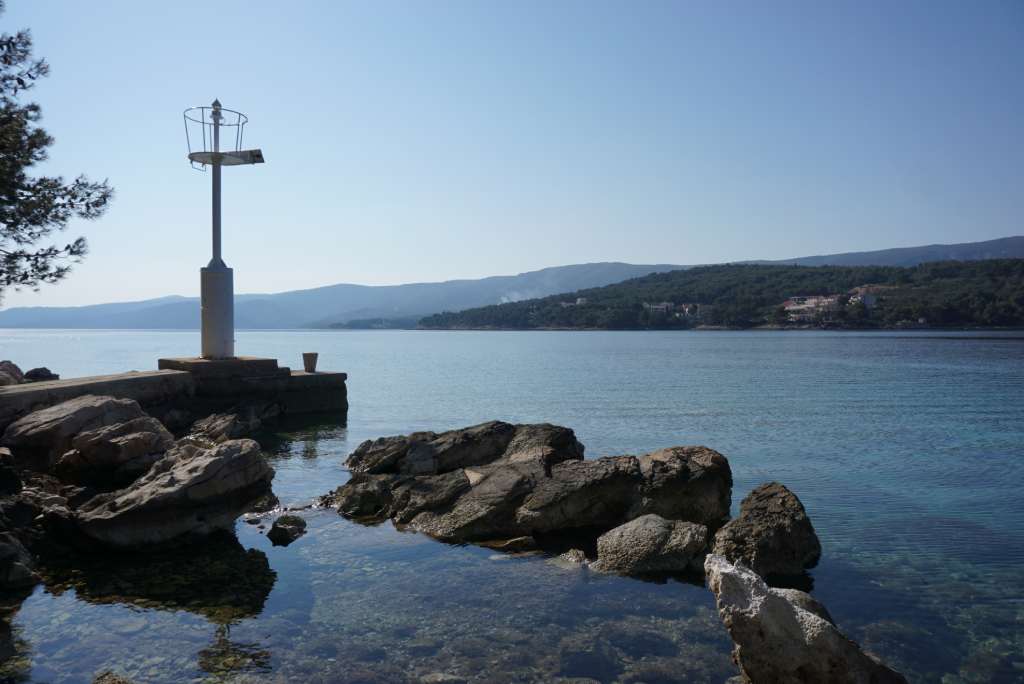
If beach hopping is your holiday style, Hvar might just be the right destination to visit in Croatia. With a length of 250 km, Hvar’s coastline offers plenty of bathing opportunities and a diverse range of beaches, from rugged, pebbly beaches to sandy ones. Even though the island is trendy and has tons of visitors throughout the summer, you can still find your little (semi)private place by the beach. The Adriatic seawater is very bright and has a unique, brilliant colour on Hvar, so you won’t fail with any of the coasts you choose. Just grab one beach that you like.
Sv. Nedilja, Zogon Beach
A beautiful pebble beach is situated on a rocky coastline in the southern part of Hvar. That shore has cliffs that rise majestically out of the Adriatic. The nature of swimmers and divers will like it because the water is incredibly bright. While it glitters in the sun, it seems like paradise. For children, there is a tiny sandy beach called Zogon. The beach with the depth increases slowly from shallow to deep – even grown-ups appreciate it, so they can relax in the water in complete calm.
Lučišća Beach
Lučišća Beach is to be located on the south side of the island, not so far from Sv. Nedilja village. Aside from the crystal-clear waters and pine forests, the journey there will offer stunning views. Lučišća Beach is a tranquil beach where one would like to swim in the summer. Parking at the beach can be difficult. However, most tourists come by ferry. While you are there, spend a lovely day lying on the beach or surfing and swimming, or be adventurous and take a dive. The hiking lovers will adore hiking the rocks above it.
Dubovica Beach
Dubovica, as one of the most popular and safest beaches in Hvar, lies on the south side, just before you reach Stari Grad. The elegant, ancient stone structures are one of the main subjects along the shore. Dubovica Beach’s glassy blue water and Hvar Island’s calm environment attract many tourists year-round. You can find a restaurant along the pebble beach, which serves delicious food. Getting to the beach needs a short walk, but you’ll enjoy every moment of it once you’re there. Why we like it: The area is beautiful, so it is charming outdoors.
Local tip: There may be crowds at these beaches.
Grebišće Beach
Located in the well-known sand cove Grebišće, 1500 m from the centre of Jelsa, the beach bearing the same name as the bay is a favourite among visitors to Jelsa. All those sand fans would like it. This Hvar’s finest family-friendly sandy beach is nothing glamorous. Still, children who want sandcastles would love them and enjoy building them.
Jerolim Beach
Jerolim Beach is a vanishingly rare beach type, situated on Jerolim Island, since it is a nudist beach. In particular, CNN had called it one of the world’s best nudist beaches. Not only is the real beach outstanding, but there is also wildlife everywhere along the shore, and nature is predominant there. Several bars can be located along Jerolim Shore, where you can relax and wait for your drinks.
Hvar events and festivals
There are a lot of them, especially during the summer. However, will mention a few of the most famous and attractive.
Hvar Lavender Festival
Hvar Island has excellent natural beauty, and lavender is a trademark of the island. Following its tradition in lavender fields, the island has a fantastic atmosphere during the Hvar lavender season. You can enjoy it at The Lavender Festival, which brings many lavender and plant lovers to Hvar Island each June. In addition to presentations on lavender distillation and many of the typical homemade souvenirs you can take home packed in your small drawers, during the festival, it is also possible to taste dishes made with lavender in the small village of Velo Grablje.
Jelsa Wine Fest fair
Look no further than the Jelsa Wine Fest – Fešta Vina, if you are hunting for a good taste of Hvar Island. Every year, this magnificent wine fair takes place over the last weekend in August. The Jelsa Festa Vina features Hvar Island’s finest wines and other speciality cocktails, along with plenty of music and dancing, including live concerts downtown. As the Jelsa Wine Fest Fair attracts tourists from all over the country, keep in mind that all the hotels are always booked during the festival. If you’re looking to be on the island during it, look to book accommodation in advance. The last weekend of August is a beautiful time for travel, and everything seems to be more peaceful.
Forska Fešta Pulene
If you see a group of boats identified as Hvar Island Harbour in late October, you will know it’s a Forska Fešta. The Forska Fešta Paulene, also known as the Modern Sailboat Festival, has become a renowned festival honouring Hvar Island’s maritime tradition. Pulene comes from the word “Pulena“, the wooden idol on the front of the boats set up to appease the gods.
Dormouse Festival
A regional group from the village of Dol proposed, about 8 years ago, establishing a festival to commemorate their village’s unique culture and traditions. It’s been branded The Puhijada. One feature of this festival celebrates the Dormouse, or Puh, as we call it in Croatian. The Dol people have continued the practice of hunting and eating dormice, a practice they have pursued since ancient times. The Puhijada finishes off with an incredible courtyard BBQ and lots of Croatian food. Even the dormouse is too far away to be my favourite food. Participating in the Puhijada held at the beginning of August is one of the funnest things you can do while you’re on the island of Hvar.
Hvar Island Easter procession
A traditional procession through seven churches has been held on Hvar Island every Easter for over 500 years. The songs are considered the oldest crucifixion songs in Europe.
Getting to the island of Hvar
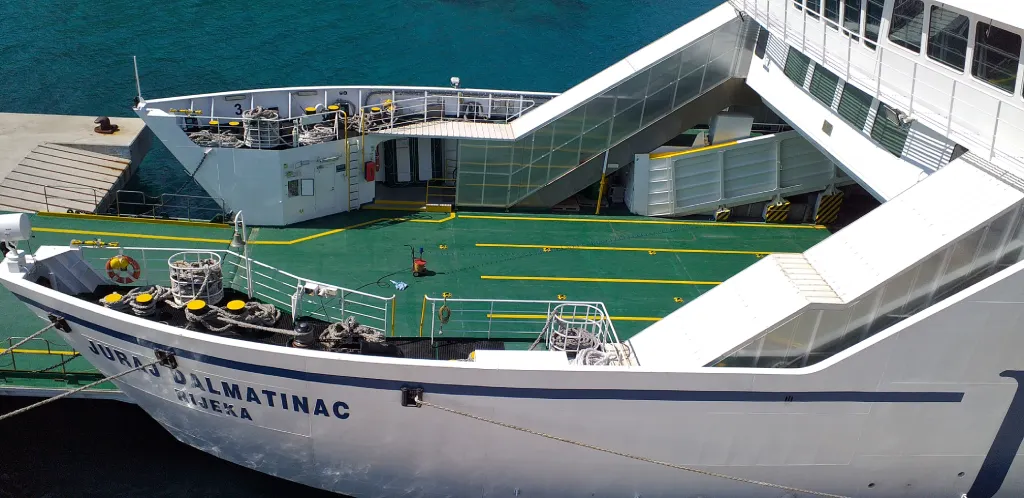
The only way to get to Hvar is by sea, so that means by ferry, own yacht, or ship.
⛴️ By Ferry. Split is the main harbour connecting Hvar, with ferries running on the Split–Hvar line to either Stari Grad or Hvar Town. Another option is the Drvenik–Hvar line, which takes passengers to Sućuraj at the island’s easternmost point. Besides these two routes, you can also take inter-island or coastal ferries. These are much longer sea journeys, but in their own way, they are a fantastic ride. Jadrolinija operates ferries from Split to Hvar year-round, with frequency varying by season.
✈️By Air: The nearest airports to Hvar Island are Split, Zadar (160 km), Dubrovnik (230 km), and Brač. If you are arriving via Split Airport, you can take either a shuttle bus or a local bus to Split Harbour. The ride takes around 30–40 minutes, after which you can board a ferry to Hvar.
🚆By Train (to Split): The nearest train station is in Split, located right next to the bus station, and there is also a waiting room for passengers. From there, you can take the ferry to Stari Grad or Hvar Town.
🚌 By Bus: Besides the central bus station in Split, there are connections to the bus stations for domestic and international cities. You can get to the ferry port in Split by bus, where you’ll then take the ferry to Hvar Island and, if needed, continue on another bus around the island.
🚗 By Car. Once you’ve made it to a ferry port on the island, whether in Stari Grad or Sućuraj harbour, there are plenty of insular roads running alongside the island of Hvar. You can drive almost the whole of Hvar, and the streets are made lengthwise all over the island from Sućuruj to the city of Hvar.
🅿️ Parking in Hvar. It’s available at the designated parking spots, and the charge depends on the parking zone.
Hvar tips
📍 Where it lies: In central Dalmatia, a two-hour ferry from Split, stretching 68 km between the islands of Brač and Korčula.
🏰 Wander: Hvar Town’s St. Stephen’s Square, the Fortica fortress above it, and the Venetian loggias glowing in the evening light.
🌊 Hidden corners: Stari Grad’s poetic calm, Vrboska’s stone bridges, the lavender-scented paths around Jelsa, and the sunlit coves of Dubovica and Lučišća.
⛰️ Slow adventures: Hike to Sv. Nikola (628 m), kayak to the Pakleni Islands, or cycle through the island’s vineyards and olive groves.
🍷 Flavours to linger on: Lavender honey, local Plavac Mali wine, prosciutto and goat cheese shared under a vine-covered terrace.
🎭 Traditions & festivals: The ancient Easter “Za Križen” procession, the Lavender Festival in Velo Grablje, and Jelsa’s late-summer Wine Fest.
🅿️ Practical: Ferries from Split to Hvar Town or Stari Grad; buses connect island villages. Best explored by bike, scooter, or on foot.
🐐 Trek Goat tip: Skip the rush. Stay inland for a night — perhaps in a stone village above Jelsa — and wake to the quiet music of wind, sun, and distant waves.