

As the ferry door swings open, the first thing that hits is the mingled scent of wild sage and salty sea air. This vivid welcome signals your arrival on Cres Island, set in the heart of vast Kvarner Bay, where a diverse and exciting coastline stretches as far as you can see.
The fact that Cres offers the enjoyment of diversity without stress means that a visitor will discover this the moment they step off the ferry and set foot on its diverse karst coast. I remember pausing on the narrow footpath just beyond the pier, letting the morning sun warm my face as a gentle breeze carried the fragrance of sage and rosemary from the hillside. Around me, honey-colored stones tumbled down to a secluded cove, and somewhere in the stillness, a bell chimed from a distant village. In that simple moment—breathing in wild herbs and salt air, watching sea and sky blur into calm—I felt something inside settle, as if Cres itself offered a quiet promise of return. Some parts of this island are simply an elixir for the soul. Still preserved from the trends of the modern age, Cres will enchant with its landscapes and karst, drawing energy from times that were in many ways different from those we know today.
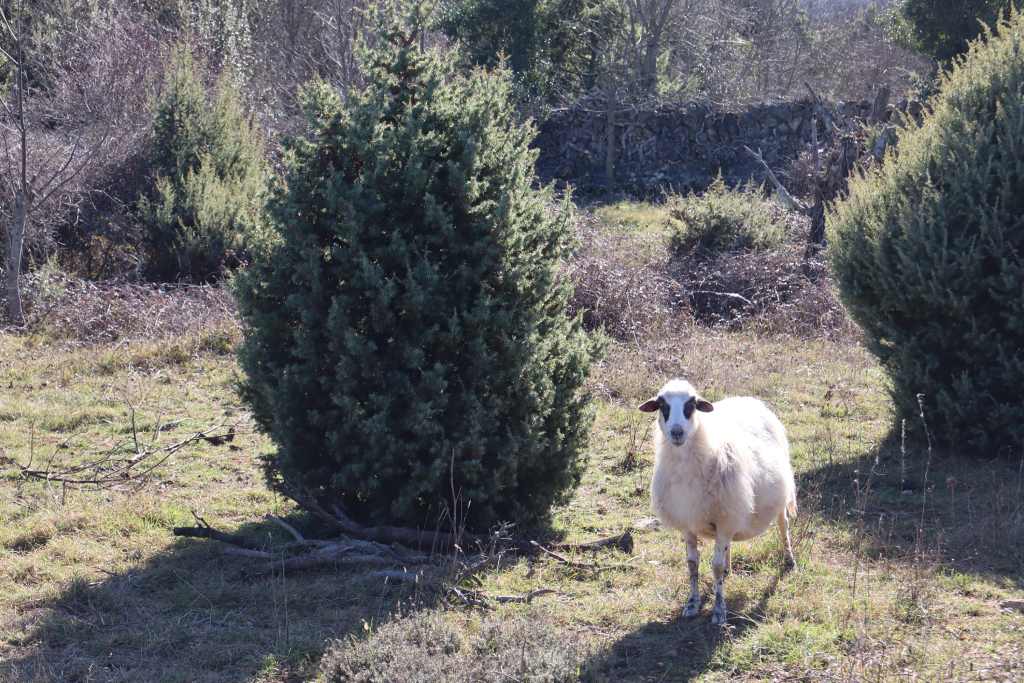
Cres is one of the largest of all Kvarner islands. Its “wild side” is best described by the northern, relatively hilly landscape. On that side, called the “Tramuntana trail”, we come across an area that has survived for thousands of years. And still today, it is almost untouched. Tiny hilly places like Beli and Ivanje still reveal their authentic traces of the past. Already on the way there, it will quickly become clear to whom this part of the island belongs. Distinctly matured, wild island sheep leap in the middle of the road as griffon vultures circle above them.
Historical Overview
The island of Cres has a tradition of different reigns. The island was autonomous before the Romans dominated it in the 2nd century. However, the island fell under Venetian rule from 1000 to 1797, after regaining autonomy in the 10th century. Like the other parts of the coast, it fell under Austro-Hungarian rule in the early 1800s, and after World War I, the island was under Italian rule. The islands were turned over to (former) Yugoslavia at the end of World War II and became part of Croatia in 1991, when it proclaimed independence.
To experience this remarkable history firsthand, imagine a day on Cres as a journey through centuries. You might start at the Roman ramparts in Beli, standing where early settlers watched the sea. Stroll through Venetian Cres Town and admire the clock tower and stone-paved squares where Venetian lions still gaze down. Step inside the Austro-Hungarian-era Town Hall for a glimpse of fin-de-siècle grandeur. Visit the Italian-period schools and signage still visible in Osor. Finally, pause in a local café and notice how the languages and customs of old Yugoslavia and modern Croatia blend in daily life. By following this ‘time-travel walking route,’ every visitor can literally walk through the island’s story, with each stop in the present revealing a layer of the past.
Island of Cres location
Along with the neighbouring island of Krk, Cres is the largest (405.78 km²) and, after Hvar, the most extensive Croatian island. The island, 66 km long and 12 km wide at its widest part, stretches north-south. It closes the Kvarner Bay with its northern end. To the west and northwest of it, there lies the Istrian peninsula; to the east and northeast is the island of Krk. Eventually, its south side is connected to the opposite Lošinj Island by a bridge in the tiny town of Osor.
It is considered that Cres Island merged with the island of Lošinj by a thin isthmus. However, a canal was dug to separate the islands to enable passage for the ships. Administratively, the island belongs to the Primorje-Gorski Kotar County.
10 Top Things To Do On Cres
The turbulent past, interwoven with trade activities so many times, has resulted in the complexity of the island’s culture and architecture. Furthermore, today it is encouraged that the island be made more fascinating in a historical and sustainable manner. Here, things move at a different pace. Rather than racing between crowded sights and busy promenades, visitors are invited to slow down, connect deeply with their surroundings, and savor authentic island traditions. The following list highlights ten uniquely slow experiences—immersive activities that encourage travelers to wander, linger, and truly experience Cres’s soul in ways that mainstream options may overlook. There is a possible step into some of the ancient Cretan places, which are mostly sparsely populated. The latter fact makes it an excellent substitute for Croatia’s traditional tourist attractions. Finally, the island’s magical countryside is fantastic, making it one of the best places to explore in Croatia.
Starting from the island’s northern slopes, impassable, whipped by winds; crossing the central plateau, wrinkled, sharp, rugged; reaching the southern slopes, open to the mistral and the sea, laments its bays; signs of this supernatural origin could be felt everywhere. One will find them in tortured thunderbolts, on the tame snout of a sheep or in houses and old churches. It is an island made of stones. Stone upon stone, from which a stone is born, a stone that whitens towards the clear sky that the griffon vulture proudly and arrogantly surrounds in all its boundless freedom. Cres seems to be both mystical and pure.
Every time one decides to step on Cres, they could know this island would offer a relaxing time, no matter the activity. Before we dive in, here’s how we’ll wander Cres: we’ll trace its fascinating history, meander through ancient villages, hike rugged scenic trails, and uncover hidden beaches and coves. Continue reading, since this island is full of things to see and do!
Welcome to Cres Town
Surrounded by a fertile landscape and gentle hills, Cres Town has welcomed generations drawn to its natural riches and striking sea. These contrasts gave rise to a place where tradition thrives, where fishing, farming, and shipbuilding have long defined community, and every visitor is invited to be part of this enduring story. As local fisherman Marko says while mending his nets on the dock, “On Cres, the sea gives us everything. My father taught me to respect the currents and the fish, just like his father did before him.” Nearby, shipbuilder Ana adds with a quiet pride, “Every boat that sets out from our harbor carries a piece of our heart, shaped by hands that know this coastline like family.”
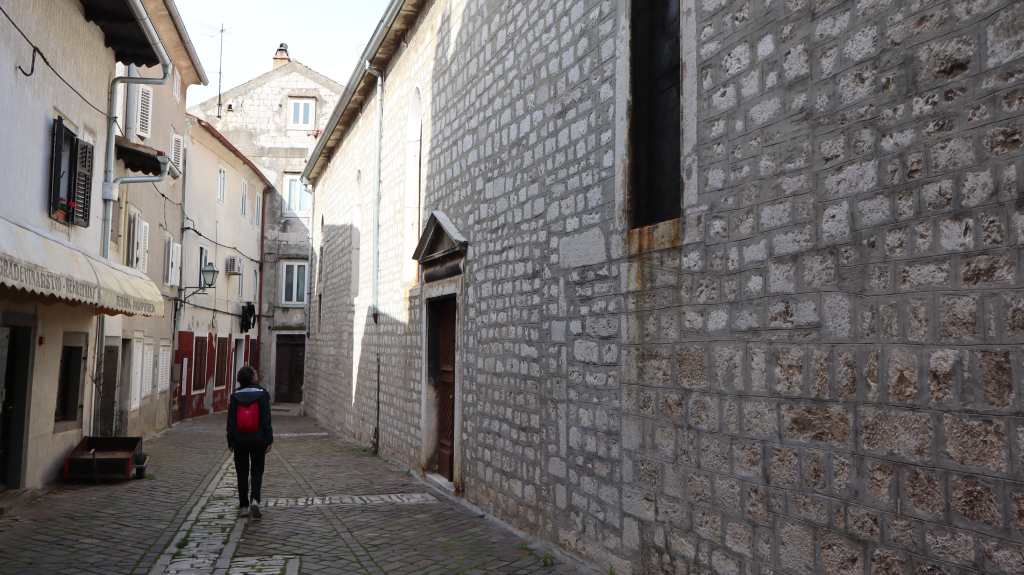
Cres flourished in the 15th and 16th centuries, becoming the island’s cultural and economic centre. Its old town is a harmonious blend of stone houses, narrow streets, and historical landmarks that reflect a strong sense of community and tradition.
Wander through the streets once called Res Publica Crepsa, visit the hillfort on St. Bartholomew, or admire dry-stone walls that reveal the Cres people’s care for the land. Architectural highlights include the city gate, clock tower, parish church of St. Mary of Snow, and the 12th-century Church of St. Isidore.
Don’t miss the Gothic-Venetian Petris Palace—now a museum and birthplace of philosopher Frane Petrić—and the Franciscan monastery with rare books and Glagolitic manuscripts. Cres offers a rich history, authentic charm, and warm hospitality for every visitor.
📍 Bonus while in Cres town: discover the Myth of Cres in the Town Museum
Before exploring Cres’s natural and historical treasures, uncover its mythical roots in the Cres museum. According to legend, the islands of Cres and Lošinj were once called Apsyrtides, named after Apsyrtus, brother of Medea, who met his end here in ancient myth. Over time, the island saw Neolithic settlers, Liburnian-Illyrian tribes, Greek sailors, Romans, Byzantines, Slavs, and Venetians—all of whom left traces in the island’s culture and landscape. Despite these changes, the harmony between people and nature has remained strong.
To dive deeper into this rich past, visit the Cres Museum in the Gothic-Renaissance Arsan building. Its eight collections include archaeological finds from prehistory to the Middle Ages, traditional tools, clothing, and everyday items from the 18th to 20th century – telling the full story of life on the island.
Find the Grifon Vultures in Beli
After leaving the port of Porozina, the road leads to Sis (650 m), the highest point of Cres, and then descends to Beli, a historic village perched on a 130-meter cliff. With roots in prehistory, Beli offers stunning views of Velebit, a charming pebble beach, and a sense of timelessness. While you explore Beli, consider visiting the Eco Centre Beli, where you can learn about the rescue and protection of the island’s rare griffon vultures. By joining a guided tour or leaving a small donation, visitors directly support the ongoing conservation of these majestic birds and become part of the story that helps keep Cres wild and thriving for generations to come.
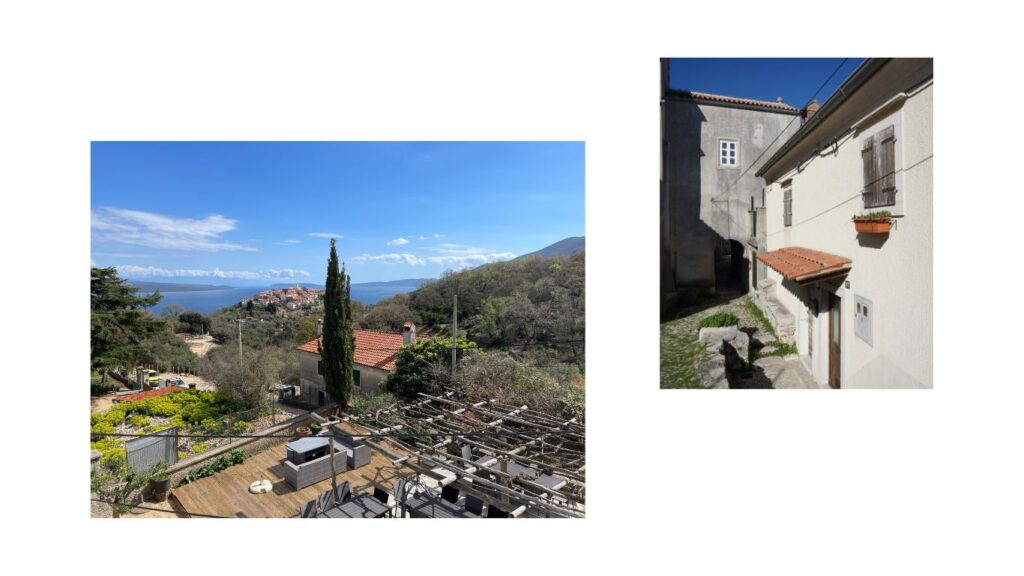
Once known as Caput Insulae by the Romans, Beli features ancient ramparts, Romanesque-Gothic churches, Glagolitic tombstones, and the remains of a medieval commune. Its quiet streets and stone agora speak of centuries-old traditions.
Ideal for a peaceful escape in nature, Beli offers simple accommodation and a small camping area. Don’t miss the Eco centre Beli, home to the island’s griffon vulture rescue efforts—protecting one of Cres’s most iconic species, with only around 100 remaining in the wild.
Hike to Sis, the most naturally scenic point on the island
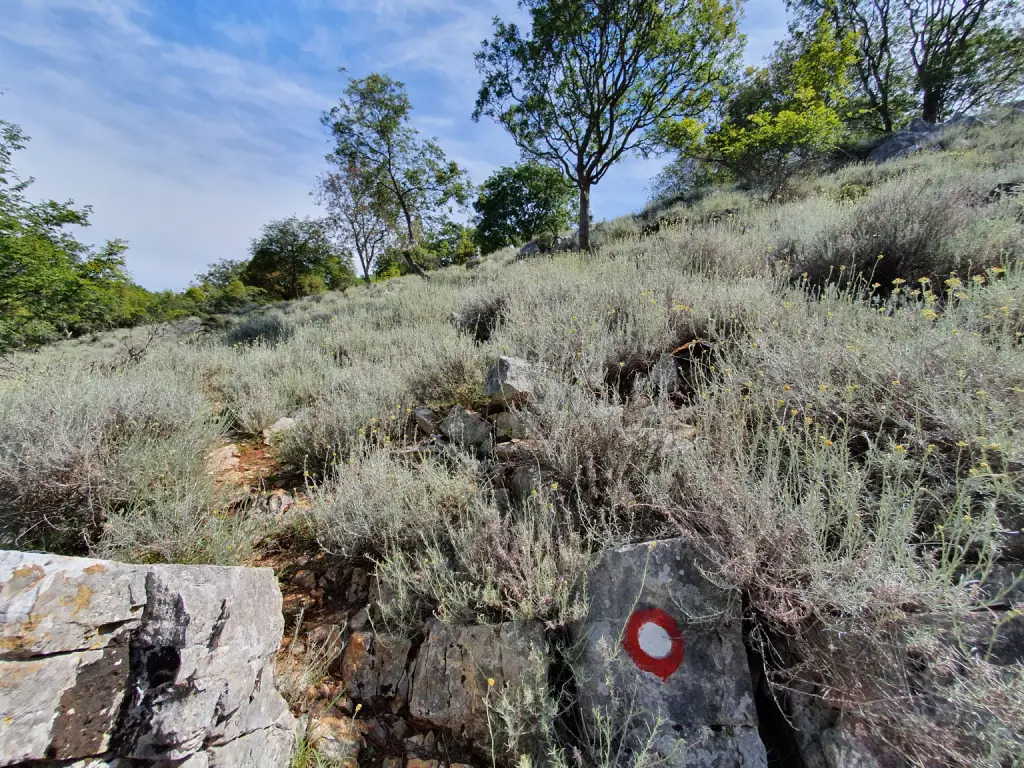
With over 100km of marked trails, hiking in Cres is an excellent way to see the island’s natural treasures, some of which include the freshwater Vrana Lake and the Tramontana Woods. However, the peak with probably one of the best obstructed views is Sis.
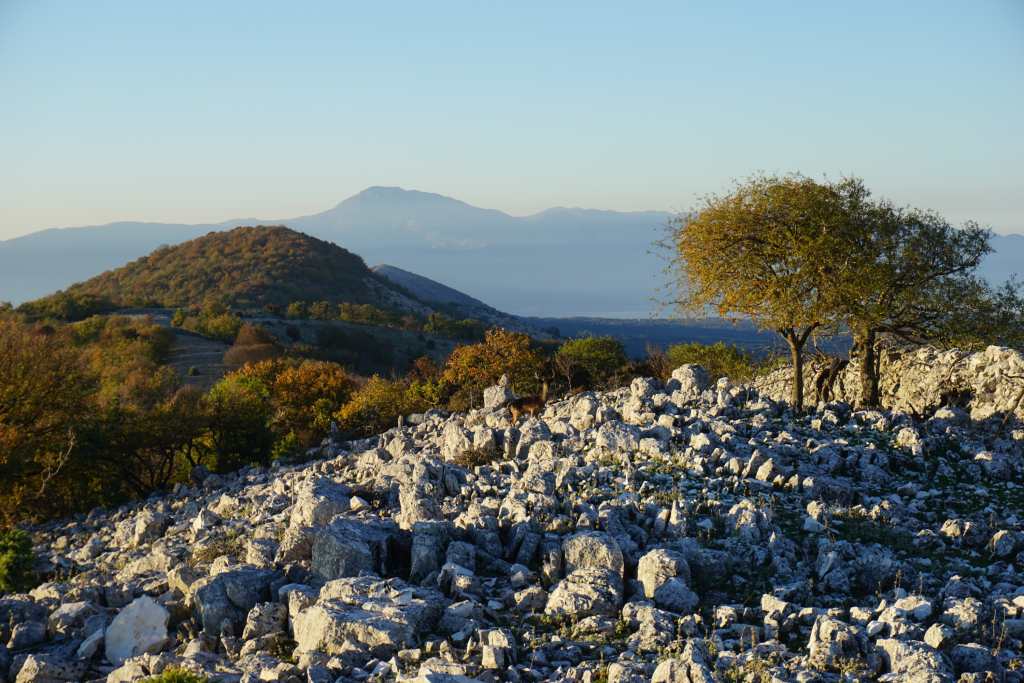
Set above the island road leading from Porozina to Cres Town, the trail’s starting point is right on Beli’s road. Leave a car there and head up for the magnificent view. Though Cres is an island, bounded from all sides by the sea, this island would never stop surprising. So it happens to me, too. After I reached an excellent point of Sis, right there, I mentioned a deer. Yes, a perfect chamois friend also lives on that island!
Enjoy the fantastic view of Vrana Lake from Pernat
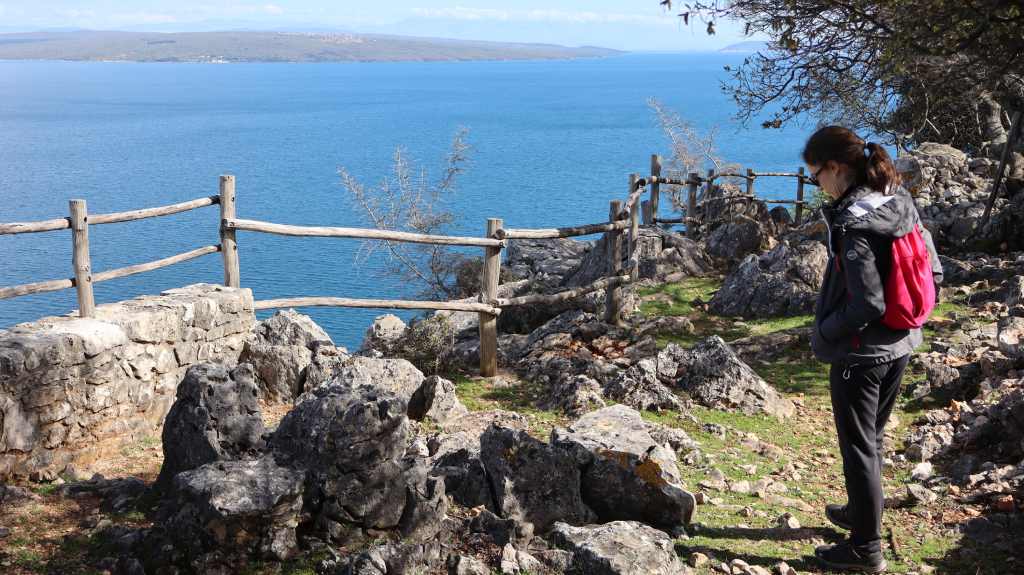
Set high on a hill, Vrana Lake gazes over the wide Cres Bay, its shimmering waters watching the world beyond—the bluish outlines of the Istrian peninsula and the proud peak of Učka. Above, a griffon vulture soars, its wings embracing the wind. Born on this island, the eternal voyager carries the spirit of adventure, journeying across Greece, Sicily, Malta, and Spain, before returning home, drawn back by love to nest.
Villages like Pernat, Osor, and Beli blend into this serene landscape, their simple, traditional stone architecture harmonising with the tranquil surroundings. These timeless settlements are living testaments to a rural way of life deeply attuned to nature’s rhythms. One quiet afternoon, I wandered past a grove where several locals had gathered near the edge of an olive orchard, tending a fire beneath a spit of lamb while children collected figs from nearby trees. The fragrance from the roasting meat mingled with the sharp scent of fresh olive oil and the earthy sweetness of ripened fruit. In that moment, it felt as though the entire countryside was joining in the meal. The air really is filled with the vibrant scents and flavours of lamb, cheese, olive oil, and figs, evoking a sense of abundance. The locals, radiating warmth and sincerity, invite you to experience the Mediterranean’s enduring spirit, its climate, traditions, and remarkable hospitality.
Find Glagolitic traces at Valun
In the shelter of Cape Pernat, in a deep bay of the Cres Bay, there is Valun. A typical fishing village and a place that has been widely known for the discovery of the famous “ValunPlate” in the small church of St. Marcus, at the local cemetery. The plate makes an exceptional document for the history and culture of Croats in this area. Dating back to the 9th century, there is today a parish church of St. Mary.
The Valun tablet is known because the first Glagolitic inscription was carved on it, and its translation into medieval Latin was found on the island. Copies of other, similar texts are kept in the Glagolitic lapidary in the open, next to the “Juna” restaurant. Space is provided by renovating an old oil mill and a small museum that testifies to the locals’ hardworking, valuable nature.
Sidebar: The Glagolitic script, developed in the 9th century, is the oldest known Slavic alphabet and a treasured symbol of Croatian cultural identity. Its presence on Cres reflects a living connection to centuries of language, tradition, and national heritage, reminding visitors that the written word is a cornerstone of community and memory.
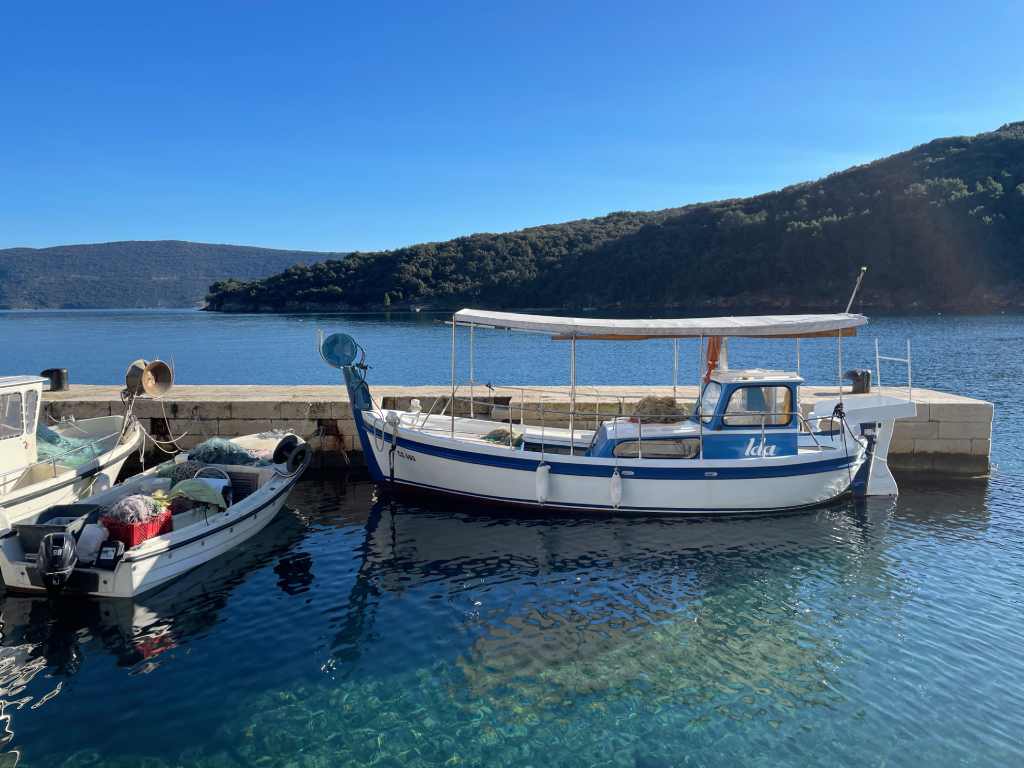
Because, in this settlement, peasant and coastal cultures intertwine. Boats and fishing boats are anchored along the coast; nets and wrinkled faces can be seen everywhere, dried by the sun and wind. I will quickly find accommodation here, either in private houses or in a small, beautifully decorated camp for all those who like to spend the holidays in direct contact with nature. Walks, comfortable nights in the company of friends, boat trips and much more, this small fishing town has to offer. ButValun is, above all, a place of famous gastronomic specialities, primarily fish, shellfish, and other seafood, prepared with great love and skill according to old, traditional recipes.
Find importance of the bridge at Osor
The town of Osor, with an extension of the road leading to Punta Križ(Punta Cross), directs us to the southern end of the island. Since ancient times, Osor has been one of the leading centres of the islands of Cres and Lošinj and a vital transit port of strategic importance, located along the canal, which significantly shortened navigation to the northern Adriatic ports.
Remains of its glorious past are visible in the city’s historic centre: the forum, the town hall, a loggia with a semicircular vault (today a museum), the bishop’s palace, and the cathedral with a bell tower. The buildings date from the 15th to 16th centuries, when the town was closed due to epidemics inside its walls. Outside the old core are the remains of the mythical Apsoros: the foundations of an early Christian cathedral, walls, ramparts, gardens and flower beds covering traces of ruined Roman villas and monasteries, hidden pearls that evoke memories of past times.
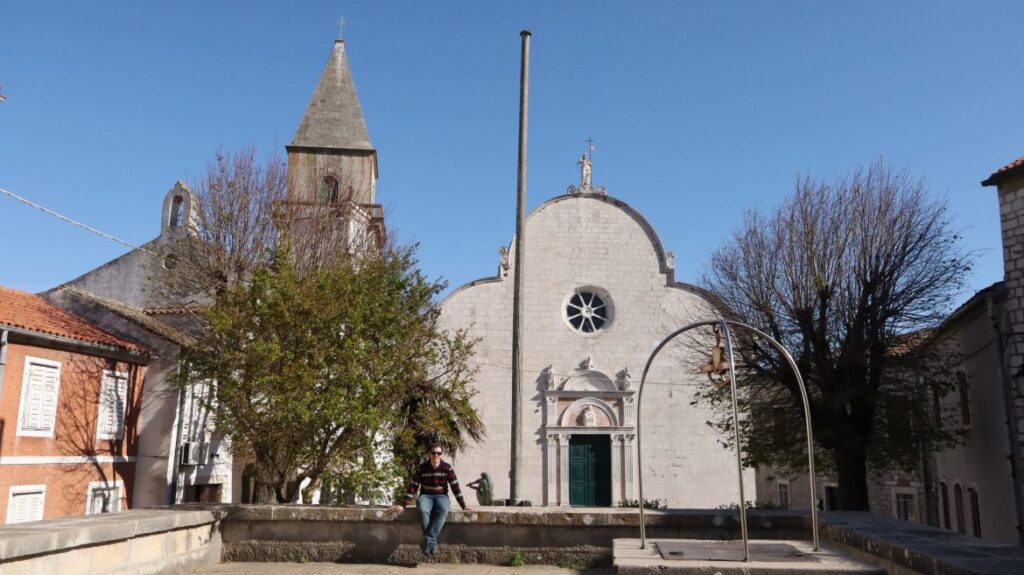
Today, this city is revived with gratitude for the cultural and artistic manifestations of the Osor Music Evenings. Those are mostly held in the cathedral. Tourist staff offer their guests a stay in a campsite by the sea or private accommodation in the historic centre. Continuing on the road to Punta Križ(Cross), which stretches between lush forests and giant pine trees, you come to a large and well-stocked camp. The campground offers naturist areas, restaurants, shops, sports facilities and many beaches along beautiful bays.
Find a fort in Martinšćica
Created as a fishing village, Martinšćica has recently opened up to organised tourism thanks to the beautiful bay in which it is located and the attractive beaches. In a short time, two available campsites were built. With rooms in private accommodation, apartments, and tourist resorts, they can satisfy guests’ needs. The village of Martinšćica sits on a breathtakingly beautiful bay with a spectacular, pristine pebble beach, making it an enjoyable swim stop. Be sure to take a camera because this bay is stunning.
The settlement owes its name to the medieval church of St. Martin, located next to the Glagolitic monastery, the Franciscan Third Order, and the church of St. George. Here is a fort, a country house of the Cres patrician Sforza from the 17th century. It is one that offers the man a perfect balance with the nature that surrounds him.
Enjoy the scenic view at Lubenice and head down to the beach
Directly opposite Valun, along the plateau’s ring that rises in the middle of the island, chained to the top of a rock, wakes the settlement of Lubenice, bravely resisting storms and wind gusts. Lubenice is another of Cres’s smaller villages where nomads would put on their adventurer’s cap as they trek outside the city and explore. Perched on top of a cliff 378m above sea level is Lubenice, where one will find a medieval fortress and the remains of the city walls. The Romans, therefore, called this place Hibernia, making it impregnable. Fortress rising on top of a 378 m high cliff, enclosed on the east side by a defensive wall with two gates.
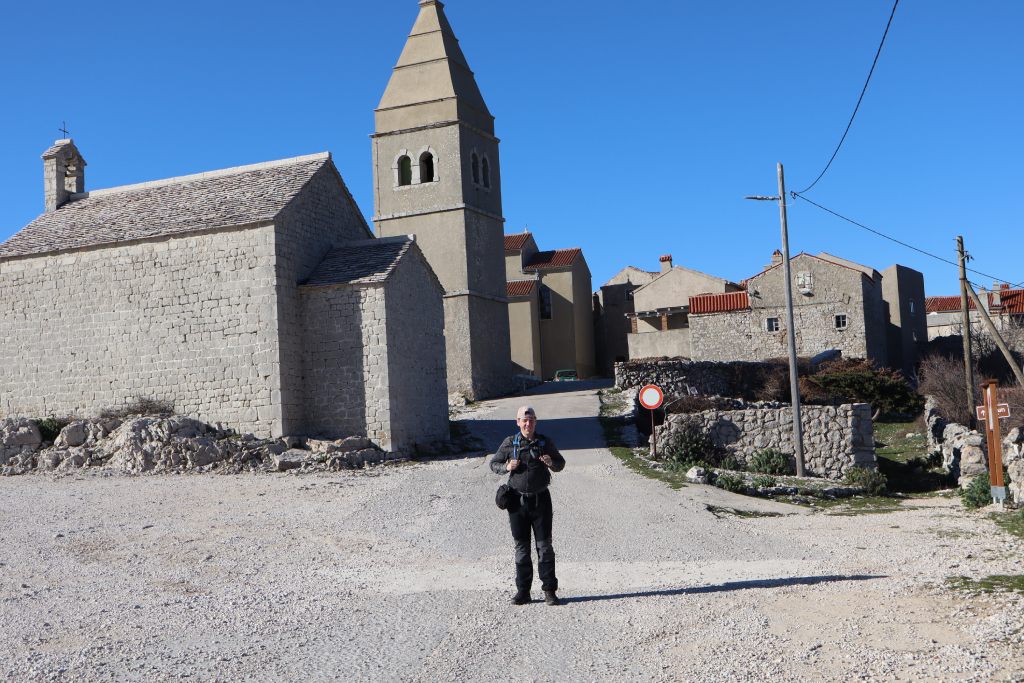
The first impression one would get is that it is on the deck of a ship firmly anchored out of time. Traces of this glorious past are still visible on the houses: openings for loopholes, built-in ship’s shafts. Just enter the wall surrounding the local square to be overcome by the sensation of poisoning, like a seagull that flies freely over the rugged surface of the blue sea. Here, on warm summer evenings,the village hosts Lubenice Evenings. There are some of Croatia’s best performers entertaining scores of visitors to the island. Directly below Lubenice is St John Beach, ranked 15th best beach in the world by Bild magazine.
Hike over Tramuntana Trail
For all those seeking the trail of the oak, hornbeam, chestnut and archaeological sites, this is the one to go. Have a keen eye, enjoy the island’s blue sky, and do not forget the main thing: look down, since this trail is home to one of the oldest reptile species. Try to spot the endangered Eurasian Griffon.
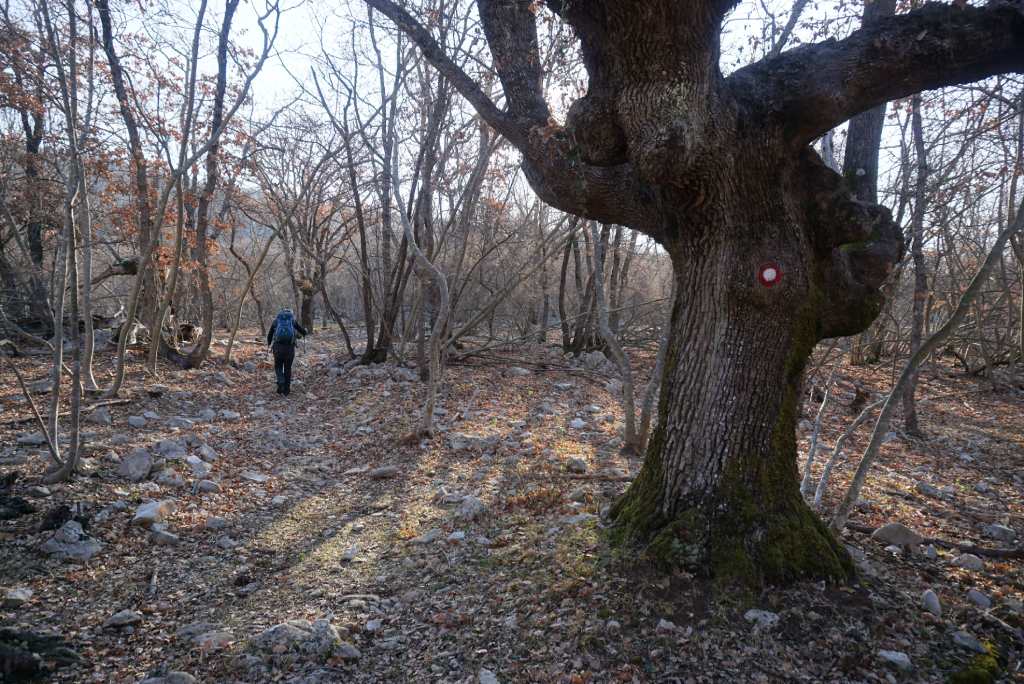
The trail starts in the tiny village of Porozina and leads over the thick island forest. There are several directions one could choose to hike. Still, the most important thing is reaching Beli village (as mentioned above).
2 Bonus Things To Do On Cres
A Mediterranean mild climate, karst and crystal nature. One would ask: What more should one expect from Cres? Continue to read to find out.
Head to the neighbouring Lošinj Island archipelago
Lošinj, along with Unije, Ilovik, Susak and nearby islets, forms a stunning archipelago known for its rich seafaring past and vibrant tourism. While each island deserves its own story, Lošinj stands out for its legacy.
In the late 18th century, Veli and Mali Lošinj became maritime powerhouses thanks to pioneers like the Vidulich brothers, Dr Capponi, and shipowners Martinolich and Cosulich. Their efforts led to the construction of shipyards, a nautical academy, and even an observatory, while captains like Pedrina and Budinich connected the island to distant continents.
By the late 19th century, as sailing gave way to steam, tourism took root. Lošinj’s mild climate and pine forests made it a health resort for the Austro-Hungarian elite. The first hotel opened in 1887, followed by luxury villas and medical institutes, especially in Čikat Bay. Today, Lošinj continues this legacy with modern facilities and a year-round tourist offer rooted in a tradition of excellence.
Find an outdoor activity at the Island Point
It is an excellent idea for anyone who aims to backpack, trek, cycle, or kayak. One of the activities we did was trekking and hopping over the island. Those with more days available would hop not only all the Cres islands from one to the other side, but also include Lošinj and its archipelago treks.
We will surely update our posts about all such treks, providing as much information as possible. Follow our posts to find the best updated Kvarner Bay information.
Beaches of Cres – Hidden Gems by the Sea
Cres is rich in tiny coves, wild beaches and breathtaking coastal corners, many of which remain hidden, waiting to be discovered. Even for us who live nearby, exploring them all is a lifelong adventure. To help you join us in discovering new gems, we invite you to follow our ongoing updates—connect with us on Instagram at @trekgoat, @putokoza or sign up for our newsletter through the link below. That way, you’ll be the first to learn about our latest beach finds and insider tips from the island.
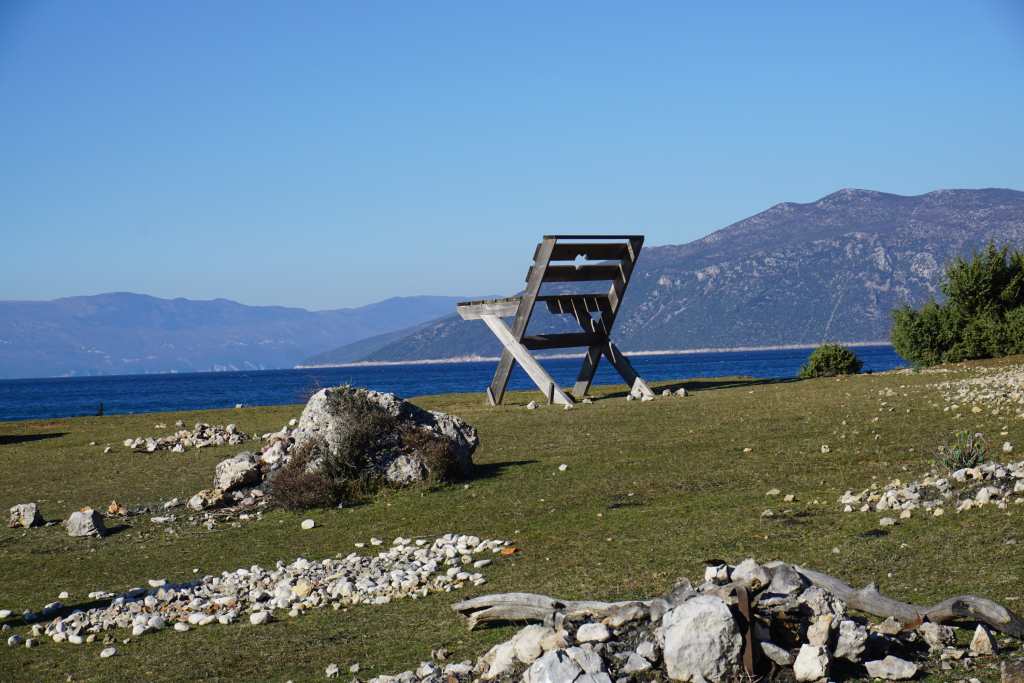
The Western Pearls. Most beaches lie along the island’s western coast, between Cres town and Ustrine Bay. Some are shaped like seashells carved by time, wind, and waves. Polished white rocks dip into emerald-blue waters, forming stunning natural sculptures. You’ll reach some on foot, walking ancient trails through olive groves and wild herbs. Others can only be accessed by boat, making daily excursions the best option.
Plava Grota – Blue Cave & St. Ivan Beach. One of the island’s highlights, the Blue Cave (Plava Grota), lies in Žanje Bay beneath the village of Lubenice. This sea cave glows with magical light that filters through cracks in its walls, especially in the late afternoon. A small pebble beach lies inside the cave, which has two entrances — one above water, the other underwater, accessible by diving.
Nearby is St. Ivan Beach, ranked by Bild magazine among the 40 most beautiful beaches in the world. The descent from Lubenice takes about 30–40 minutes, while the return hike lasts up to 1.5 hours. Alternatively, approach by boat or kayak from Martinšćica.
- Beli Beach. Under the medieval village of Beli lies a romantic white-pebble beach framed by forest and old stone boat houses. With no amenities and little crowd, this is the place to enjoy pure nature and the crystal-clear sea.
- Jablanac Cove – Ivanje Porto. Near the quiet hamlet of Ivanje, between Beli and Porozina, this cove is more of a peaceful anchorage than a true beach. Still, if you enjoy solitude and have time for exploration, the walk down from Ivanje is rewarding, as we found ourselves.
📞 Useful Information – Cres Island
- 🚨 European emergency number: 112
- 🏥 Hospital: Cres Health Centre (Dom zdravlja Cres) – located in Cres Town
- 💊 Pharmacy: Cres Town (regular hours; limited availability outside the summer season)
- 📍 Where it lies: Northern Adriatic, at the meeting point of Istria and Kvarner Bay — one of Croatia’s largest islands, known for its wild landscapes and quiet rhythm.
- 🚢 By ferry:
- Brestova (Istria) → Porozina (Cres): approx. 20 minutes
- Valbiska (Krk Island) → Merag (Cres): regular year-round connection
- 🚌 By bus: Frequent bus connections from Rijeka and other Croatian cities, coordinated with ferry arrivals.
- ✈️ By air: Fly into Rijeka (Krk) Airport, then continue by ferry or private transfer.
- ⛵ Nautical & outdoor life: Cres is a sailor’s haven — crystal-clear waters, hidden coves, and well-equipped marinas in Cres and nearby Lošinj. On land, the island offers hiking and cycling trails, water sports, and some of the Adriatic’s most rewarding diving sites.
- 🎭 Events & island life:
- Cres Town Summer Nights
- Cres Summer Carnival
- Vidovići & Martinšćica Summer Festivals
- Tramuntana Days (celebrating the island’s wild north)
- Belej – St. Rocco Festival (16 August): the island’s largest celebration, with live music, local food, and late-night gatherings
- 🌿 Trek Goat tip: Skip the rush and head north into Tramuntana. Walk slowly, listen to the wind in the oak trees, and let the island reveal itself without asking for attention.