

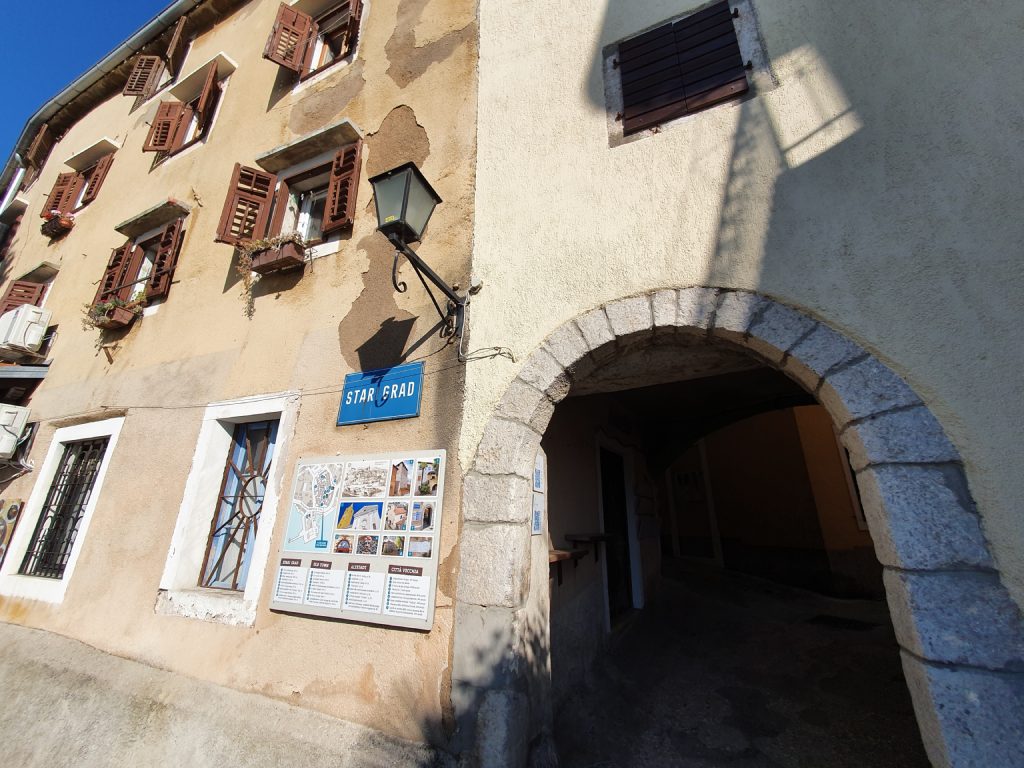
Step into Lovran and the first thing you notice is the fresh, herbal scent of wild laurel drifting through the air, a fragrance carried on the coastal breeze. The town itself is tiny and vibrant, its white and yellow houses clustered close together, each facade glowing in the Mediterranean sun.
Strolling the narrow streets of this ancient city on Kvarner Bay will fulfil the dreams of any artist or storyteller like me who enjoys seeking inspiration in picturesque towns. But Lovran’s true magic lies in unearthing its secrets—the traces, stories, and corners that are waiting to be discovered. Join me as we follow these clues together in this Trek Goat article and explore all there is to do in Lovran.
Lovran, one of the oldest coastal settlements on Istria’s eastern shore, was once called Lauriana, named for the laurel (Laurus nobilis) that still grows wild here. Over two thousand years of history are embedded in its stones. Today, Lovran is quietly alive, both old and gentle. The old town centre retains its medieval plan. Small cobblestone streets circle inward, leading to the church of St. George, its bell tower rising above a patchwork of terracotta roofs. The town is quiet yet vibrant. Both exist side by side at their core. Walk slowly. Let your pace match the alleys’ easy rhythm. Pause for wine in St. George’s tower’s shade. Listen. The mountain, sea, and old walls quietly speak to those who listen.
Why should you visit Lovran?
Lovran is one of the small towns on the western coast of the Kvarner Bay in Croatia, overlooking the island of Cres. The region has existed since prehistoric times, with life continuing unabated. Many nations have passed through it, leaving behind a wealth of cultural and architectural heritage that speaks to our ancestors. How do I uncover the layers of its history? The answer is simple: I start by walking the streets of a place like Lovran.

Each time you visit a place like Lovran, I recommend searching for the small details. When you look, you’ll discover things that aren’t immediately obvious. If you do what we at Trek Goat did, you will find these hidden gems. We at Trek Goat created this blog post to uncover Lovran’s story together. This town, filled with culture and history, offers a variety of activities. Let’s explore them.
Lovran is known for its beautiful beaches and scenic promenade. At the foot of Učka Mountain, it attracts outdoor lovers. For adventurers, nearby mountains and nature parks offer hiking, biking, and breathtaking viewpoints. Leisurely visitors will enjoy seafront walks to Opatija, soaking in Mediterranean scents and sea views. Food enthusiasts will find lively terraces and cosy taverns, serving local seafood, Istrian pasta, and Kvarner flavours. Whatever your style, Lovran offers a distinct, enjoyable experience.
Lovran in history
You may not know that Lovran is among the oldest coastal settlements on Istria’s eastern coast. Legend says Roman patrician and statesman Marcus Vipsanius Agrippa built his summer residence here, the Roman “Villa Rustica.” The villa, built in the first century AD, marked the start of settlement in the area. It was home to the Liburnians, who worked the land and grew vines and olives.
Another little-known fact: Lovran is named after laurel (Laurus nobilis), the Mediterranean plant seen on its coat of arms and growing nearby. In “Ravenati Annonymi Cosmographia,” an anonymous Ravenna cosmographer described Lauriana, the ancient name of Lovran.
During the Middle Ages, Lovran was fortified with walls, and the remaining walls can still be seen in the Old Town today. It’s assumed Lovran was one of the fortified Liburnian castles forming the Latin Castrum Kastav line. Unlike other palaces built on a hill, Lovran is unique because it is built by the sea. In the 12th century, Lovran was an important trade and shipbuilding centre in the entire northern Adriatic. In the 15th century, Lovran became a vital pilgrimage port, with pilgrims setting out for the Marian shrine of Loreto in central Italy. Describing the expedition in his biography, the imperial adviser Sigismund Herberstein (1486-1566) wrote:
“We boarded a ship in Lovran and went to Jakin (Ancona) to make the pilgrimage, and came back the same way from Ancona to Lovran “.
Today, echoes of maritime history remain at Lovran’s old harbour, Mandrać. Stand by the water, where trading ships once docked, and picture the busy life of merchants, sailors, and pilgrims as Herberstein described. To deepen your experience, see the remains of the Old Town walls and explore the area around St. George’s Church, the starting point for many medieval journeys. Let these sites take you back to when Lovran was a true gateway to the Adriatic.
The steamship’s appearance in the late 19th century led to a severe economic crisis across the entire Lovran, as it caused the collapse of the shipping and shipbuilding industries, both of which were based on shipbuilding. Many were then forced to immigrate to overseas countries. To put a human face to these changes, imagine the Radoslav family, whose generations had built wooden boats along Lovran’s shore. After the shipyard closed, they faced the uncertainty of starting over. Instead of leaving, they converted part of their home into one of Lovran’s first seaside boarding houses, welcoming foreign visitors searching for the clean air and quiet beauty of the Adriatic.
Their story is one example of families who turned challenges into a tourism industry that now defines Lovran. In the early 20th century, the city grew north and south. The water supply, city baths, and electricity were introduced. Lovran once had a tram line to Opatija, abolished in 1933. Many villas, summer houses, boarding houses, and hotels were built, establishing Lovran as a health and tourist resort.
Lovran sights
After reviewing Lovran’s history, let’s see which sights have been preserved for you to visit.
Enjoy the colours of The Old Town Lovran
Your first stop in Lovran should be St. George’s Square, the town centre. The square, filled with colourful homes, is dominated by St. George’s Church.
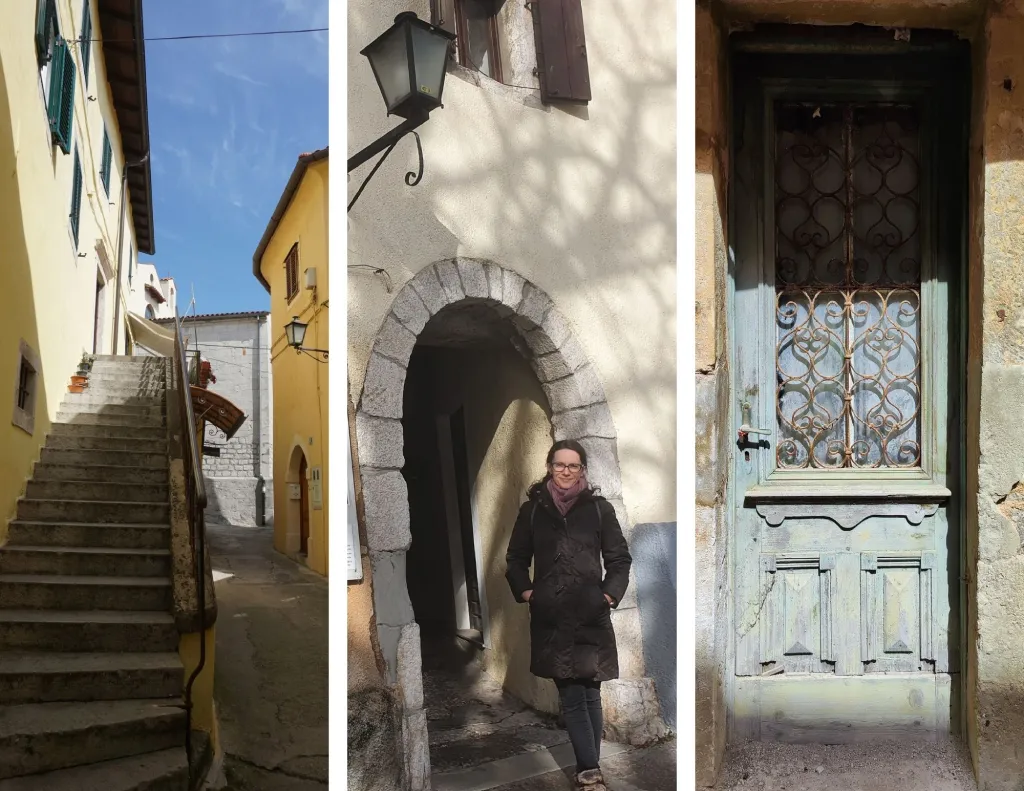
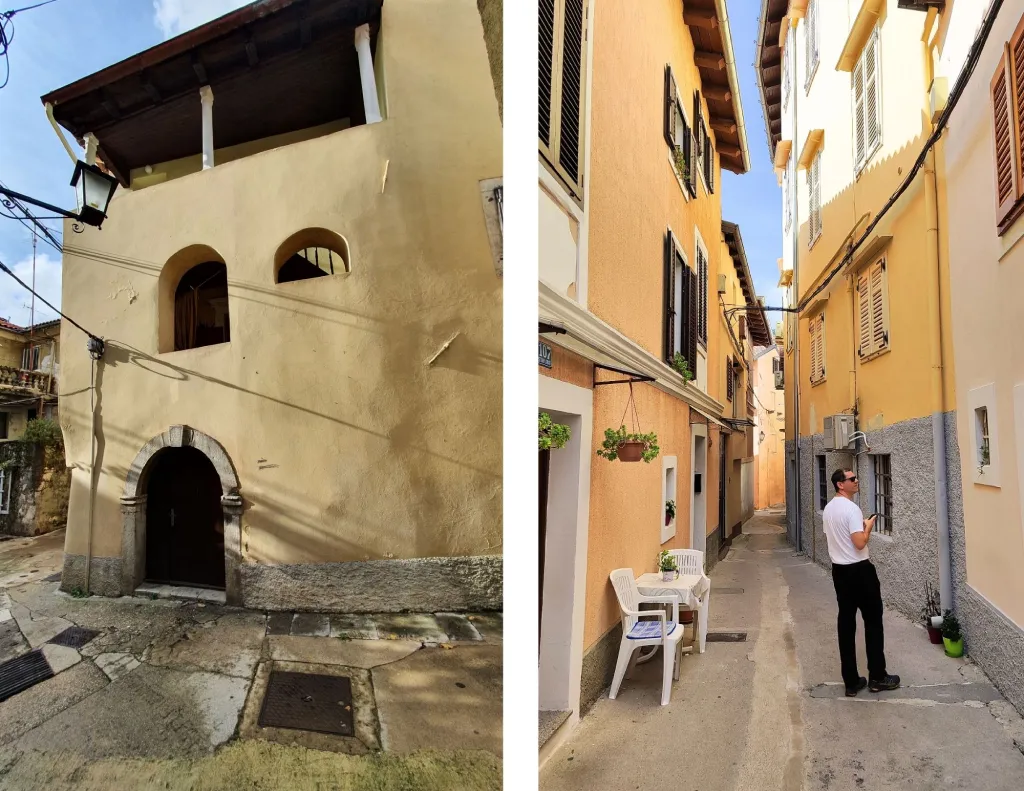
Walking the tiny, scenic streets reveals 16th-century Mediterranean architecture. You can enjoy a mix of architectural styles and patterns. Look closely at buildings’ facades, gates, and passages—some houses have stone arches, adding visual interest.
Strolling Lovran’s narrow streets, you may feel inspired to become an artist. Your phone will fill with photos of the charming, clustered houses. Others may simply enjoy a quiet coffee in the square by the bell tower, as we did.
Look at the St. George Church
You can’t miss the yellow building with the bell tower in the centre—St. George’s Church, which gives the square its name. It was first mentioned by the parish priest, Raden, in a testament dated 9 May 1410. Its oldest part is the Romanesque sanctuary, built in the 12th–13th centuries. The church was restored in the Gothic period with a mesh roof and late Gothic frescoes.
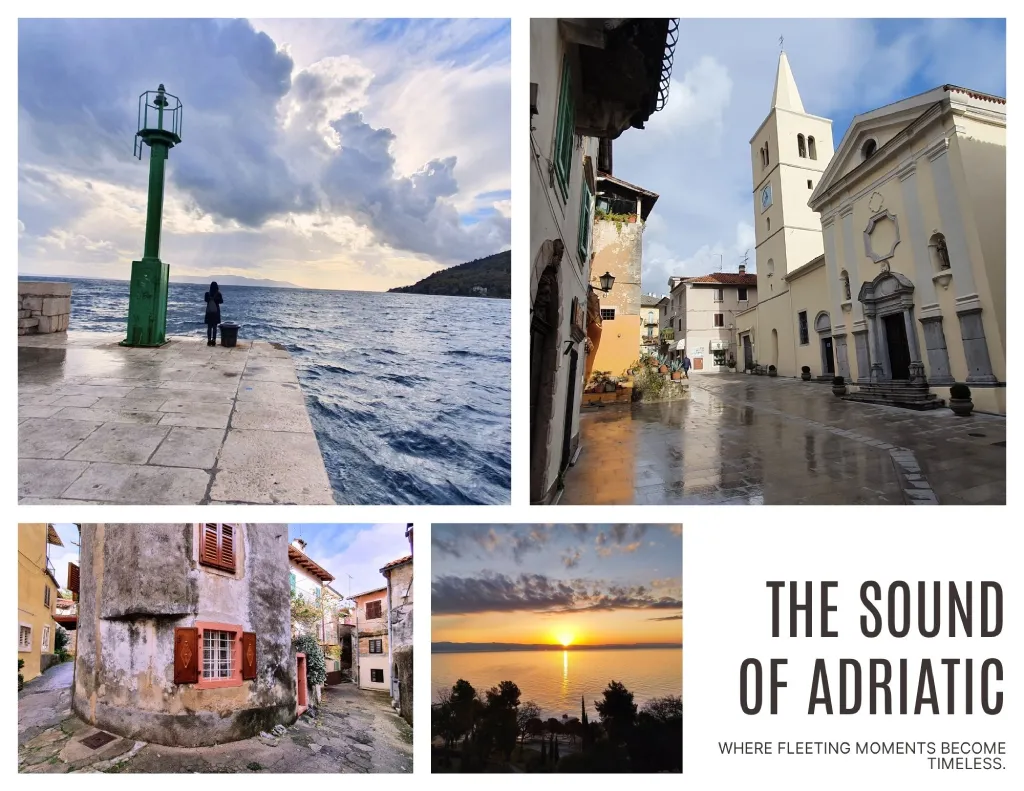
The Belltower dates back to the 16th or the early 17th century and stands next to a church, making the old town visually appealing. Recent art history has determined that the belfry’s style is Renaissance rather than Baroque.
Watch the City Tower
The large building near the square, across from the church, is a remnant of the fortification system. Don’t miss this prominent yet almost hidden stone structure, the only preserved tower in Lovran, which served as a prison from 1830 to 1870. Its stone-block exterior shows its turbulent history, having been built in two parts.
Notice that the lower Gothic stone blocks differ from the upper ones. The upper blocks are likely replacements for those destroyed during the Uskok War (1615-1618).
See the “Mustaćon”
While strolling the main square of Lovran’s old town and looking at the lunette of the portal of a grand house, one will notice the wooden carving of a dark-skinned, moustachioed and bearded man with a turban. The decoration is assumed to be a work made by the master “Mihovil Zierer” from Rijeka. It should convey the basic idea of protecting the house and its residents from all kinds of evil forces. As we can see, the year 1722 is carved on the arch stone, indicating the year the portal was constructed.
Admire St. John Chapel
Take a look at this tiny single-nave Romanesque church, with the street lamp at an angle, making it look more picturesque and in harmony with its surroundings. It was built on the plot of a former smaller church, whose construction dates to the 12th or 13th century. It’s assumed the church was first mentioned due tothe visitation of Msgr Bartirome, a representative of the Bishop of Pula, in November 1658.
Bounce away and take the incredible photos in memory of the mini building bounded by the other houses of Lovran.
Pass through the Eastern City Gate of “Stubica”
You can get anywhereon foot in Lovran. So after you walk the tiny streets following the direction it leads you across the sea, you’ll arrive at the eastern gate known as “Stubica”. The only remaining town gate, preserved in its original shape, gives the impression of being so picturesque.
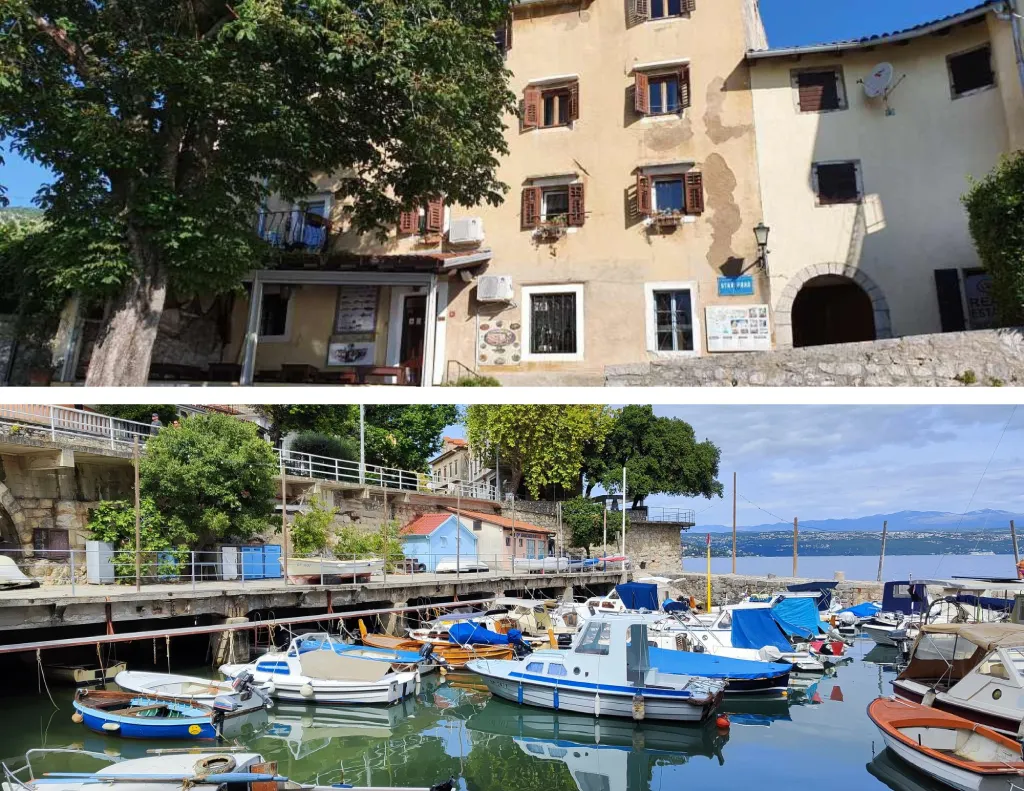
Besides, serving as a defence point on the southeast section of the old town walls, this arched gate used to provide access to Lovran’s harbour (known locally as “Mandrać”). Surrounded by a colourful facade, with the window, the lamp, and the opposite wall gazing out to the sea, Stubica gate seems so elysian.
Take a look at St. Trinity Chapel
The tiny church situated in the graveyard dates back to the 12th and 13th centuries. It was probably dedicated to Holy Sunday and has preserved the beautiful altarpiece with gilded figures in relief. It was rebuilt in the 15th century when a fragment decorated with an early Romanesque plait was built into the arch’s frame. The church portal decoration, dating to the end of the 11th century, is very similar to the ornament on the upper edge of the “Baška Tablet.” It is considered to be the only example of a plaited motif in the area of Liburnia.
Be active in Lovran
Situated at the base of Učka Mountain, Lovran is a favourite spot for many adventure and outdoor enthusiasts. So if you are an outdoor seeker like Trek Goat, don’t wait, since you can climb, hike, or bump about on a mountain safari on Učka. For those looking for an added dose of excitement, why not set yourself a micro-challenge? Try making it from sea level in Lovran to the summit of Učka before noon—a fun, personal goal that will give your hike a real sense of achievement and community bragging rights. On the other hand, if you’re more adapted to the sea, rent a kayak and make a tour alongside the beautiful Kvarner coastline.

The impressively rugged and forested Učka Nature Park, just above Lovran, has been responsible for weary limbs since the days when the Slavs crossed its ridgeback in sandals. Nowadays, holidaymakers are few and far between. Still, a mountain trip is a local rite of passage. Locals remain fiercely proud of the labyrinth-like limestone range. Biking and hiking are all-year-round traditions in Učka, while some of Istria’s most accomplished hikers made their first hiking steps on its slopes.
Hiking. Lovran is one of my favourite starting points when hiking to Učka mountain. Starting, in fact, from sea level, you can reach the Učka summit by following the marked hiking trails. Since you’ll climb to 1396 meters, prepare for a demanding mid-hike, and always check the season: temperatures at the summit can drop by 10°C compared to the coast, and weather conditions can change rapidly. Take enough water if you hike during summer days, and pack extra layers for safety year-round.
Other hiking options near Lovran include more straightforward, relaxed hikes. For instance, Lovran could be reached from several places. One could walk from “Lovranska Draga”, a tiny cottage located on the shore, down to the sea. Another hiking path is from picturesque Liganj or Mošćenice. Both of these places are the ideal starting points for a few other tours. Sure, we crossed them all, and we will describe the details in our trails category.
Tramontana: Trek Goat recommended tour. What we used to do was the Tramontana hiking tour on the northern part of the island of Cres. You can just leave your car at the port of Porozina or above and cross the sea to the island of Cres, paying only for the number of people.
Once you reach the small harbour and village of “Porozina”, you can start exploring Cres. The hiking trip we recommend is to the scenic Beli and back. Trek Goat crossed the way more than once, and sure, we are going to write about it.
Cycling. Similar to hiking, Kvarner Bay, with Učka Mountain, offers unforgettable biking experiences. Take a drive along the coast road, or, if you’re more into macadam fun, choose one of the Učka mountain roads. I also recommend biking on the island of Cres.
Kayaking. There are a few possibilities for kayak rentals in Lovran. The developed coastline of eastern Istria will reveal many hidden coves. Find one of them!
Daily tours from Lovran
As we mentioned earlier, Lovran is an ideal starting point for various excursions and daily trips. I especially recommend visiting the nearby places, as they are very similar to Lovran. So let’s mention some of them here.
Mošćenice
Situated on the hill above“Mošćenićka Draga”, scenic Mošćenice is one of my favourite places. The best way to reach “Mošćenice” is the asphalt ascent that can be taken in the south. After getting to “mošćenićka Draga”, take an asphalt road leading up for a few kilometres. Once you arrive at Mošćenice, you’ll enjoy the fantastic view of the sea and the island of Cres. It will take your breath away.
Opatija
Besides being known for the stunning, illuminated 12-km-long coastal “Lungomare” promenade, Opatija is also known as the “oldest lady of Croatian tourism”. It’s easily reachable from Lovran, and you can walk this promenade alongside the sea, enjoying and breathing the Adriatic Sea air. Once you reach Opatija, you’ll notice the architecture is somewhat similar to Lovran’s, and there are plenty of eateries, restaurants, and bars.
Rijeka
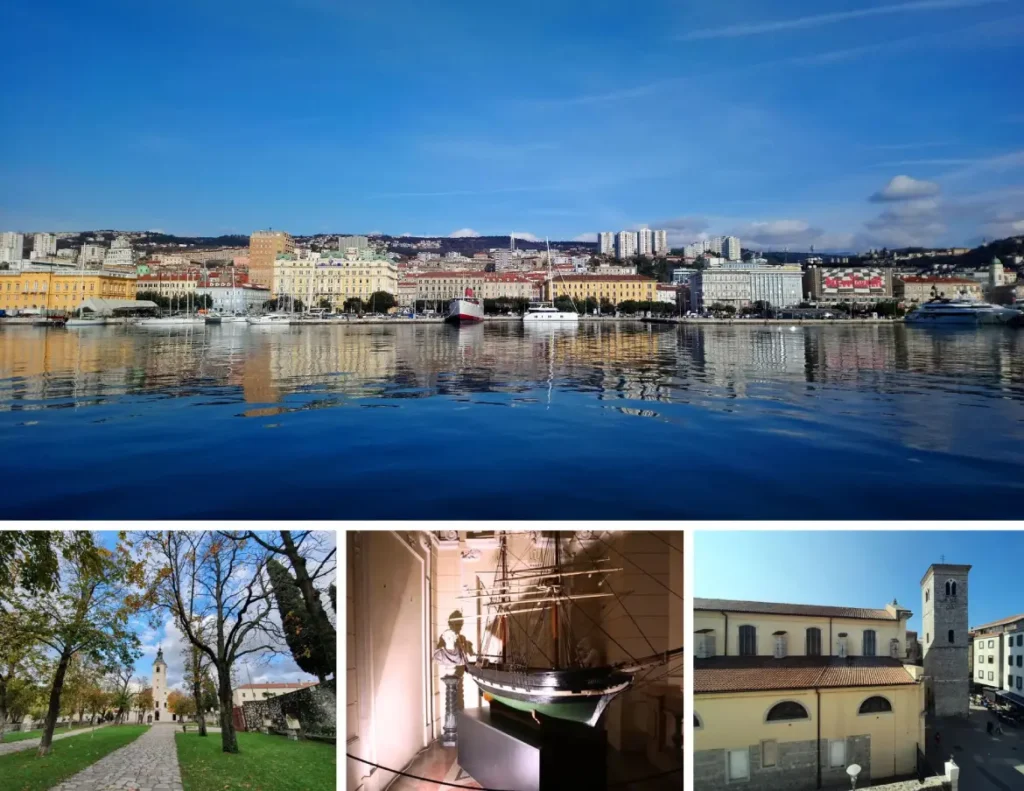
Rijeka, the largest city in Kvarner Bay, Croatia, was awarded the title of European Capital of Culture (ECC) in 2020 and. Despite being large and better known as a port city, Rijeka has a very long list of attractions you can see on a daily tour. I recommend strolling through Korzo, the main street and the hill up to Trsat castle since it offers a beautiful view extending to Rijeka.
Istria
Being the most prominent Adriatic peninsula and a region of wonderful yellow and green countryside, alongside a scenic coastline of inlets, beaches, and small, picturesque historical towns, “Istria” is an excellent choice for a day trip from Lovran. You can just follow the coastal road towards Rabac, another coastline jewel. From there, continue to Pula, Rovinj, Poreč or the innerland.
Cres
One of my favourite daily excursions and choices is Cres. Whenever you do hike, bike, or just drive and look at the scenic places, you will, without a doubt, have a lot of fun on the island of Cres. The opulence of the hidden coves and tranquil points offers moments of stress-free relaxation.
Sure, you can follow for more of our posts where we will describe Cres experiences.
Trek Goat Lovran tips
As the eponymous verse of a local song has it, Lovran is a tiny town that lacks nothing. That’s right, how do we feel when we visit Lovran? So I am sure you also will. Here we mention the things you shouldn’t miss while in:
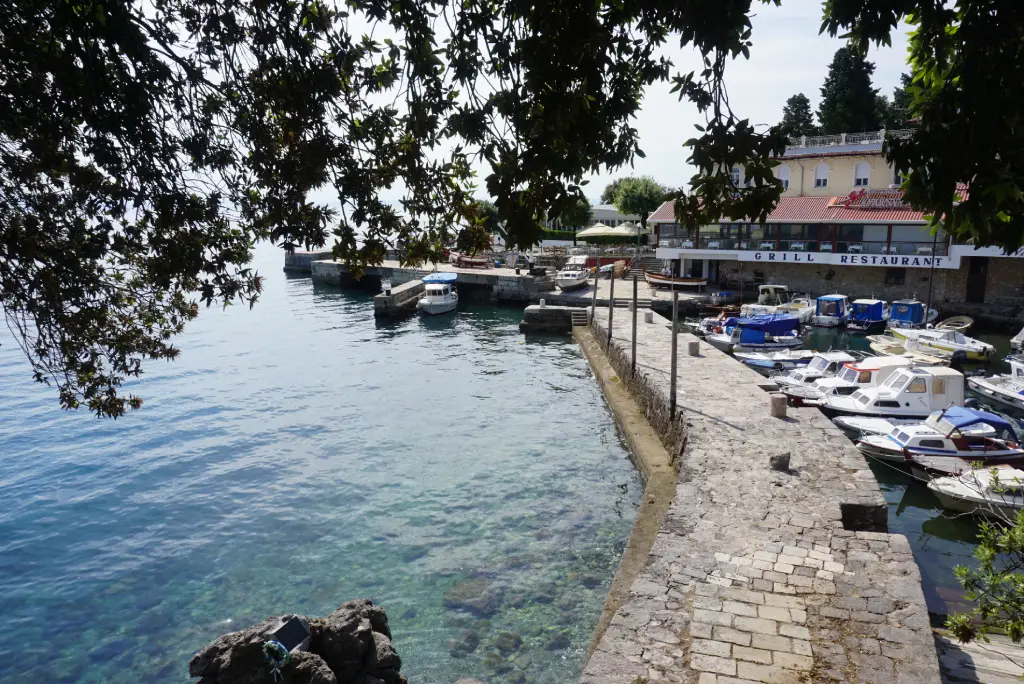
Eat & drink. Lovran’s local flavours are more than a meal—they become a memory you carry with you. If you visit in autumn, don’t miss tasting the region’s signature dish: soft potato gnocchi prepared with Lovran’s famous sweet chestnuts. These chestnut-infused gnocchi, topped with a drizzle of sage butter and served with a glass of crisp local white wine, capture the heart of the town’s culinary tradition. Even after you leave, the aroma and taste will bring Lovran back to you. Here are the points we stop at while in Lovran or hiking in the Nature Park Učka.
Lovranski Pub
Located in the very centre of Lovran, just opposite the bus stop for line 32, this pub is the ideal spot to get some rest. If you’re seeking tasty pizzas, Istrian and Croatian meals, meats or pasta, don’t hesitate to stop by! Besides, you can always come for a cup of good coffee or wine and make yourself a drink from 60 kinds of beer. The unique and special pizzas made this pub highly recommended by Goatlet!
Restaurant Delfino
The restaurant, which has been operating since 1999, is located on a hill outside the main road in Lovran. With a great selection of pizzas, pasta, homemade lasagna, grilled chicken and turkey, other grilled meats, steak and beefsteak prepared in different ways, homemade ravioli, fish and seafood, fancy and fresh salads, crepes and panna cotta, the pizzeria “Delfino” in Lovran is ideal for lunch or dinner. With friendly service, we recommend visiting and picking something you like.
Shop for some handmade art products. A few art shops are located straight in the town centre. Let’s find some handcrafted arts you will want to take home as souvenirs, reminding you of Lovran/Kvarner.
🚐 Getting to Lovran
✈️ Air. If you are flying to Lovran, the most convenient option is a shuttle bus from the airport to Rijeka, aligned with flight schedules. From Rijeka, take a local bus to Lovran (departures from Delta).
🚆 Train. The nearest railway station is in Rijeka, on King Tomislav Square. From there, walk to the public bus station at Delta and continue by local bus to Lovran.
🚌 Bus. Several lines connect Lovran, but the main Kvarner bus hub is in Rijeka, at Žabica. City buses also depart from Jelačić Square and Delta. Always check timetables, as intercity connections can be limited.
⛴️ Ferry. The closest ferry port is Rijeka, located in the city centre, just 350 m from the promenade. Both international and national lines operate from the harbour.
🚗By car. Driving is straightforward—follow the scenic coastal road along Kvarner Bay from Rijeka or Istria.
🅿️Parking. Lovran has two main parking areas in the town centre. During peak times, they may be full, so patience is required to find a spot. Keep in mind to observe speed limits and be patient due to possible heavy traffic during the summer months.
Lovarn tips
📍 Where it lies: On the eastern coast of Istria, at the foot of Mount Učka, overlooking Kvarner Bay and the island of Cres.
🏰 Wander: St. George’s Church and bell tower, the medieval town walls, the old gate of Stubica, and the colourful alleys of the Old Town.
🌊 Slow moments: Walk the Lungomare promenade toward Opatija, or simply sit by the harbour (Mandrać) and watch the boats drift in.
⛪ Sacred corners: St. John’s Chapel with its Romanesque charm, and the quiet St. Trinity Chapel at the old cemetery.
🥾 Outdoors: Hike from Lovran to the Učka summit (Vojak, 1396 m), or take lighter trails through the chestnut forests above the town.
🚴 Active escapes: Cycling routes between Lovran and Mošćenice, kayaking along the coast, or exploring the nearby island of Cres.
🍴 Taste: Local seafood, Istrian pasta, and the autumn Chestnut Festival (Marunada), when Lovran’s streets fill with the scent of roasted maruni.
🚌 Getting there: 10 km south of Opatija, easily reached by coastal road from Rijeka or from Istria via the Učka Tunnel.
🐐 Trek Goat tip: Start your walk just before sunset — when the façades glow gold, the bells ring softly, and Lovran feels suspended between the mountain’s breath and the sea’s hush.