

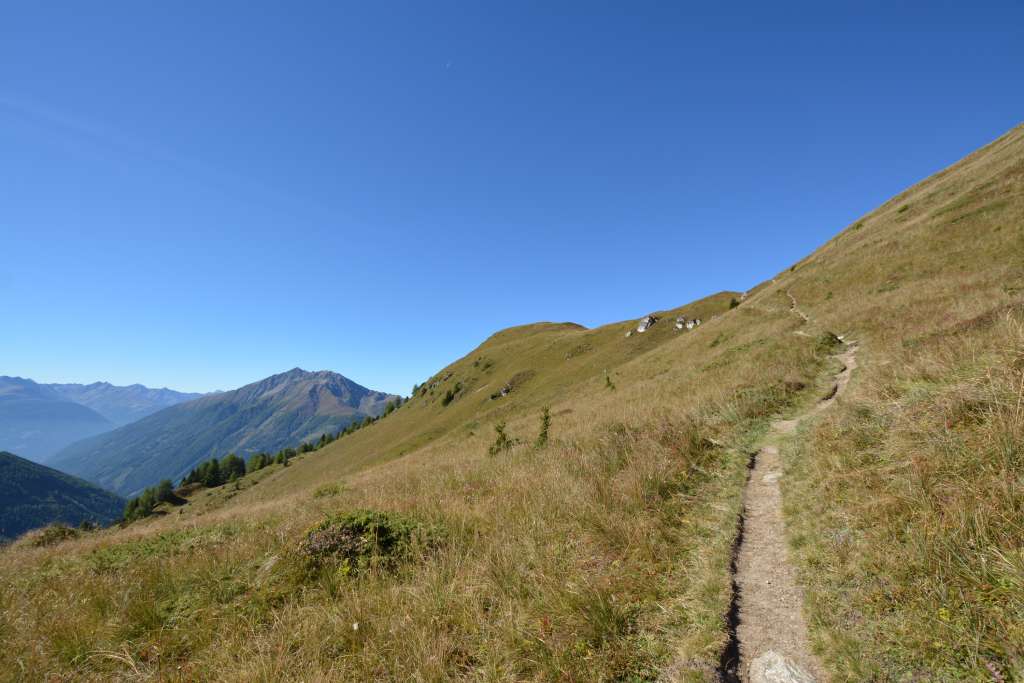
Figerhorn (2,742 m), located in East Tyrol’s iconic Glockner Group, is an accessible Alpine peak. Surrounded by vibrant meadows and ringing with cowbells, it offers a classic alpine hiking experience, perfect for those seeking natural beauty without intense difficulty.
The Figerhorn is the ideal choice for stunning views of Austria’s highest mountain. To ensure a safe, enjoyable hike, we avoid the steep rock faces and follow the gentle southern grassy slopes, ascending along the Wendelin–Weingartner-Weg named after a former Tyrolean governor.
You should remember its name because the peak is very beginner-friendly. The gentle terrain and, on good days, stable weather make it accessible for most hikers, allowing them to enjoy the hike without unnecessary stress. That said, there are still some steep sections near the summit, so it’s important for everyone to stay cautious and prioritise safety.
Few hikers who have tackled Grossglockner — one of Austria’s and Europe’s most demanding peaks — choose to climb Figerhorn just for fun. Yet Figerhorn remains one of the region’s most popular routes, earning a place among the “elite” of high mountains thanks to its impressive elevation, relatively straightforward ascent, and moderate technical challenges, offering both satisfaction and a sense of accomplishment to those who reach its summit.
Trek Goat loves the mountains, and even more the quiet green Alpine shadows that stretch over tiny valley villages. Figerhorn is one of those special experiences. If you’re curious about enjoying a moderately challenging Alpine hike while staying safe and relaxed, this article will guide you through it.
After considering a few possible peaks for a weekend hike, we settled on the Austrian mountain Figerhorn. Leaving Istria, Croatia, early in the morning, we drove across Slovenia and Italy into Austria, heading for Lienz. We crossed the Austrian border around 9:00 a.m., and the road, framed by stunning Alpine landscapes, eventually brought us to Lienz.
Trail description
On the road leading to Lienz, look for the direction towards “Alpengasthof Lucknerhaus” – Luckner House (1,910 meters). In comparison, our planned hiking endpoint is Figerhorn Peak (2,742 meters). Before entering the area, you’ll be asked to pay a parking fee if you decide to leave your car near the mountain hut. From the ticketing point, drive uphill and, after about 10 minutes, you will reach Alpengasthof Lucknerhaus, in front of which there is a parking lot.
Lucknerhaus is the starting point for many fantastic hikes and ski tours in Hohe Tauern National Park, including routes to Grossglockner (3,798 meters), Austria’s highest mountain. You can reach Lucknerhaus year-round, in both summer and winter, via Kals am Großglocknerstraße.
We began the hike from the parking lot in front of Lucknerhaus, following a moderate trail toward Greichl. Although starting at 11 a.m. might seem late—hikers usually set off early—we couldn’t arrive earlier due to the long drive. There was no need to rush, however, as the hike to Figerhorn isn’t very long and the weather that day was perfect.
Hike from “Alpengasthof Lucknerhaus” to Greichl
From the Lucknerhaus starting point, the first 200 meters of ascent are steep, with switchbacks leading to Greiwiesen (trail no. 42). Once in the open area, the terrain becomes flatter, and we pass just below Greibichl. As we climb along the path through a beautiful forest, we enjoy the winter sun scenes.
After about 20 minutes of walking, we reached a wider area and took in the beautiful Alpine atmosphere. From there, the path climbs almost directly north through grassy meadows. The final stretch to the ridge is steep, but grassy bends make the ascent easier, and before long, we arrived at Greichl Ridge.
Greichl Ridge above Lucknerhaus on the way to Figerhorn
Greichl Ridge is lush and scenic, surrounded by meadows, so we paused for a short breakfast break. Sitting on the bench, we enjoyed the beautiful horizons stretching across the valley. This point is accessible even for older hikers, children, or beginners. If anyone doesn’t feel confident continuing further, it’s perfectly fine to turn back here and still enjoy the Alpine scenery and fresh mountain air.
After a short 10-minute break, we continue by turning sharply to the right. A relatively moderately steep path leads us to the beautiful Wendelin–Weingartner-Weg.
From Greichl (2,247 m) to Figerhorn Peak (2,742 m) via Wendelin–Weingartner-Weg
Although the trail is steep from the beginning, gaining elevation quickly reminds us why we love hiking. Shortly after Greichl, the path leads through beautiful meadows and grasslands, offering breathtaking views of the valley and the opposite mountain slopes.
We were delighted to spot a flock of sheep — sheep are friends of goats, after all. While capturing views of the valley below, we listened to the sound of bells carried by the wind. These were the bells of sheep and cows grazing peacefully. Among them, we even spotted a newborn lamb resting on the grasslands.
As we continued, the summit gradually came into view. Only one final steep climb separated us from the top. We made it, and after about three and a half hours of walking, we reached the summit of Figerhorn (2,742 m).
The Figerhorn view
The view from the summit is truly beautiful. On one side stands the mighty Grossglockner, while on the other, the valley opens wide below. Since the summit space is limited, we took only a few photos before moving slightly down to the ridge. There, we enjoyed a short break and soaked in the astonishing mountain light.
However, time reminded us that it was necessary to start thinking about the descent back to the valley. The descent would lead us back to our starting point at Lucknerhaus.
Descent
The descent follows the same route as the ascent. Our journey ended back at the parking area near Lucknerhaus. The entire tour took about four hours of walking, covering approximately 6.6 kilometres with around 830 meters of elevation gain.
The story of Lucknerhaus: from humble farm to gateway to Austria’s highest Peak
Long ago, in the year 1685, a man named Andreas Oberlohr was born in the rugged valleys near Kals am Großglockner. He worked the land tirelessly and eventually established a farm he proudly named “Luckner.” Little did he know that this simple plot of earth, passed down through generations of the Oberlohr family, would one day become the beating heart of mountain adventures in the Hohe Tauern.
The real transformation began in the mid-19th century. In 1855, daring mountaineers—guided by local experts Georg Rangetiner and Johann Huter—achieved the first historic ascent of the Grossglockner from the Kals side. Word of Austria’s tallest peak (3,798 meters) spread, drawing more adventurers to the region. At the Luckner farm, perched at around 1,920–2,205 meters in the scenic Ködnitztal, the family began offering simple refreshments: fresh milk straight from their cows, homemade butter, and hearty bread. It was a modest start, but it marked the birth of hiking and mountaineering tourism in this wild corner of the Alps.
For decades, the farm welcomed weary travelers on foot or horseback. But as interest in the Grossglockner exploded—thanks to nearby huts like the Stüdlhütte, Glorerhütte, and the famous Erzherzog-Johann-Hütte (Adlersruhe)—the Oberlohr family saw the need for something more permanent. In 1950, with official permission granted on October 30, they began building what would become the Lucknerhaus. For three long years, everything was done by hand—no machines, just sweat, determination, and the skilled hands of Josef Oberlohr and his three sons. When it finally opened, the new alpine guesthouse featured a cozy guest room, nine double rooms, and two dormitories with space for 20 beds. It was basic, but it offered shelter and warmth to climbers preparing for the challenging ascent.
In those early days, reaching Lucknerhaus meant a rough journey—only possible by horse or on foot along a narrow path carved with picks and shovels. Then, in 1955, progress arrived: the trail was widened into a jeep track from Kals up the valley, making the trip far more comfortable for alpinists and day visitors alike. The biggest change came in 1980. After about three years of construction, the new Kalser Glocknerstraße—a scenic toll road—was opened, winding its way right to the doorstep of Lucknerhaus. With easier access, the family added a substantial extension: more space, better facilities, and the capacity to welcome many more guests.
Today, Lucknerhaus stands as a welcoming alpine lodge, still proudly run by the Oberlohr family (now in its third generation, with fresh energy from the younger members since 2025). Perched at the end of the road with breathtaking views of the Grossglockner, it serves as the perfect starting point—or triumphant finish—for countless climbs and hikes.
The sun terrace and restaurant seat up to 200 people, where you can savor warm traditional Tyrolean dishes all day long: hearty East Tyrolean specialties, fresh game, homemade pastries, and creative ice cream treats. There’s even a special children’s menu and a large playground for little adventurers to burn off energy. Whether you’re lacing up boots for a serious summit push, enjoying a leisurely walk in the alpine meadows, or simply sipping coffee while gazing at Austria’s iconic peak, Lucknerhaus remains what it has always been—a family home turned mountain haven, bridging centuries of hard work, alpine dreams, and the timeless call of the mountains.
🐐 Trek Goat Figerhorn tip
The Figerhorn summit, located opposite Austria’s highest peak, Grossglockner, is perfect for hiking tours that do not require special technical equipment. Due to its easy accessibility and moderately steep slopes, it is an attractive option for beginners, while still offering a satisfying workout for more experienced hikers.
The slopes of Figerhorn offer spectacular views, and the summit unveils a breathtaking panorama across countless peaks of the Glockner Group. It’s a hike that rewards every step with its scenery, and believe me, the moment you reach the top, every drop of sweat from the ascent will feel completely worth it.
Technical gain
- Highest point / summit: Figerhorn: 2,742 m
- Location: Kals am Großglockner / Lienz – Huben – Kals – toll road to Lucknerhaus
- Activity: Hiking
- Starting point: 1,910 m – Lucknerhaus
- Ending point: 2,742 m – Figerhorn
- Total: Elevation gain 832 m, 7 kilometres, approx. 5 hours
- Hike difficulty: The entire route is technically moderate.