Ever wondered what the world looks like from a serene 142-metre hilltop, where history and tranquility coexist? Perched high above the Istrian coast, Bale captivates as a serene medieval treasure, enveloped in a calm that feels untouched by time.
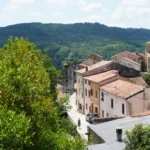
Walking into Bale feels like stepping into a village where time has slowed. Narrow stone streets twist past Gothic and Renaissance houses, their pale Istrian limestone glowing warmly under the afternoon sun. As you wander, the faint, distant echo of a church bell gently breaks the silence, grounding you in the moments that have passed and those still to come. Everywhere you look, the whispers of Venice linger: graceful loggias, ornate wells, and delicate architectural touches speak of centuries under La Serenissima.
The town placed itself under Venetian protection in 1332, seeking safety amid feudal turbulence. Even a brief Hungarian raid in 1413 couldn’t shake the deep Venetian imprint that would shape Bale’s streets, laws, and the soft echoes in its language for generations. Today, wandering its quiet squares and sunlit lanes, you can almost hear the stories carved into every stone—a living postcard of history, inviting you to pause and simply breathe.

Located between the famous tourist centres of Rovinj and Pula, Bale Istria may not be the first thought when writing stories about Croatia. Nevertheless, this picturesque place, located on a 142-meter-high hill with a beautiful view of the coastal archipelago, is worth seeing. Bale, with 2400 hours of sunshine a year, is located almost on the 45th parallel between the North Pole and the equator. Apart from providing us with an unforgettable walk, what makes Bale Croatia travel stand out is its specific local dialect. It has been passed down to generations of locals who often use Italian and Istrian Chakavian.
Things to do in Bale
There are plenty of them. The only thing you need is to stroll the town. Time in Bale doesn’t pass — it lingers. Venetian influence is still etched in every alley and facade. Locals speak a melodic dialect that blends Italian and Istrian Chakavian, and the place’s rhythm invites you to step in time with centuries past. Here, you’ll hear your footsteps echo down cobbled paths once walked by Romans and medieval merchants, feel the wind from the sea brushing through olive groves, and find that sometimes the best way to explore is to slow down until you stop.
Walking the narrow lanes, the world seems to slow. The sound of footsteps on cobblestones mingles with the hum of a dialect that dances between Italian and Istrian Chakavian. Once called Castrum Vallis by the Romans, Bale grew into a medieval town wrapped in Venetian grace. Its towers, walls, and lodges still stand as gentle reminders of an age when trade routes pulsed through Istria and the Adriatic winds carried news from distant ports. The rhythm of life here has barely changed: mornings begin in soft light, afternoons spill lazily over stone terraces, and evenings end in conversation under the bell tower’s shadow.
A walk through the old town
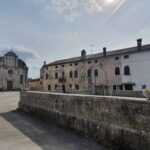
The medieval centre is remarkable because it was designed to be historic. The squares’ architecture and colourful facades are reminiscent of Northern Italy. In the nineteenth century, Bale was dominated by defensive towers along its city wall. Today, the remains of these towers, the city gates, the Praetorian Castle, and the town lodge can still be seen. All these features invite us to step into the Middle Ages.

It is pretty cool to walk alongside the old town. And every step will remind us of ancient times. One of the most significant was Roman rule. Then, when a settlement was established, they called it “Castrum Vallis”. Surrounded by defensive walls, it was built to protect the trade route in Istria, which passed between Trieste and Pula. Since then, life in Bale has lasted for centuries.
Soardo-Bembo Castle
In addition to several souvenir shops and coffee bars, the main feature is the Soardo-Bembo castle, whose construction dates back to the early 15th century, a time when the two towers were connected by a bridge. The residential Gothic-Renaissance part first belonged to the Soardo family, and in 1618 it passed to the Bembo family through the marriage of Veronica Sorado to Alvise Bembo. Today, Bembo Castle is listed among the 30 most prominent monuments in Croatia.
Parish Church of the Blessed Virgin Mary Elizabeth
The white stone building is considered the fifth to be built on the site of several older sacral buildings. It dates from 1638 and was rebuilt in 1883, during the time of Thomas Bemb. And the aforementioned castle was owned by the same person at that time. Next to the church is a 36-meter-high bell tower that dominates the place.

One of the most valuable sights is the “Twelve Capitals ” from the 8th-century Carolingian period. They are attributed to the master of capitals from Bale. Another feature is the 15th-century wooden statue of Our Lady of Mon Perin. It is associated with the legend of saving the place from drought. That is why the hill of Mon Perin, on which Bale was built, got its name.
Rural estates –“stanzia”
Like the other medieval places in Istria, Bale’s legacy is characterised by rural estates. The locals used to call them “stanzia”. The vicinity of Bale is specific for numerous rural estates (stancias).Those were once used by shepherds to overwinter, but also for staying during longer winter periods. Today, most of them are villages with guesthouses, offering a sense of harmony in a rural setting.

Some of the examples in the area are “Stancija Bembo”, Stancija Golaš, ” Meneghetti” ,” Pižanovac” or “Cernibieco “. All of them are located in a coherent, intertwined cycle or trekking routes.
Field churches
Walking through the place, we notice the late Gothic Church of St. Spirit from the 15thcentury. Apart from its specific stone blocks, the culmination of its masterful stonemasonry is its façade. It is covered with stone tiles – “slats”. The frescoes, such as “Escape to Egypt” or “The Last Supper”, create a main interior characteristic. They are attributed to Master Albert of Constance on Lake Constance.

The Church of St. Anthony, with a 14th-century Latin cross, is located outside the place. Right next to the road to the Lim Bay is the pre-Romanesque church of St. Elijah (Concetta). It was restored in the 14thcentury, when it received an imposing 12-meter bell tower.
Things to learn in Bale: dinosaur tracks and butterfly species
Butterflies and dinosaurs seem like a fairy tale. According to research, dinosaurs once walked through the area. At least that’s what the tracks found on the surrounding trails look like. To find out if this is true, you need to follow the paths of the dinosaurs. It’s not a joke. Bale will show us the bones of Sauropods, i.e. dinosaurs found on the sea shore of Colone Bay in 1992. They are kept in the Paleontological Museum of the Italian town of Monfalcone. The footprints of these amazing animals, which lived on our planet some 130 million years ago, are astonishingly large. Imagine the width of a modern bicycle wheel – about 24 inches. The imprint left by a sauropod could easily dwarf that, giving a sense of just how massive these creatures once were.
Today, there are no dinosaurs, but the area’s clean, untouched nature has enabled the region around Bale to host more than 360 butterfly species. Many of them are protected. Let’s look around to find a butterfly and capture a moment with a camera. You may find out later that this is a rare species.
Step into nature around Bale
The immediate vicinity of Bale is made for nature and outdoor lovers. Full of olive groves and vineyards, the region offers beautiful views of Istria’s green landscapes. However, the beaches are probably the most scenic. There are several points worth visiting.
Palud swamp – the story of lake photography
Nature and bird-watching enthusiasts will appreciate the bird-watching opportunities in Palud swamp Istria. This enchanting wetland, situated in the southern part of Istria between Rovinj and Pula, features rippling waters and lush forests and hosts thousands of birds. Its closeness to the sea makes the lake distinctive and magnificent. The lake is prized by outdoor photographers and offers remarkable opportunities for nature photography.

The swamp is designated as an ornithological reserve due to the large numbers of birds that used to nest here. The swamp is developed by the natural inflow of water from the surrounding hills and springs into a natural depression. The swamp was once wholly separated from the sea. This is evidenced by a 200-metre channel connecting the swamp to seawater. The track was excavated in the early 20th century to eliminate malaria and destroy mosquitoes by mixing the lake with seawater. The channel is also used to regulate water when the water level is too high. Aside from nature, full of water, bird sounds, and the sea, there are also historical remnants of the church that can be seen while visiting the lake’s southwest part. Aside from bird species, the area is inhabited by turtles, eels, mullets and lizards.
Getting to the Palud Lake. The easiest option is a 10-minute walk to the wetland from the park entrance. This should be done in accordance with the nature reserve’s rules. The most valuable way is to take the bicycle and ride from Rovinj or Bale using the road and macadam later.
San Polo and Colone beach
About 4 km from Bale, several of the most beautiful beaches in Istria are located. An asphalt road leads to the entrance of the campsite. Alternatively, a tourist train runs on a regular summer schedule. If driving yourself, keep in mind that an entrance fee is required at the reception.

The pebble beach of the beautiful Adriatic crystal sea will be ideal for rest for both families and solo travellers. Nature is beautifully created, with a still-intact coast that lets you enjoy Istrian sunsets in peace, far from city crowds. A lush Mediterranean vegetation, including pine and oak trees, is widely planted along the coast. There are some parts with cliffs. Aside from enjoying nature and getting rest, there are plenty of beach facilities, including a restaurant, coffee bar, shop, toilets, showers, and a children’s playground. In contrast, the beach is connected by a free tourist train.
Barbariga Beach
This is quite an unusual beach located under Bale, which is, in fact, one of the top pristine beaches in Istria. Natural elements and non-paved areas are prevalent throughout this beach. Not only is the actual beach outstanding, but nature all along the coastline is as well.
You can find several bars along Barbariga Beach, some of which you can lounge around and wait for your drinks in hammocks. This laid-back beach atmosphere is what many long for in a beach retreat.
Events in Bale
Bale has its festivals and summer events. Though there have been many concerts and events on the main square or in the galleries throughout the year, the most well-known is “Baljanska Noć” – Bale’ Night.
Bale’s Night
Suppose you’re in Istria on the first Saturday in August. In that case, you should visit this real public party organised by the tourist community. By that time, the tradition had taken over the place and the song, dance, and homemade cuisine that had already taken over Bale’s town anyway. Since divestment doesn’t end until the wee hours of the morning, we believe you’ll have a lot of fun.
St Julian’s feast
Every May 1st, which is also the official Day of the County of Bale and the Labour Day, St. Julian’s feast is held. A feast is held in honour of St Julian, the patron of the saint, who lived the longest time in a monastery of St Michael just outside the place. There, he passed away. The legend has it that it was somewhere between 1328 and 1367.
Getting to Bale
📍 Where it lies: Between Rovinj and Pula, on a 142-metre hill overlooking the Istrian coast.
🚶 Wander: Medieval alleys, Soardo-Bembo Castle, and the quiet charm of the old square.
⛪ Sacred corners: Church of the Blessed Virgin Mary, St. Anthony, and field chapels scattered through olive groves.
💧 Hidden gems: Palud Swamp nature reserve, San Polo and Barbariga beaches, and Colone Bay with ancient dinosaur tracks.
🅿️ Practical: 10 km from Rovinj, 20 km from Pula. Easy access via the Istrian Y motorway. Free parking near the old town; pedestrian zone inside the walls.
🐐 Trek Goat tip: Bring a bike or take an unhurried walk from Bale to the sea — it’s where Istria’s silence sounds the sweetest.